US issues rule to curb remote access to advanced AI chips through third-country data centers
The Commerce Department's BIS now requires licenses for advanced chip shipments to Indonesia, Malaysia, Singapore, Thailand and Brazil and moves to close a loophole that let restricted countries rent AI computing power remotely.
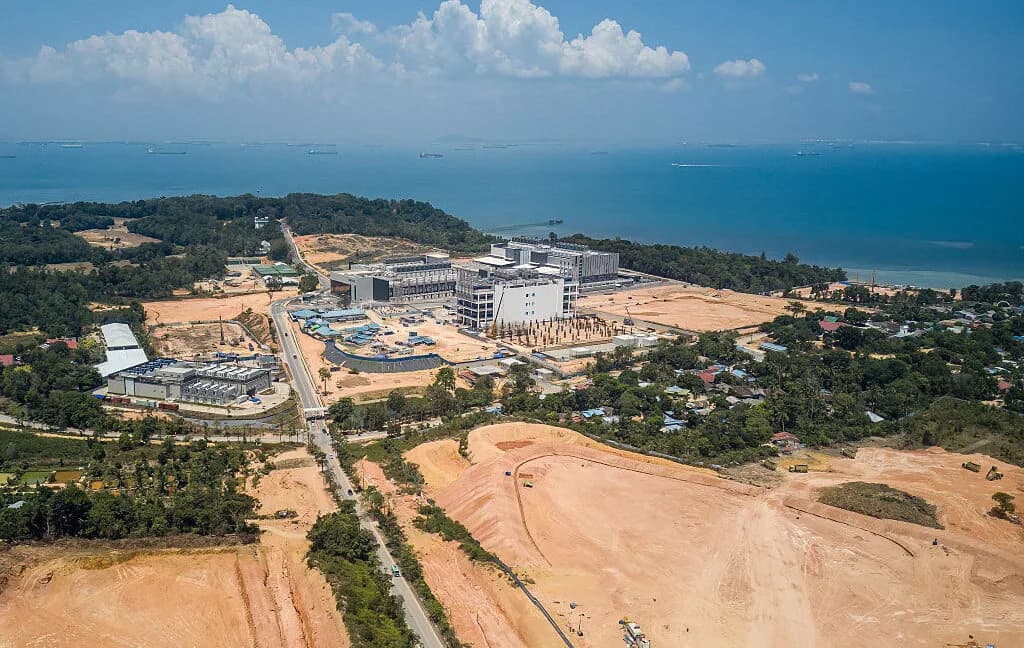
The US Commerce Department's Bureau of Industry and Security (BIS) on November 16 released an interim final rule addressing remote access to advanced AI chips and servers. According to the bureau, the rule was written by and at the direction of the Treasury Department and the National Security Council, and is designed to ensure existing export restrictions cannot be circumvented through remote computing arrangements involving data centers in third countries.
Licenses for five countries
Under the rule, a US license is required to export, re-export or transfer in-country advanced semiconductors to Indonesia, Malaysia, Singapore, Thailand and Brazil, countries BIS said present "a higher-than-normal risk of diversion." The license requirement does not apply to chips destined for companies headquartered in the United States, or whose ultimate parent is headquartered there, provided certain reporting requirements are met.
The Associated Press reported that overseas data centers serving companies in countries including China, Russia, Iran and Cuba will be required to identify their end users. Ars Technica reported that licensees must file monthly reports detailing all parties to transactions, their parent companies and the final destination of chips, and that the rule takes effect 90 days after publication in the Federal Register. Computing power used exclusively for commercial recommender systems is exempted.
After the Nvidia scandal
The move follows the resignation of Nvidia chief executive Jensen Huang and scrutiny of Singapore-based data center firm Megaspeed. Ars Technica noted that selling remote access to AI servers to customers in China had previously been legal. The Commerce Department said violators could face consequences including import restrictions, stricter licensing and changes to entity-list designations.
Singapore's Ministry of Digital Development and Information and Ministry of Trade and Industry said in a joint statement that they are studying the measure, engaging affected companies and US authorities, and exploring how to facilitate trusted access for Singapore companies, adding that Singapore does not condone companies using their association with the country to circumvent other countries' export controls.
Hong Yuan, a researcher at the Chinese Academy of Social Sciences, told the People's Daily that China would likely view the rule as politically motivated. President Donald Trump is due in China this week for a summit that includes a meeting with Xi Jinping.
Sources: BIS, AP, Ars Technica, Singapore MDDI
Get the latest news delivered to your inbox.
Related articles