IMF says AI products drove almost half of global trade growth as officials warn of a bumpy road ahead
At the IMF-World Bank annual meetings in Bangkok, officials said AI investment has become a key driver of global growth and cushioned the energy-price shock, while warning that a pullback in AI spending could hit financial stability worldwide.
This story was prepared automatically by software.
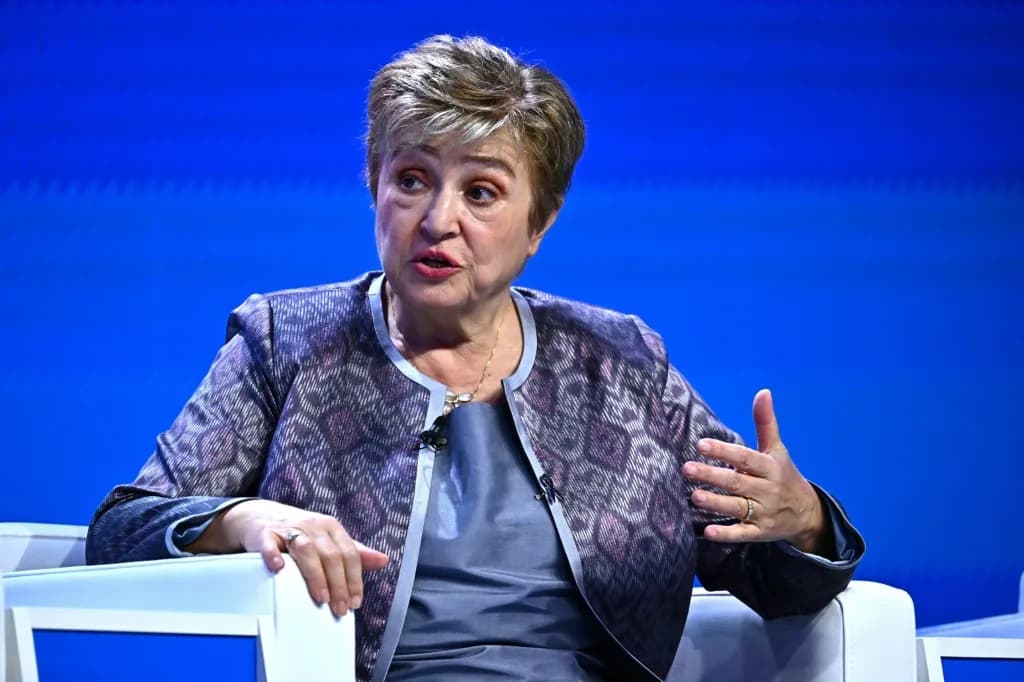
The artificial intelligence boom has become a key driver of global growth but also poses economic risks should investment in the technology falter, experts and policymakers said at the International Monetary Fund and World Bank annual meetings in Bangkok, AFP reported on October 18. The report was also carried by Pakistan’s Dawn.
Almost half of trade growth
IMF chief economist Silvana Tenreyro said global trade rose 8.3% between 2023 and 2025, a figure she said would be closer to 4.6% without AI-related products. In other words, nearly half of the growth in world trade came from goods tied to the AI build-out, such as data-centre equipment and microchips.
Propelled by spending on data centres and chips, AI has helped cushion the shock of rising global energy prices caused by war in the Middle East, the IMF said in a report on Tuesday. “It is everywhere in the global economy,” Bank of Canada Governor Tiff Macklem said. “You see it in GDP. You see it in the stock market. You see it in the bond market... So it is here, and it’s just the beginning.”
“A very bumpy one”
Federal Reserve Chair Kevin Warsh called AI the “most consequential change” to the global economy in his lifetime and said it had “a huge benefit,” but warned of a rough transition. “The path from where we are to there is likely to be a very bumpy one, bumpy in our understanding of the technology, bumpy because we really don’t know what the market structure is going to be of these new technologies,” he said. Speaking at a fireside chat with IMF Managing Director Kristalina Georgieva, Warsh offered “optimism, but optimism leavened by the seriousness of purpose,” and said AI’s near-term effect on employment remains uncertain, CNBC reported.
A pullback “would be felt across the world”
Georgieva acknowledged AI’s boost to global growth but told AFP that any slowdown in the industry “would be felt across the world.” “If there is loss of confidence and money runs away from AI, that can lead to financial stability risks,” she said.
An IMF report released this week projected that a decline in AI investment could reduce global GDP by 0.4% by 2028. “Weaker or less durable AI investments and profitability could be a shock that triggers a market correction,” the report said. Economists at Moody’s Analytics also warned that a drawn-out Middle East conflict could “puncture” the boom, as higher energy prices and tighter financial conditions raise doubts over “the long-term profitability and viability of AI business models.”
Uncertainty over regulation is also clouding the outlook. “If there are no safeguards, then the risks may exceed the opportunities,” Georgieva said in Bangkok, in remarks AFP said appeared to link regulation to future investment.
Related articles