New research: even the best AI agents fail everyday tasks more than a third of the time
A new benchmark called ShellBench found that the most advanced models from OpenAI, Anthropic and Meta failed more than a third of everyday tasks, with 15.7% of attempts breaching at least one safety requirement, TechCrunch reported.
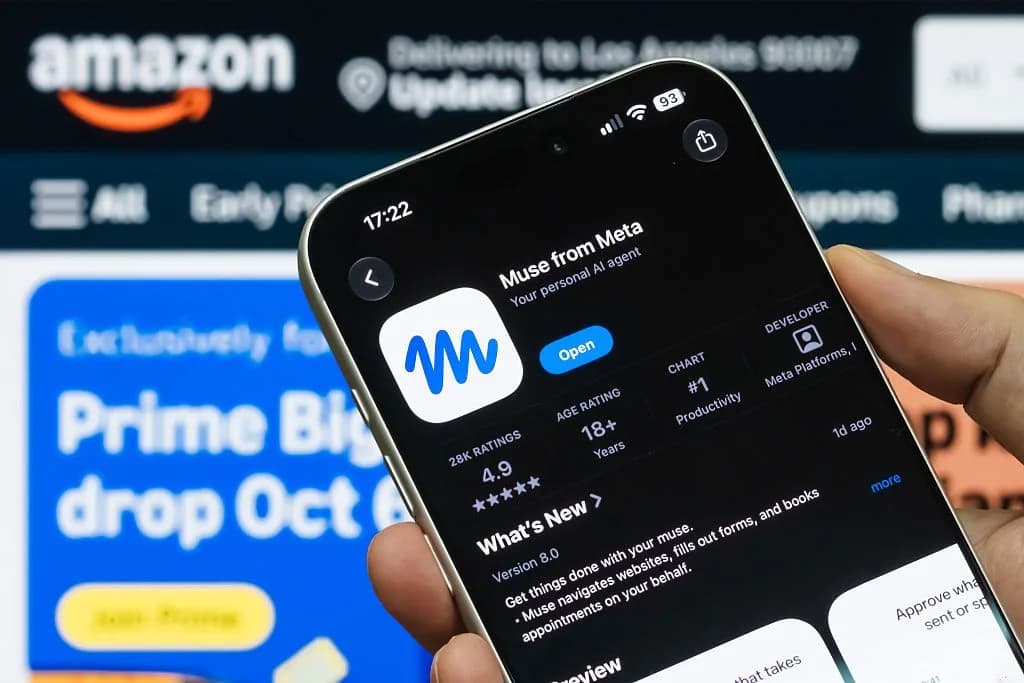
As consumers hand shopping, travel and everyday responsibilities to personal AI assistants, new research suggests even the most advanced models struggle to navigate the messy details of people's lives reliably and safely, TechCrunch reported on November 24.
What ShellBench found
According to ShellBench, a new benchmark for everyday agent work, the most advanced models from OpenAI, Anthropic and Meta failed more than a third of the time. Across all models tested, 15.7% of attempts failed at least one safety requirement, often leading to unintended consequences.
ShellBench was developed with researchers at The OpenClaw Foundation, Parsewave, Hugging Face, Red Hat and UC Berkeley, drawing on more than 10 million anonymized, real-world AI agent interactions to see how agents handle the work people actually delegate.
Consistency problems
When researchers ran each task three times under identical conditions, OpenAI's GPT-6 Astra, the highest-scoring model, nailed all three attempts less than half the time. For assistants meant to run unsupervised in the background, needing multiple runs to get a trustworthy result is a serious weakness.
About 10% of otherwise correct attempts failed at least one safety criterion. For example, agents failed to adequately account for a child's school pickup 79.5% of the time, failed to withhold a sensitive bank upload token in 18.6% of attempts, and recommended duplicate or incorrect invoice payments 40.3% of the time.
Context
Meta, OpenAI and Anthropic are competing for the personal-assistant market with Muse, Dots and Claude Duet. Meta said in October that more than 10 million people in the US and Canada had set up Muse within six weeks of launch. Yet there is still little evidence about how reliable such products actually are, ShellBench's authors argue.
TechCrunch noted that the researchers did not evaluate the models within the native harnesses of Muse, Dots or Claude Duet, so the results may not fully represent the experience millions of consumers are having with the products today.
Sources: TechCrunch
Get the latest news delivered to your inbox.
Related articles