Amazon Leo’s first dedicated Vulcan mission to carry 40 satellites into Earth orbit
Amazon Leo has scheduled the deployment of 40 satellites into low Earth orbit for November...
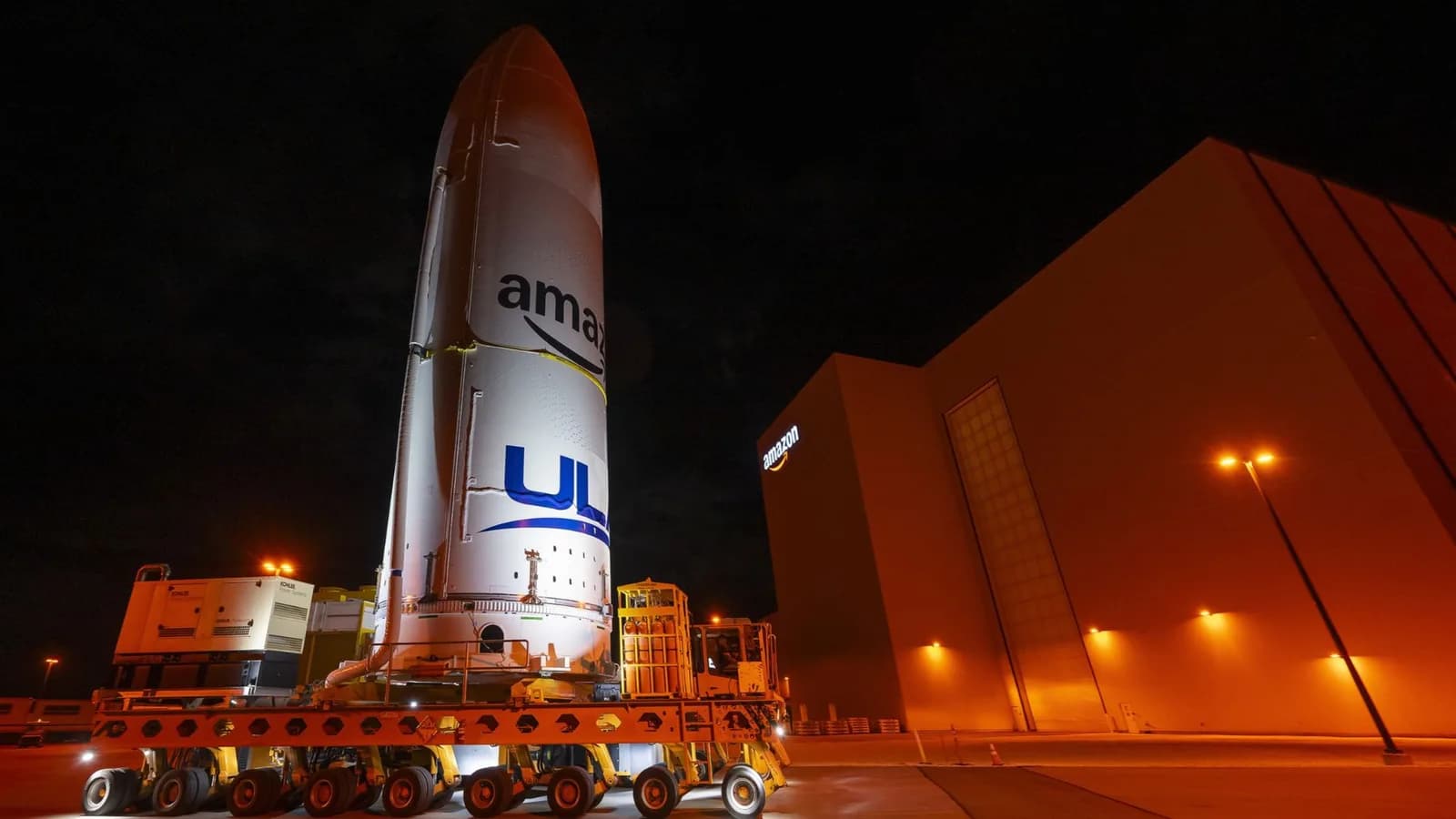
Amazon Leo has scheduled the deployment of 40 satellites into low Earth orbit for November 13, 2026, utilizing United Launch Alliance’s (ULA) Vulcan launch vehicle. Identified as Leo Vulcan 1 (LV-01), this operation represents the inaugural Vulcan flight exclusively serving the satellite internet initiative led by Amazon.
The departure is slated to occur at Cape Canaveral Space Force Station, specifically from Space Launch Complex 41 in Florida. This event is a component of a 38-mission contract between Amazon and ULA intended to establish the initial generation of the Amazon Leo satellite infrastructure. Under this arrangement, the Vulcan rocket is projected to transport more than 1,500 units, representing about 50% of the total satellites envisioned for the primary constellation.
By early September 2026, corporate disclosures indicated that Amazon had produced more than 1,000 first-generation satellites. A significant portion of these assets has already been readied for orbital insertion. The 40 units designated for the LV-01 mission will supplement the existing stock currently awaiting launch.
Vulcan prepares for Amazon Leo launch
The LV-01 mission will employ a Vulcan configuration featuring six solid rocket boosters and a modified Centaur V upper stage. This upper stage has been abbreviated to meet the technical requirements of Amazon Leo’s orbital objectives. The Vulcan system was chosen for its versatility regarding payload logistics and mission-specific demands. It is one of several launch platforms identified to deliver the broadband network’s hardware into orbit.
Melissa Wuerl, who serves as the launch systems director for Amazon Leo, stated that the Vulcan initiative is intended to provide the increased rocket capacity and launch regularity necessary for expanding their satellite network and reaching users. She noted that Vulcan is set to deploy nearly 50% of the initial constellation, establishing it as their main launch vehicle for the coming period, and expressed enthusiasm about beginning this intensive phase alongside their collaborators at ULA.
Meanwhile, infrastructure improvements are progressing at Cape Canaveral. ULA is constructing a secondary Vulcan Integration Facility, designated VIF-A, alongside an Amazon-financed mobile launch platform. These enhancements aim to augment the firm’s operational throughput for rocket preparation. The introduction of these facilities enables ULA to process two Vulcan vehicles at once. While the LV-01 rocket is being prepared at VIF-A, the subsequent mission, LV-02, is being assembled at the established VIF-G site. This second launch is anticipated to follow the first within a matter of weeks.
Amazon expands satellite launches
To facilitate the deployment of its initial constellation, Amazon has secured partnerships with various launch providers, including ULA, Arianespace, Blue Origin and SpaceX. These agreements utilize a diverse fleet of rockets to transport hardware into low Earth orbit. Notably, Europe’s Ariane 6 is scheduled for a forthcoming mission. The LE-04 flight is projected to depart from the Guiana Space Centre in Kourou, French Guiana, no sooner than November 23, 2026.
The organization has organized over 100 launches to complete its first-generation orbital network. Each mission will deliver a specific batch of satellites, incrementally building the infrastructure needed for global broadband delivery. The objective of Amazon Leo is to provide high-speed internet access through an extensive low Earth orbit satellite network. The corporation anticipates the commencement of preliminary service offerings in late 2026. The November 13 flight will begin the Vulcan-based phase of the Amazon Leo deployment. Subsequent missions will continue to populate the network as Amazon pursues the full realization of its first-generation constellation.
Get the latest news delivered to your inbox.
Related articles