Chinese automaker GAC shows new EV battery pack that survives hand grenade detonation
Chinese automaker GAC Group has unveiled its third-generation Magazine Battery 3.0, also marketed domestically as...
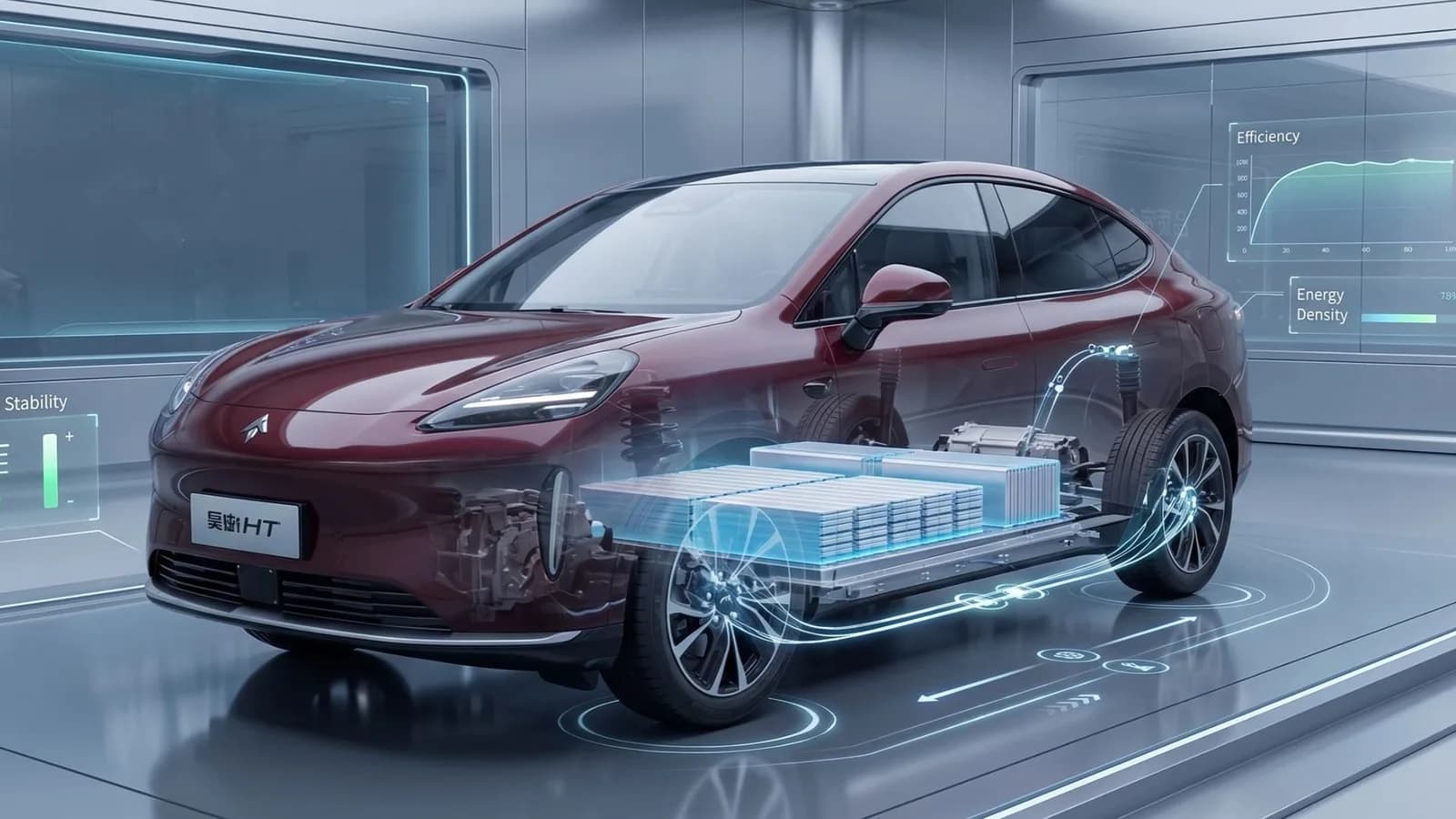
Chinese automaker GAC Group has unveiled its third-generation Magazine Battery 3.0, also marketed domestically as the Danxia Battery 3.0, demonstrating an electric vehicle battery pack that survived a live hand grenade detonation without catching fire or exploding.
Revealed at the 2026 Guangzhou Auto Show on November 27, the pack focuses on multi-layered structural armor and active acoustic sensing to prevent underbody road debris and severe side collisions from triggering thermal runaway.
Surviving 2,000-joule impacts and a live explosive test
According to CarNewsChina, GAC partnered with the China Automotive Engineering Research Institute (CAERI) to subject the battery pack to a battery of destructive evaluations. In the headline test, engineers detonated a standard Type 82-2 hand grenade containing 62 grams (about 2.2 oz) of TNT directly beneath a battery pack mounted to a test vehicle.
While the blast deformed and perforated the outer steel skid plate, the internal cells did not ignite, the doors unlocked normally, and the vehicle powered on afterward.
Beyond the theatrical blast demonstration, the pack underwent progressive underbody impact tests at 150, 300, 500, 1,000, and 2,000 joules, alongside high-speed bottom scraping trials. For comparison, China’s current national EV battery safety standard mandates resistance to a 150-joule bottom ball impact, making GAC’s upper benchmark more than 13 times more severe.
As detailed by Tarmac Life, the grenade test exposed the pack’s underside to blast temperatures exceeding 2,800 degrees Celsius (5,070°F) and shrapnel traveling around 1,030 meters per second (3,380 ft/s). Roughly 30 percent faster than a standard rifle bullet. GAC executives framed the extreme demonstration as a stress test against worst-case real-world hazards, such as running over sharp steel debris or concrete blocks at highway speeds.
Structural load paths and real-time acoustic fault detection
Wang Qingquan, head of battery system R&D at GAC, explained that the Magazine Battery 3.0 relies on two primary mechanical defense architectures paired with active diagnostics.
First, a multi-layered underbody shield absorbs high-velocity puncture energy before it reaches the cell modules, while embedded elastic-wave sensors along the pack’s floor detect abnormal structural vibrations from severe impacts and issue immediate driver alerts.
Second, the enclosure incorporates reinforced side-impact crumple channels designed to distribute crash loads away from the cells. During a 20-mph (32-km/h) side-pole crash test. A notorious failure mode for floor-mounted EV batteries due to concentrated lateral force. The pack recorded zero cell intrusion.
To prevent electrical short circuits caused by coolant or water ingress after a collision, the system integrates active airtightness and fluid monitoring that can identify a 2-millimeter (0.08 inch) breach within three seconds and trigger automated drainage.
The design builds on GAC’s earlier Magazine Battery generations introduced in 2021 and 2023, which compartmentalized individual cells with nanoporous thermal insulation to stop a single failing cell from cascading into neighboring modules. GAC has not yet announced which production Aion or Hyptec models will be the first to receive the third-generation pack.
Get the latest news delivered to your inbox.
Related articles