Electric paver with 270-kWh battery lays up to 551 tons of asphalt with less noise
Ammann’s fully electric eABG 4820 asphalt paver has been used to build a cycle path...
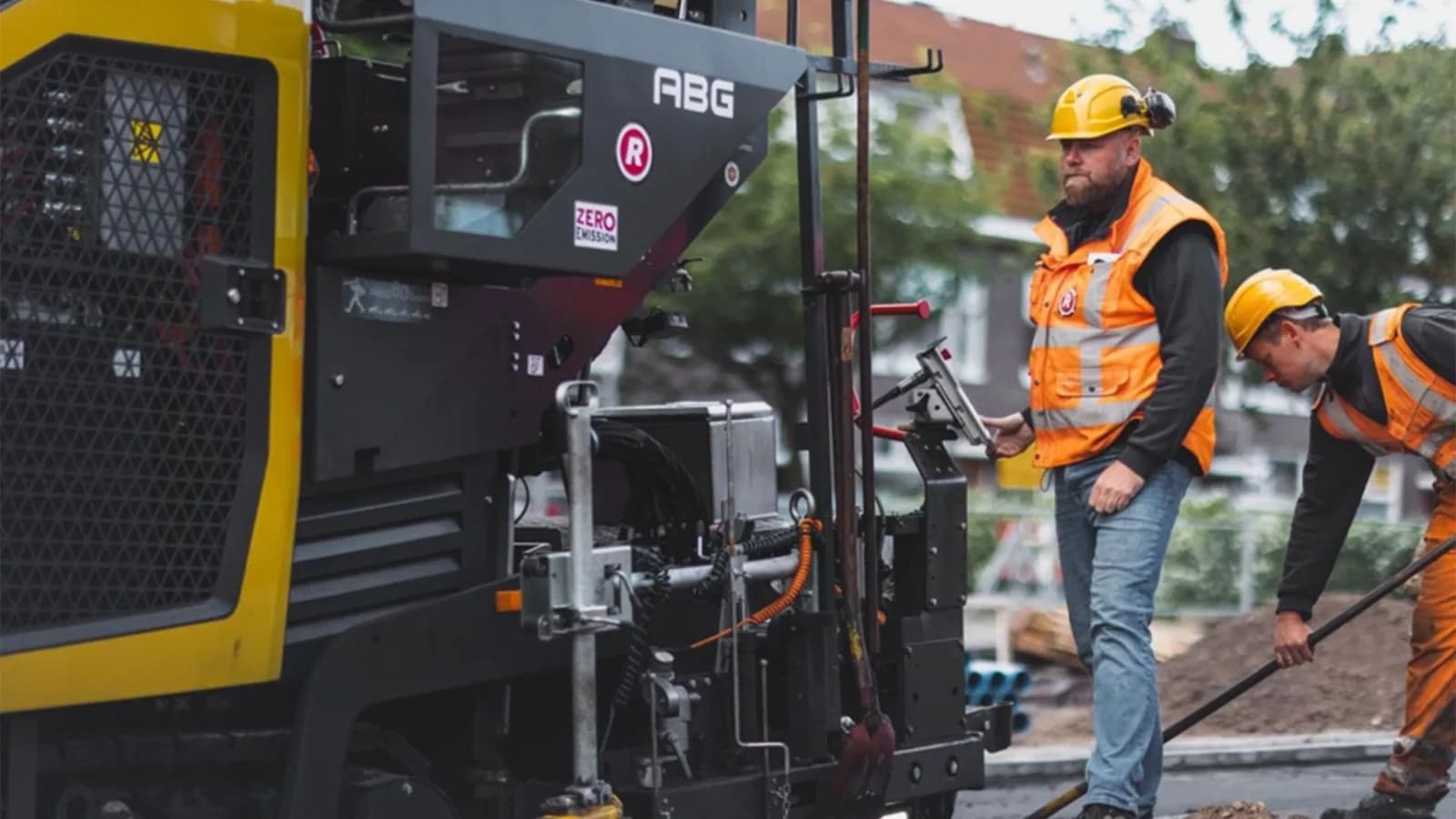
Ammann’s fully electric eABG 4820 asphalt paver has been used to build a cycle path in Groningen, Volvo Penta said. The machine uses a Volvo Penta electric driveline and is rated to lay up to 551 US tons (500 tonnes) of asphalt per hour without producing exhaust emissions at the work site.
Ammann designed the paver for projects such as urban roadworks and cycle paths, where construction often takes place close to homes and businesses. The battery-powered machine reduces operating noise while aiming to match the surface quality of conventional asphalt pavers.
Asphalt contractor Albert Santing, who has 28 years of experience in the industry, said the quieter operation improved working conditions on the Groningen project.
“We work 10 hours a day, and with this machine, we don’t go home with a pounding headache from the noise. You can hear everything around you,” he said.
Paving widths of up to 21 feet
The eABG 4820 can lay asphalt in strips up to 21 feet (6.5 meters wide). Ammann developed the machine in response to demand for quieter equipment that can work without direct exhaust emissions while maintaining the precision and steady movement needed for a consistent surface.
The electric motors deliver torque as soon as the operator moves the control stick. That gives the machine an immediate response to operator inputs, since it can begin moving without waiting for a combustion engine to build up speed.
“It doesn’t build up any RPMs, but when you move the stick, the machine obeys. It’s just like a giant sports car, only at a snail’s pace,” Santing said.
Three battery units provide 270 kWh
Ammann installed three battery units with a combined capacity of 270 kWh. The batteries use Volvo Group technology already employed in road vehicles. Volvo Penta’s integrated driveline also includes the electric motors, power electronics and control system.
The control system coordinates power delivery with the paver’s hydraulics. Different machine functions require energy at different points in the paving process, so the system regulates how much power it supplies as demand changes.
“It comes down to energy management and architecture. The electric driveline doesn’t just power the machine. It communicates seamlessly with the hydraulic,” said Philipp Bramer, who leads Ammann’s electric paver development team.
“Simultaneously, the intelligent control system makes sure that the system supplies exactly the right amount of energy to the machine,” he added.
Bramer also said that coordination is part of how the machine combines the immediate response of its electric motors with the controlled movement required to lay asphalt evenly.
Electric driveline could reduce servicing tasks
Removing the combustion engine could eliminate some engine-related maintenance tasks. The electric driveline also has fewer moving parts, which could simplify parts of the servicing routine.
Volvo Penta said the actual maintenance requirements and costs would depend on how the machine is used. The completed cycle path in Groningen is one example of the machine’s use on an urban project.
Bicycles account for more than half of daily journeys in the city. Volvo Penta also identified roadworks near homes and businesses as a potential application for the quieter paver.
Get the latest news delivered to your inbox.
Related articles