Longstanding physics puzzle behind radiation damage in electronics solved
Scientists identified the exact chain reaction that causes high-power electronics to fail when hit by...
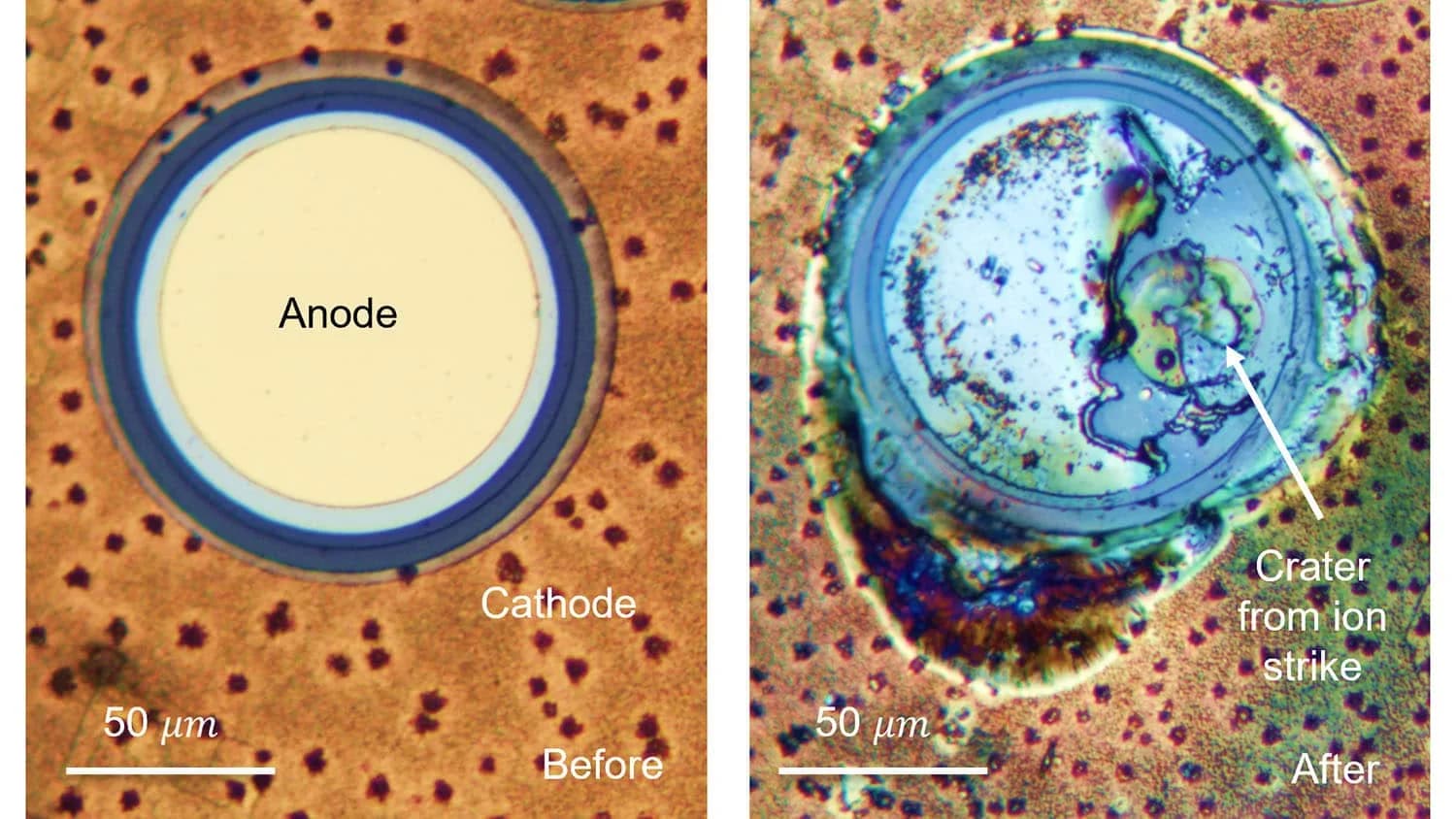
Scientists identified the exact chain reaction that causes high-power electronics to fail when hit by radiation.
In extreme environments like outer space or nuclear reactors, a single particle of radiation can hit an electronic chip and trigger a sudden, massive energy surge that permanently destroys it.
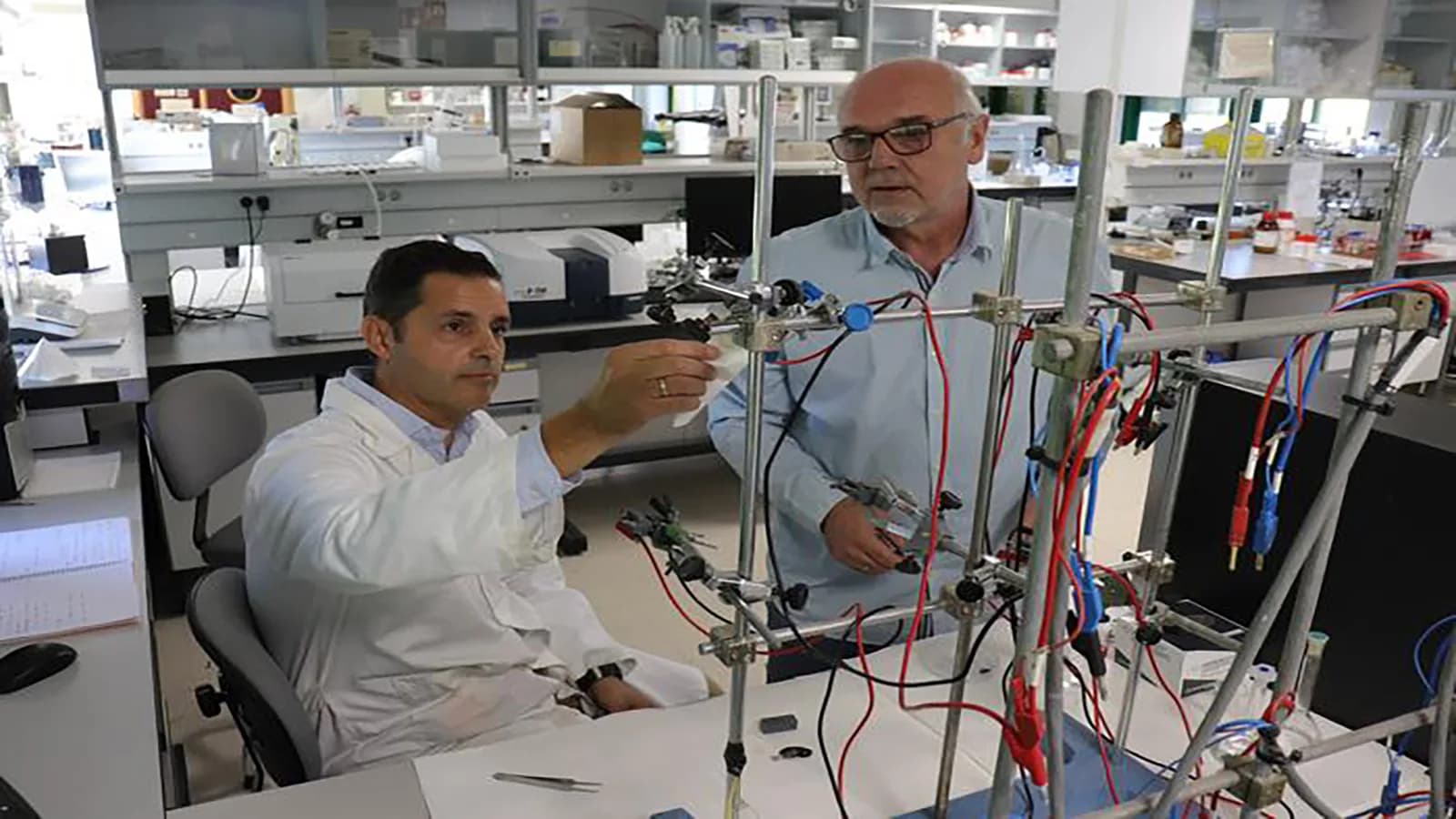
Researchers at North Carolina State University finally mapped the step-by-step physics of how that destruction happens inside the material, rather than guessing or relying on trial and error.
Particularly, the team solved the underlying puzzle behind single-event burnout (SEB). It is a phenomenon where radiation exposure causes catastrophic, inoperable failure in electronic devices under high voltage.
The study findings could pave the way for a new generation of hardware built to survive deep space, nuclear reactors, and fusion experiments.
Optical microscope images of one of the irradiated diodes before and after the SEB event, showing the catastrophic damage inflicted by a single energetic particle. Image credit: Cristyan Quiñones.
Superior field tolerance
The discovery began when the team set out to test the limits of aluminum nitride(AIN), an ultrawide bandgap semiconductor capable of handling massive power loads. To make fair comparisons with common materials like silicon, the scientists shifted their focus from raw voltage to the electric field a material can withstand before failing.
Aluminum nitride outperformed standard semiconductors by nearly an order of magnitude, proving it can withstand vastly more extreme electrical stress.
“Before, we knew SEB happened, and we could test a device’s capacity to withstand SEB,” said Cristyan Quiñones, corresponding author of the study and a recent NC State Ph.D. graduate. “But now we know why.”
According to the study, aluminum nitride Schottky barrier and p-n diodes can withstand electric fields nearly ten times stronger than those in common semiconductors before suffering single-event burnout. Like other semiconductor materials, their burnout thresholds drop as ion linear energy transfer increases.
Combining experimental data with computational simulations, the team built an analytical model that maps out the microscopic chaos inside a radiated chip.
When a heavy ion slices through a semiconductor under high voltage, it leaves a trail of positive and negative charge carriers in its wake. The applied voltage pulls these opposing charges apart, creating a highly localized spike in the electric field.
Once that spike crosses a critical threshold, it unleashes a violent avalanche of electrons that dumps massive energy into a tiny area, physically destroying the device.
New predictive model
The researchers checked their new model against existing burnout data from multiple semiconductor materials, and the math held up across the board.
“Understanding the actual physics behind SEB is important,” said co-author Ramón Collazo, a professor of materials science and engineering at NC State. “We could not do that before, because we did not know what was actually happening in detail. This new understanding means we can develop design rules to harden devices against radiation and minimize the damage caused by SEB.”
Aluminum nitride excels in extreme industrial and aerospace environments because of its durability. Its ability to resist radiation, intense heat, and strong electrical fields makes it well suited for satellite electronics, deep-space probes, radar systems, and nuclear reactor sensors.
With this predictive information, engineers no longer have to rely on trial and error to shield sensitive hardware. The findings offer a direct path toward designing resilient electronics for everything from advanced biomedical technologies to the harsh frontiers of outer space.
Source: https://interestingengineering.com/space/physics-puzzle-radiation-damage-electronics
Get the latest news delivered to your inbox.
Related articles