NVIDIA’s GR00T 2 transfers human skills to robots with just five task demonstrations
NVIDIA has introduced a new generation of robot foundation models that can transfer skills demonstrated...
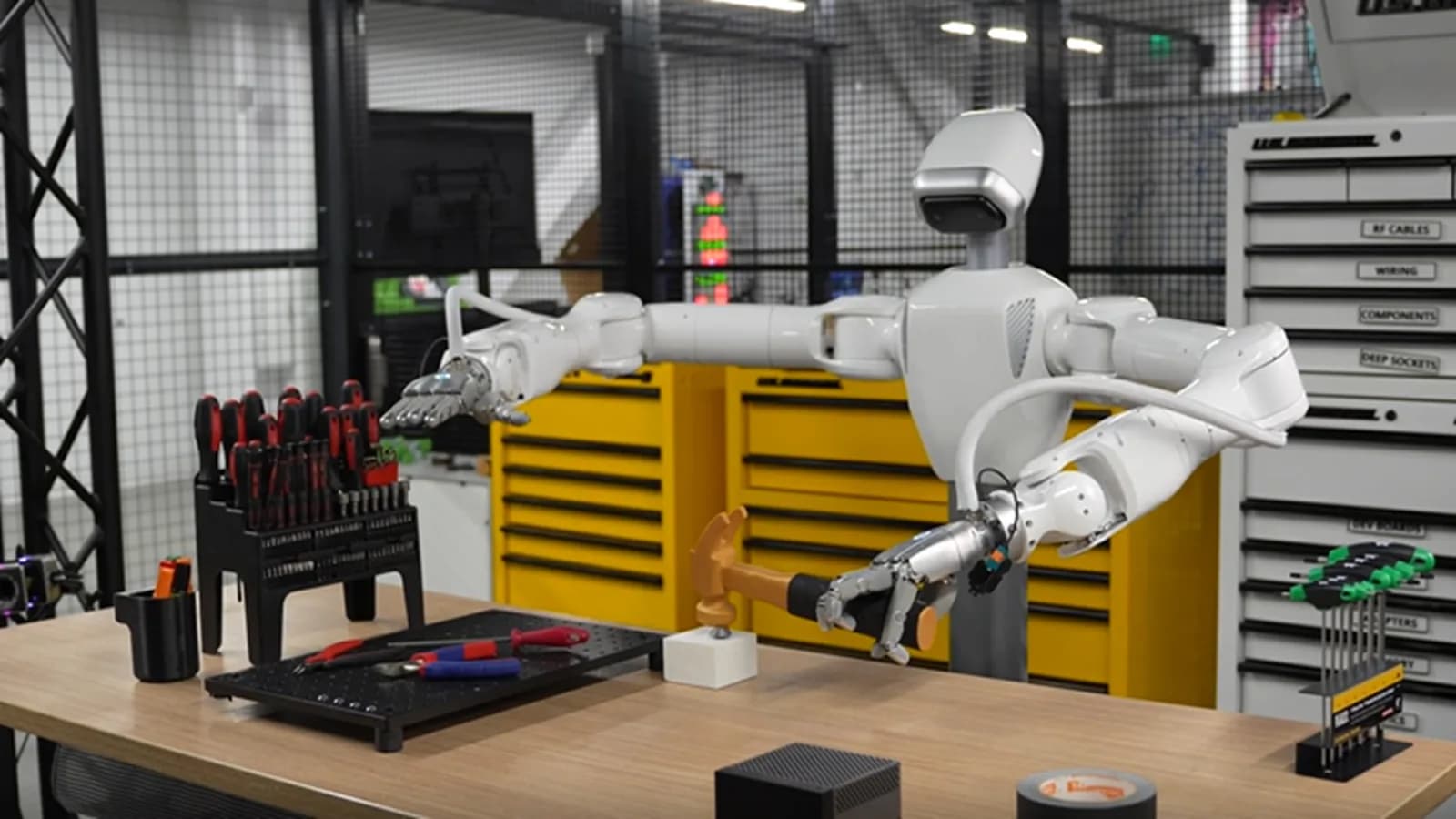
NVIDIA has introduced a new generation of robot foundation models that can transfer skills demonstrated by humans to machines that have never practiced those tasks.
Called GR00T 2, the world-action model predicts future video and robot movements together. This allows it to learn how physical interactions unfold and work out the actions needed to complete a task.
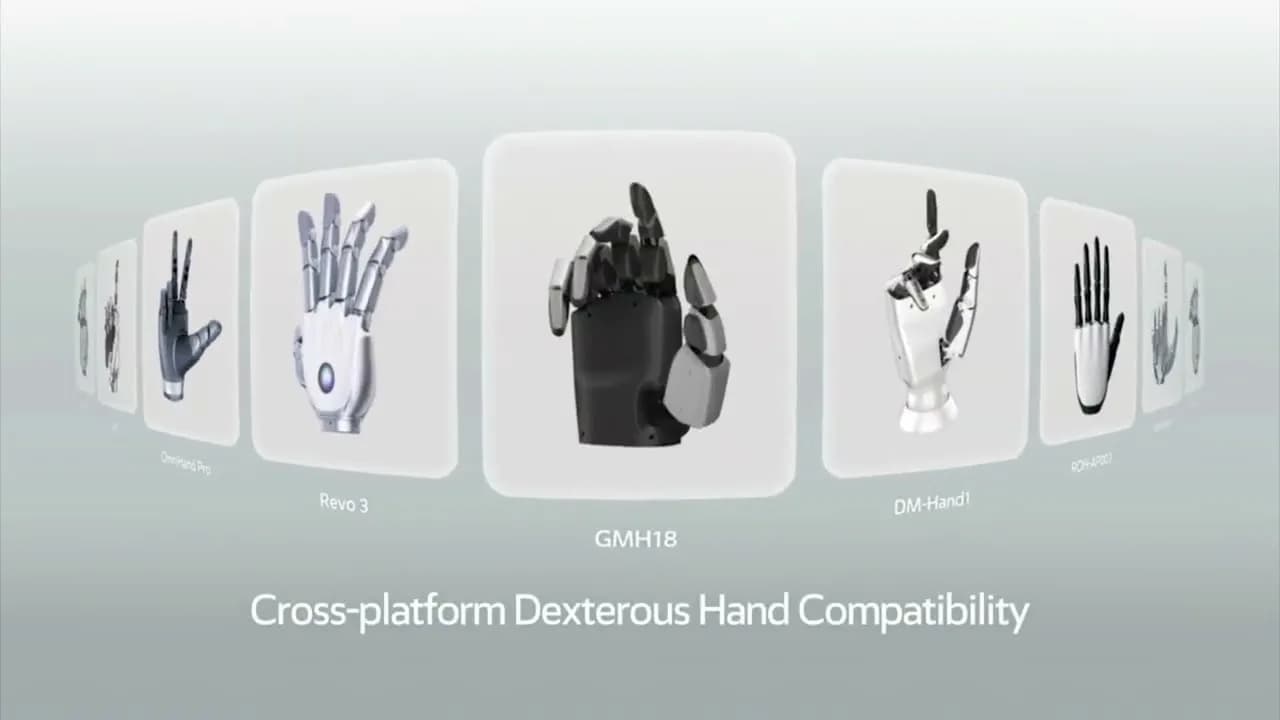
The model is designed to work across different robot bodies, including parallel-gripper arms, dexterous five-fingered hands and humanoids. NVIDIA says it can learn from human videos, handheld grippers, and demonstrations collected using other robots.
In tests involving 50 tasks that were not demonstrated on the target robot, GR00T 2 achieved a 40 percent average success rate without task-specific training. Providing five demonstrations for each task raised the average to 95 percent following a 30-minute fine-tuning session on a single NVIDIA RTX 5090 graphics card.
The demonstrations required less than three minutes of robot data per task.
Robots learn from human demonstrations
NVIDIA calls the approach cross-adaptation, or X-Adapt. It allows a robot to transfer skills from demonstrations performed using a different body or device.
In one experiment, researchers showed a robot how to line a laboratory funnel with filter paper and wet it using a wash bottle. The demonstration was performed only by a human, without teleoperating the target robot. The five-fingered robot completed the task successfully in 65 percent of trials.
In another test, a handheld Universal Manipulation Interface (UMI) gripper demonstrated how to assemble a toy dump truck. A different robot arm, called YAM, then completed the assembly in 60 percent of trials, despite never receiving a task-specific demonstration.
Researchers also used a wearable device that mirrors the movements of a person’s fingers to teach a robot hand two-handed tasks. These included preparing banana yogurt and scooping granola, as well as striking a match to light a lamp.
The model’s training combines 402,730 hours of first-person human video, 10,184 hours of handheld-gripper demonstrations and 23,500 hours of robot teleoperation data. NVIDIA says 100,000 hours of its Human-1M dataset are openly available.
Reasoning models direct robot actions
GR00T 2 can also work with reasoning models that break complex tasks into steps, monitor progress, and direct the robot through an application programming interface.
In tests involving three toy assemblies, this approach completed at least 97 of 100 trials for each toy. The system could recover from errors and interruptions during the process.
A visual-steering feature also lets a reasoning model mark where a robot should grasp and release an object. This raised success on short tasks involving what to move and where from 40 percent to 92 percent on YAM.
NVIDIA has also developed GR00T 2 Turbo, a smaller version designed for faster execution on a humanoid. It runs directly on the Unitree G1 using an onboard Jetson Thor processor, with each prediction taking 124 milliseconds.
Through a whole-body controller, the humanoid completed popcorn-serving tasks in all 48 trials and cleared a table of different objects in 93 percent of trials.
NVIDIA introduced GR00T 2 at the Conference on Robot Learning in Austin, Texas, on November 9. The company says the model is intended to help robots move beyond narrowly trained actions towards more adaptable manipulation in industrial and everyday settings.
Get the latest news delivered to your inbox.
Related articles