Russia’s fast nuclear reactor powers up on its own spent fuel in a world first
A commercial nuclear reactor in Russia has begun generating power using fuel recovered from its...
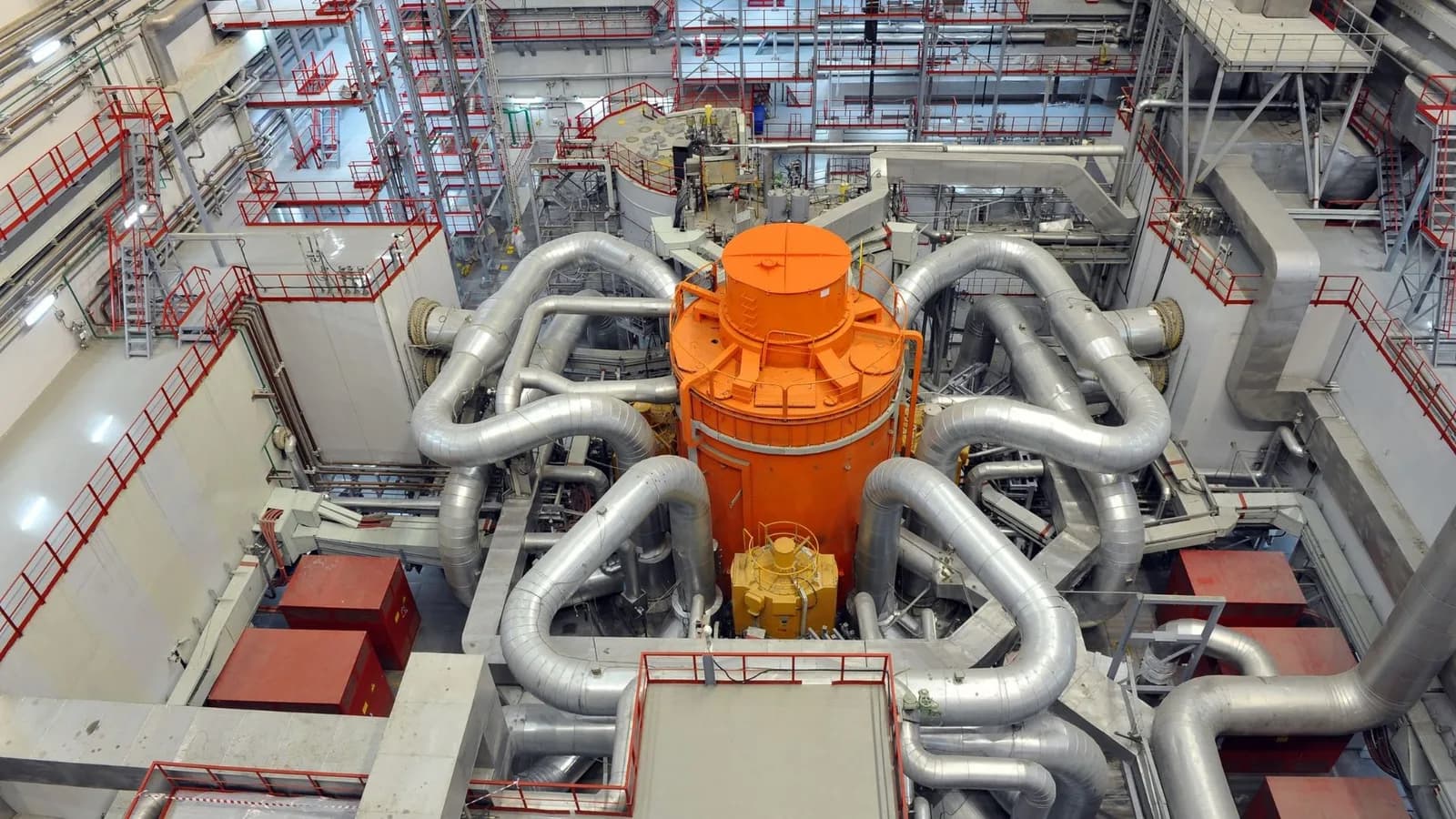
A commercial nuclear reactor in Russia has begun generating power using fuel recovered from its own spent fuel, marking a global milestone in closed-cycle nuclear engineering.
Engineers at Unit 4 of the Beloyarsk Nuclear Power Plant loaded fresh uranium-plutonium mixed oxide (MOX) fuel into the BN-800 fast-neutron reactor. Unlike standard nuclear fuel, the plutonium in these assemblies was extracted from an irradiated MOX fuel assembly that had already completed a full operational cycle in that same unit.
By feeding recycled material back into its reactor of origin, Russia’s state nuclear corporation, Rosatom, has demonstrated full technological readiness for a closed nuclear fuel cycle.
To make this loop practical on an industrial scale, specialists overhauled how plutonium is extracted from spent fuel. The team used an optimized recovery method that reduced the total number of chemical processing steps without degrading fuel quality.
Fewer processing stages lower production costs and simplify complex fuel fabrication. All loading operations met the licensing standards of Russia’s nuclear regulator, Rostechnadzor.
Physics of multi-cycle recycling
The physics inside fast-neutron reactors makes this self-sustaining loop possible. During reactor operation, neutron irradiation converts non-fissile uranium-238 into new plutonium. When spent assemblies are removed, operators can separate that newly formed plutonium and manufacture fresh MOX fuel for the same unit.
Until now, engineers have validated only a single-stage recycling process. In earlier operations, spent fuel from conventional thermal reactors was reprocessed into fast-reactor fuel just once, stopping short of a second cycle. Repeating the recovery loop indefinitely removes natural uranium supply limits and turns nuclear power into a virtually inexhaustible energy source.
“Today, in closing the nuclear fuel cycle around fast reactors, we have moved from theory to practice,” said Rosatom Director General Alexey Likhachev. “By overcoming this next technological milestone, we are proving the viability of a ‘renewable’ nuclear energy model. It will allow us to meet growing electricity demands without a proportional increase in the strain on natural resources or in radioactive waste volumes.”
Likhachev said the BN-800 breakthrough directly supports upcoming Generation IV reactors, which international nuclear bodies—including the IAEA—define by superior fuel efficiency, enhanced safety, and reduced waste.
Closed fuel cycle on a single site
Russia has started pre-project work for a larger, serial BN-1200M unit at Beloyarsk slated for the next decade. Meanwhile, construction is underway in the Tomsk Region on the BREST-OD-300 plant, the world’s first facility integrating a reactor and closed fuel cycle on a single site.
This technology arrives as global nuclear expansion threatens to strain raw materials. While an IAEA projection shows global nuclear capacity more than doubling to 890 GW by 2050, OECD analysts warn that roughly eight million tons of proven uranium reserves could run out between 2060 and 2090.
Beyond conserving uranium, fast reactors also shrink long-term nuclear waste. In May 2026, three trial MOX assemblies containing americium-241 and neptunium-237 finished three irradiation campaigns in the BN-800.
These minor actinides make up a tiny fraction of spent fuel mass but remain dangerously radioactive and hot for hundreds of thousands of years. Fast neutrons transmute them into stable or short-lived isotopes, allowing waste to match the radioactivity of natural uranium ore hundreds of times faster than through natural decay.
Get the latest news delivered to your inbox.
Related articles