
Scientists use Pompeii’s exact eruption date to make volcano dating far more precise
Roman writer Pliny the Younger left behind the only firsthand account of Mount Vesuvius’ eruption...
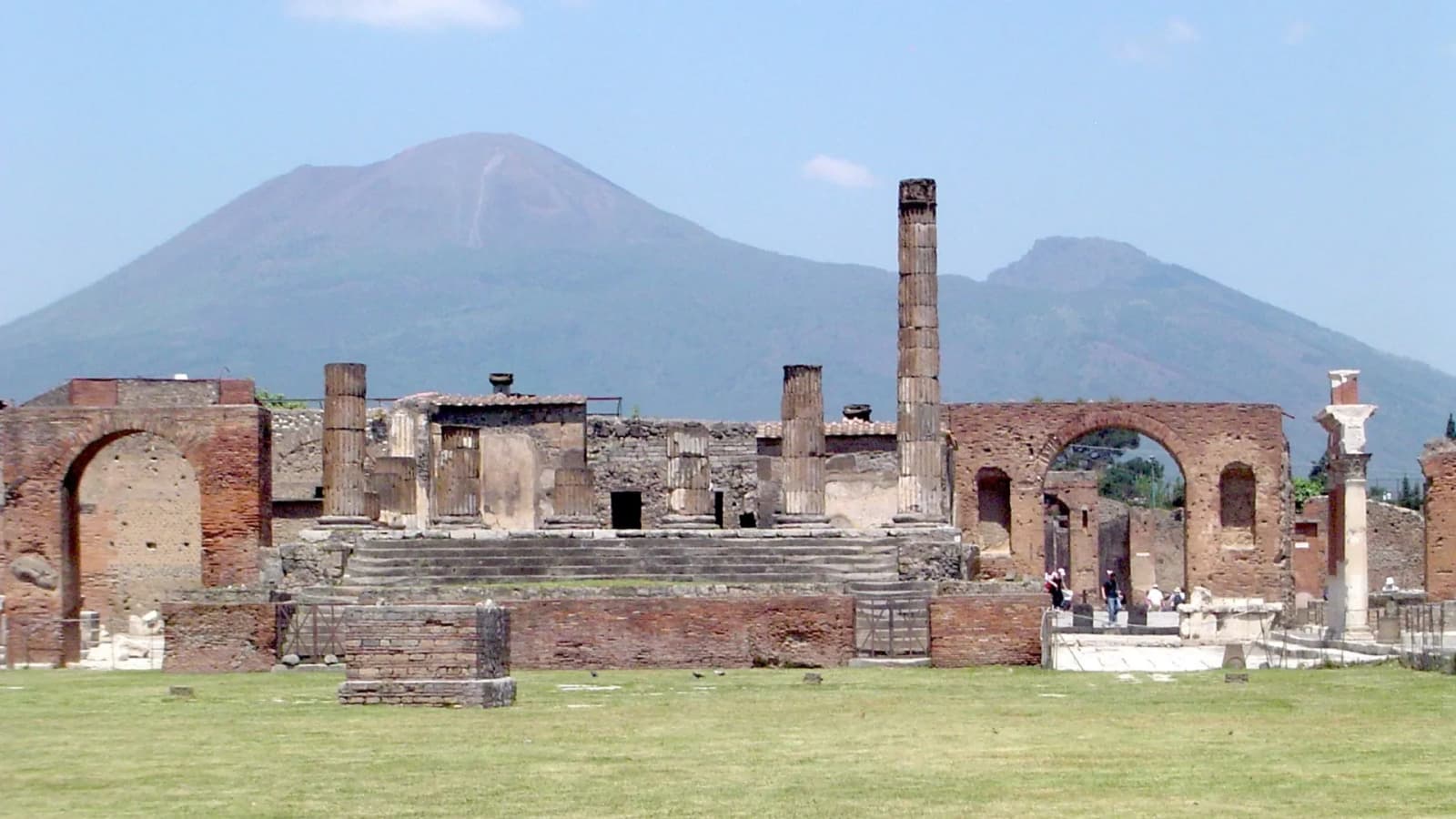
Roman writer Pliny the Younger left behind the only firsthand account of Mount Vesuvius’ eruption nearly 2,000 years ago, a disaster that buried Pompeii and killed his uncle, Pliny the Elder. His detailed record of the date has now helped scientists sharpen one of geology’s most important dating techniques.
Researchers from the Berkeley Geochronology Center, the University of California, Berkeley, and the University of Padua in Italy report that argon-argon dating, calibrated against the inferred eruption date of Aug. 24, 79 CE, has become significantly more precise. Study leader Paul Renne, who directs the Berkeley Geochronology Center, said the technique can now infer causality between geologic events far more precisely than before.
A sharper measuring tool
The improved method could help scientists attach more accurate dates to volcanic eruptions and other geologic events of the past, including the eruptive histories of volcanoes that still threaten crowded cities such as Mexico City, Naples and Yogyakarta, Indonesia. It should also help validate other dating techniques, including carbon-14 dating of organic material and uranium-lead dating of rocks billions of years old.
Researchers tested the recalibrated method on eight samples of sanidine, a potassium-rich volcanic mineral, collected from Vesuvius. The analysis dated the eruption to 1,938 years before the 2025 measurement, plus or minus 13 years, against a true age of 1,946 years based on historical records, a precision of 0.7% and an accuracy of 0.4%.
Solving a historical puzzle
Graduate student Caroline Hasler helped narrow the historical timeline further, confirming the traditionally cited Aug. 24 eruption date to within about two months. That narrower window let researchers calculate a more precise half-life for the radioactive decay of potassium-40 into argon-40, the process argon-argon dating relies on. The new figure, 12.044 billion years, plus or minus 0.088 billion, is roughly twice as precise as the value previously derived from nuclear physics alone.
The breakthrough traces back to pumice samples collected in 1998 near Oplontis, another Roman town buried by the eruption. Co-author Andrea Marzoli gathered unusually potassium-rich material from the earliest stage of the eruption, but the samples sat unanalyzed for decades until a group of graduate students, working under postdoctoral researcher Jack Carter in Renne’s lab, decided to revisit them using improved lab instruments.
Building on past work
Hasler also had to resolve a lingering historical dispute over the eruption’s timing. Some historians had argued for a later date in the fall of 79 CE, based on a coin found at Pompeii that they believed could only have been minted in September. Comparing the coin with other Roman currency from the period, Hasler concluded it was more likely struck before that month.
Renne said the improved precision builds on earlier work using argon-argon dating to pin down the timing of a meteor impact, volcanic activity in India, and the mass extinction of non-avian dinosaurs roughly 66 million years ago. He added that the technique remains a key calibration standard against which other geologic dating methods can be measured.
The research was published in the journal Science Advances.
Related articles

Decap is the man behind the drums behind your favorite song
I don't think I'm going to hurt anyone's feelings by pointing out that Decap doesn't have the name recognition of Kendrick Lamar, Olivia Rodrigo, or Charli XCX.

Kids turned the comment section of an NPR podcast into a group chat
Middle schoolers, likely blocked from other apps and social networks, apparently turned the Spotify comment section under an episode of NPR's Wild Card into an impromptu group chat.

Gaming’s biggest horror series are more vital than ever
For the third year in a row, I've been scared out of my wits by a new Silent Hill game. First it was the modern remake of Silent Hill 2, then the Japan-set spinoff Silent Hill F.
Caught on camera: How smart home devices are reshaping courtroom evidence law
A Taiwanese man used footage from his family’s robot vacuum to catch his wife in...