US scientists test atomic-layer coatings to make industrial parts last longer
A Lehigh University team has received a $680,000 National Science Foundation (NSF) grant to test...
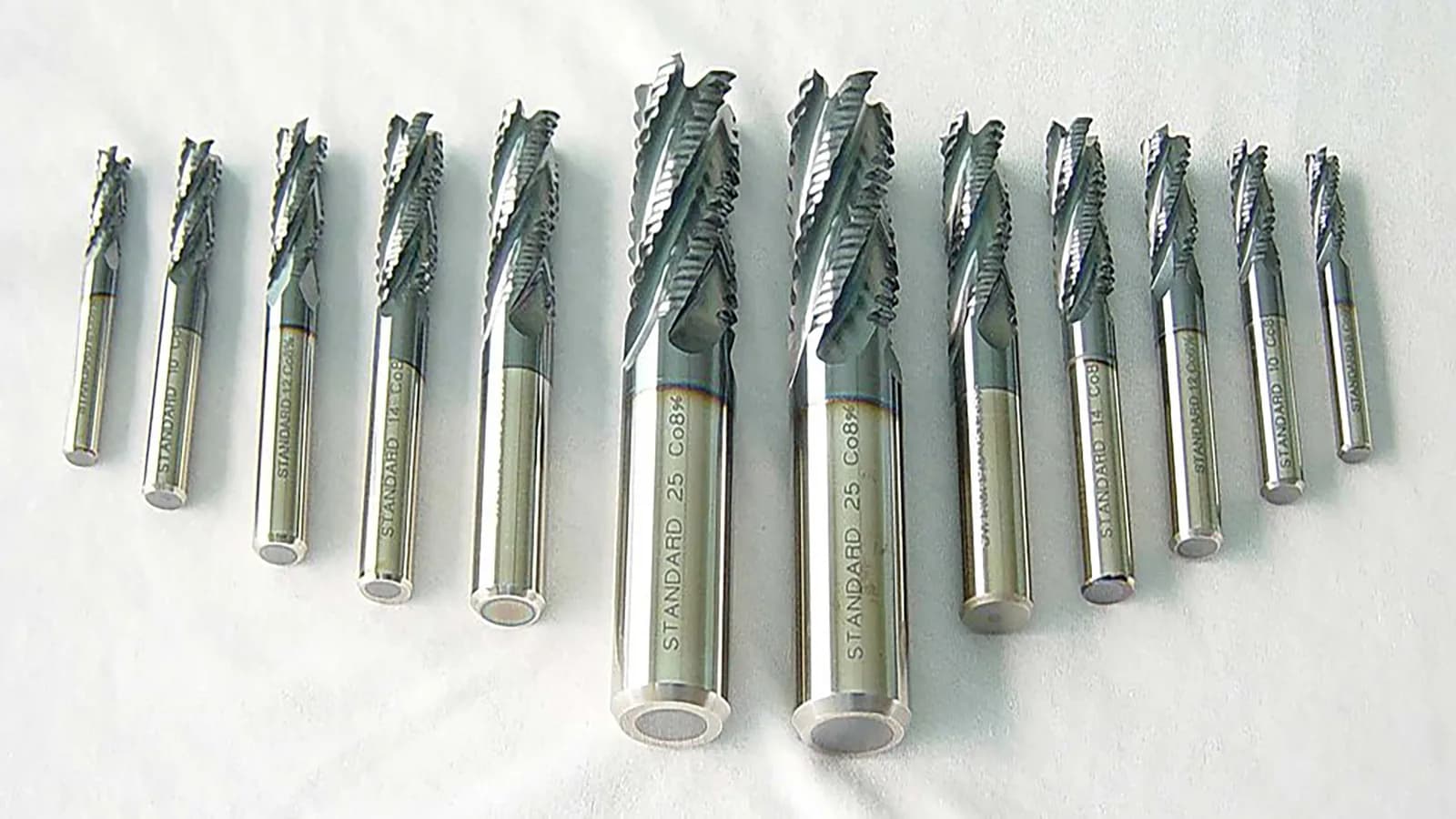
A Lehigh University team has received a $680,000 National Science Foundation (NSF) grant to test whether ultrathin nitride coatings, built one atomic layer at a time, can better resist friction and wear, according to a university release.
Friction wears down surfaces and protective coatings on moving parts such as industrial cutting tools and microscopic mechanical switches, leading to repairs and replacements, the university said. Longer-lasting coatings could extend device life and cut maintenance costs, but making them both extremely durable and practical to apply remains a challenge.
Nicholas Strandwitz, a professor of materials science and engineering at Lehigh, leads the project. The team includes Brandon Krick, a professor at Florida State University who previously taught at Lehigh, and industry partner Veeco-CNT. They will study transition metal nitrides, a class of materials, and examine how structure and chemical composition affect mechanical properties. The partners previously worked together on NSF-funded research into titanium and vanadium nitride coatings.
Building coatings one layer at a time
The team will use plasma-enhanced atomic layer deposition (PEALD), which uses reactive plasma to deposit material one atomic-scale layer at a time, Lehigh’s release said. The process allows precise control of film thickness and composition, even on complex shapes, and can run at lower temperatures than some other coating methods, Lehigh said. That could widen the range of materials and devices that benefit. No film thicknesses, deposition temperatures or timeline were given.
Strandwitz said PEALD, compared with other techniques, “enables a huge amount of control over the growth process.” Argonne National Laboratory researchers applied candidate protective coatings by atomic layer deposition in solid-state battery research. Other labs have also pursued wear resistance in metals, such as a platinum-gold alloy Sandia National Laboratories reported in 2018.
Veeco-CNT, which makes the equipment used to grow the films, will produce the thin films. Strandwitz’s lab will study the films’ chemical, physical and structural makeup, and Krick’s lab will test their mechanical properties.
Two tests and what remains unproven
The first test uses superlattices, structures of alternating layers of different materials. The team will make vanadium nitride and titanium nitride samples, from one to 100 atomic layers of each, to see how layer thickness affects hardness and wear resistance. Strandwitz said the theory is that some layer spacings give enhanced mechanical properties.
The second test combines up to four transition metals. Such compositionally complex materials, which mix several metals and include high-entropy materials, can show enhanced hardness, toughness and thermal stability, the release said.
No test results have been reported, so any gain in wear resistance is unproven for these films. Strandwitz said superlattice spacings and high-entropy compositions have been explored, but not with atomic layer deposition, and questions remain about whether such compositions can be made with PEALD.
According to the university, the findings could eventually lead to more durable coatings for vehicle brake pads and cell phone screens. Strandwitz said PEALD could suit microelectromechanical systems (MEMS), tiny devices that pair mechanical parts with electronics. Lehigh University published the release Nov. 16.
Source: https://interestingengineering.com/science/lehigh-wear-friction-nitride-coatings
Get the latest news delivered to your inbox.
Related articles