1,200 mph F-35C jet makes first arrested landing on 100,000-ton US Navy aircraft carrier
Lockheed Martin’s F-35C Lightning II has completed its first shipboard launch and recovery trials aboard...
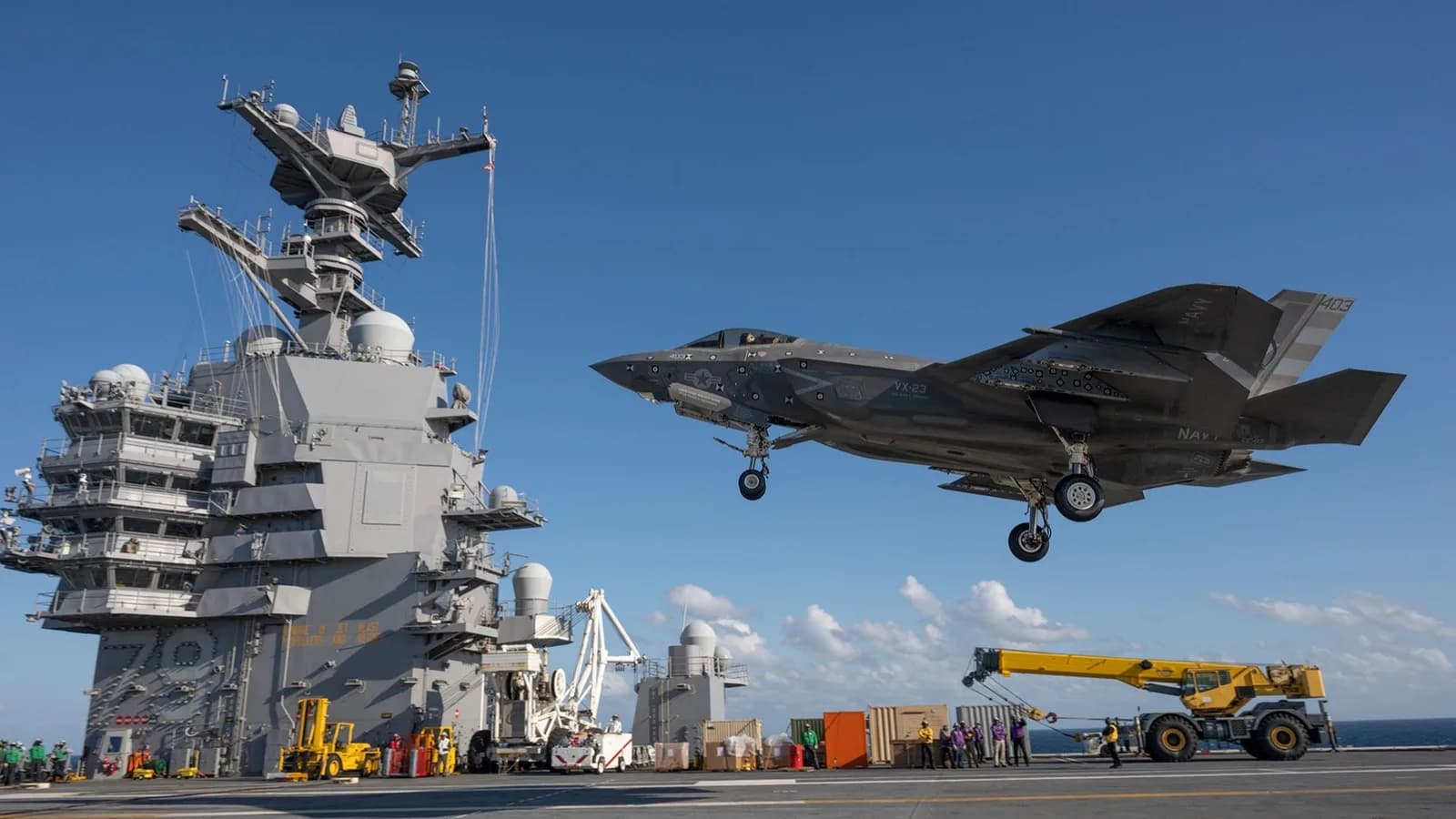
Lockheed Martin’s F-35C Lightning II has completed its first shipboard launch and recovery trials aboard the U.S. Navy’s newest aircraft carrier, USS John F. Kennedy (CVN 79). The tests mark a major step toward integrating the fifth-generation fighter with the Navy’s Ford-class fleet.
Two F-35C aircraft from Naval Air Station Patuxent River, Maryland, participated in the 11-day evaluation. They conducted 34 flights, including 122 catapult launches and 122 arrested landings. The trials took place aboard the carrier on Oct. 13, the Navy’s 251st birthday.
The evaluation examined how the carrier’s launch and recovery equipment handles the F-35C. It also generated engineering data needed to support future flight operations across the Navy’s newest carrier class.
Testing Ford-class flight systems
The USS John F. Kennedy introduces a different flight deck environment for carrier-based aircraft. Its electromagnetic launch system replaces the traditional steam catapults found aboard older American carriers.
Known as the Electromagnetic Aircraft Launch System (EMALS), the technology uses controlled electromagnetic force to accelerate aircraft along the flight deck. It allows operators to adjust launch settings to accommodate different aircraft weights and operating conditions.
Recovering aircraft presents another engineering challenge. The carrier uses the Advanced Arresting Gear (AAG), which replaces conventional hydraulic arresting equipment. The system captures incoming aircraft using arresting wires and controls the forces involved during landing.
Ford-class carriers also feature a redesigned island and flight deck. These changes affect airflow, engine exhaust patterns, and the movement of personnel and aircraft. Consequently, the Navy needed to evaluate how the F-35C would perform within this different operating environment.
Trials generate critical engineering data
The shipboard evaluation followed shore-based testing conducted between January 2024 and May 2025. Engineers used the latest sea trials to examine the interaction between the aircraft and the carrier’s launch and recovery systems.
Testing covered EMALS and AAG software, along with their shipboard installations. Engineers also collected measurements to validate the F-35C’s structural models and aircraft loads during launches and recoveries.
The findings will help the Navy prepare Aircraft Launch Bulletins and Aircraft Recovery Bulletins. These documents establish the technical parameters crews need when operating aircraft from specific carrier classes.
Engineers also assessed the stability of the fighter’s mission systems software. The evaluation included initial use of Block 4 software in a carrier environment. Another objective involved examining aircraft support requirements aboard the new carrier.
Sean Jackson, Lockheed Martin’s vice president of the F-35 Development Program, described the trials as a critical milestone. He said the evaluation demonstrated the fighter’s ability to launch and recover from a Ford-class flight deck.
Expanding carrier operations
The successful evaluation clears the F-35C for operations across the Navy’s entire aircraft carrier fleet, according to Lockheed Martin. The result expands the fighter jet’s compatibility beyond the carrier classes already supporting its operations.
The F-35C features reinforced landing gear, larger wings, and folding wingtips. These modifications distinguish the carrier variant from the F-35A and short-takeoff-and-vertical-landing F-35B.
Its stealth characteristics and sensor systems also give carrier strike groups access to fifth-generation combat capabilities. The aircraft can share battlefield information with other platforms during joint and maritime operations.
With the USS John F. Kennedy trials complete, the Navy has another important step toward operating the F-35C from its newest generation of aircraft carriers.
Source: https://interestingengineering.com/military/f-35c-first-arrested-landing-uss-john-f-kennedy
Get the latest news delivered to your inbox.
Related articles