2,200-year-old Roman ship’s 10 coating samples reveal clues to repairs across regions
Scientists from France and Croatia analyzed the waterproof coating of a 2,200-year-old Roman ship and...
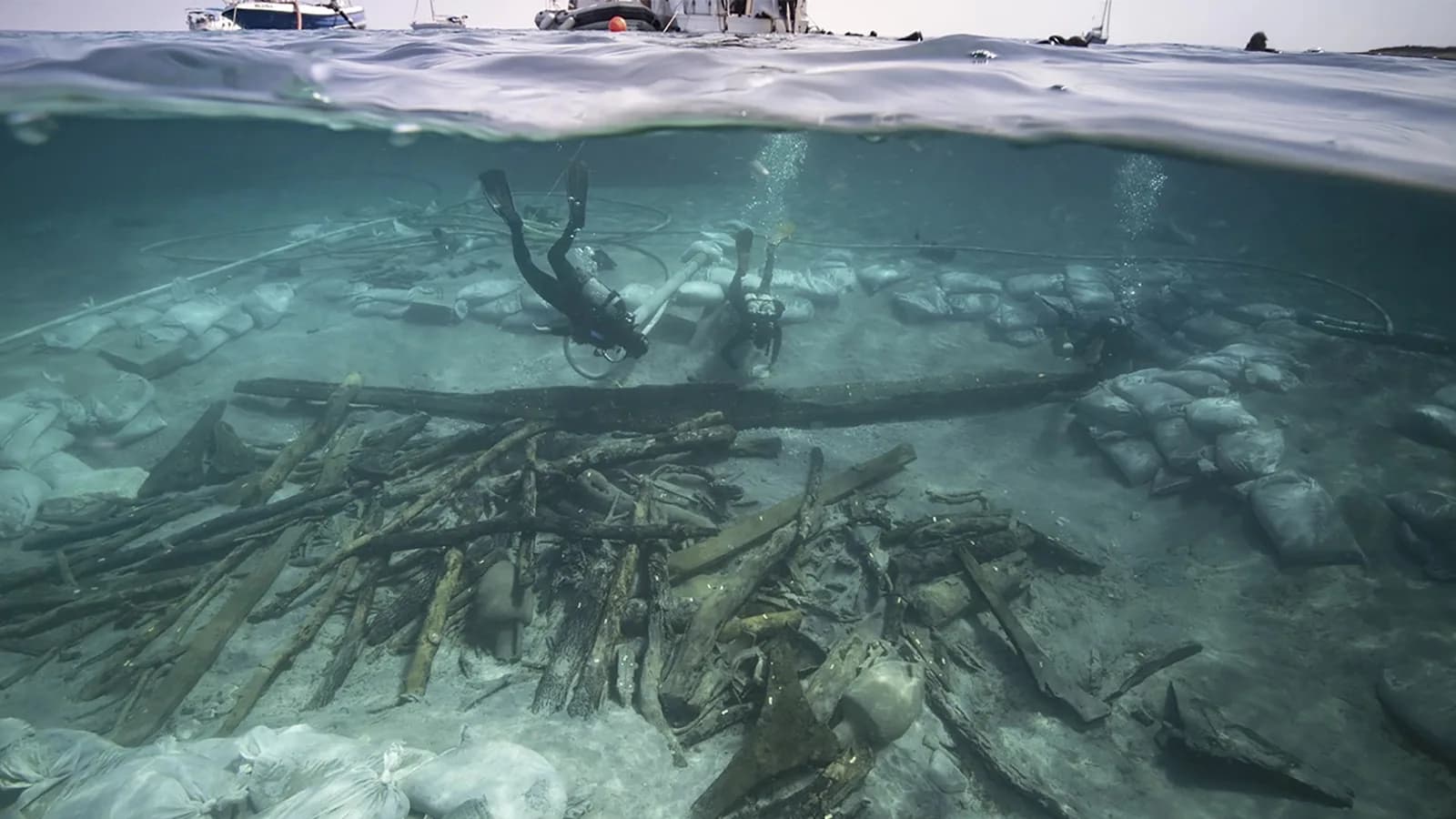
Scientists from France and Croatia analyzed the waterproof coating of a 2,200-year-old Roman ship and say pollen trapped in it suggests the vessel may have been repaired at multiple places along its route, according to a paper in Frontiers in Materials and a release from its publisher.
The ship was called Ilovik-Paržine 1 and was found off Ilovik Island in Croatia in 2016, about 13 feet (4 meters) underwater. Based on radiocarbon dating and the style of the clay jars the ship carried, the paper dates its construction to around 170 B.C.
Ten samples were taken from the thick coating brushed onto the hull’s inside and outside. Molecular tests on seven, including mass spectrometry, which identifies substances by the mass of their molecules, found markers of heated conifer resin or wood tar, also called pitch. Pollen was counted in all 10.
Pitch, beeswax and pollen
One bow sample also held markers of beeswax, which the paper reads as pitch mixed with wax. Wax makes the coating more flexible and easier to apply hot, according to Frontiers‘ release. The paper matches the blend to zopissa, a pitch-and-wax mix attributed to Greek shipbuilders.
Pitch is sticky and can trap and preserve pollen, the release said. The pollen pointed to forests of holly oak and pine, olive and hazel shrubland, alder and ash from waterside areas, and small amounts of fir and beech typical of mountains. Statistical analysis suggested four to five coating batches. In one analysis, the stern and middle looked alike while the bow held three distinct batches.
The seven stern and middle samples corresponded with pollen records from Apulia, the Italian region that includes Brindisi. An earlier study of the ship’s ballast, the heavy stones carried for stability, placed its construction near that port. The three bow samples may come from elsewhere, the paper said, two possibly near Narona, an ancient Croatian port.
Pollen “has been very useful in identifying different coatings” whose molecular profiles were identical, said Armelle Charrié-Duhaut, an archaeometrist, or scientist who analyzes archaeological materials, at Strasbourg University, according to the release.
What will follow
The repair locations are not a direct measurement. They are the scientists’ inference from pollen and statistics, and they assume the pollen was trapped when the pitch was made or applied. The paper says the batches reflect either successive repairs or materials from different sources used during construction or refitting. It calls the pollen results behind its location hypotheses preliminary.
Grain counts ranged between eight and 236 per sample, and the authors note that pollen studies of ship coatings are still rare and data for statistical approaches are lacking. Only the beeswax sample carried a chemical marker that confirmed pitch, and the authors say the conifer species and the pitch’s production site are hard to pin down with chemical markers.
The paper doesn’t name follow-up work, but its authors say the combined chemical and pollen approach opens new research fields in naval archaeology. The raw data will be made available by the authors on request, the paper said.
The study appeared April 24 in Frontiers in Materials.
Source: https://interestingengineering.com/culture/roman-shipwreck-pollen-hull-pitch-repairs
Get the latest news delivered to your inbox.
Related articles