360-year-old manuscript may reveal Galileo’s telescope work began far earlier than thought
Galileo Galilei, the Italian astronomer and physicist, helped transform the study of the heavens through...
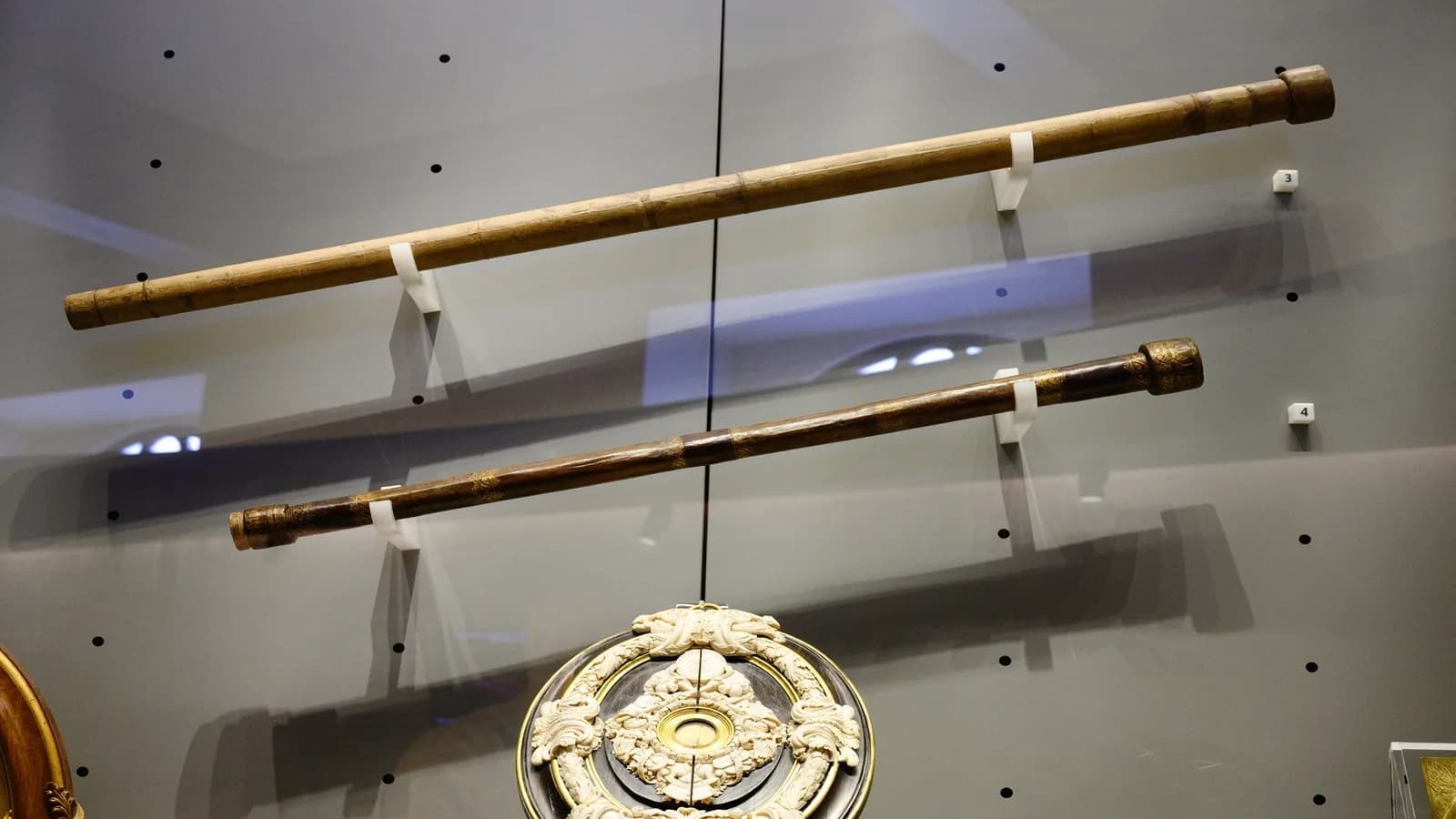
Galileo Galilei, the Italian astronomer and physicist, helped transform the study of the heavens through his pioneering use of telescopes to observe the Moon, Jupiter, and its moons.
And now, a 360-year-old manuscript may shed new light on a telescope design that Galileo could have developed decades earlier than previously believed. The document describes a four-lens instrument attributed to the Italian astronomer, with technical details that could place its construction as early as 1630.
Written in Mexico City on Aug. 8, 1666, the manuscript was penned by Dominican friar Ignacio Muñoz. It contains diagrams, measurements, and a detailed description of a terrestrial telescope designed to make distant objects appear upright.
Historian José María Moreno Madrid of the University of Limerick in Ireland examined the document and investigated the evidence behind its attribution. While the manuscript does not prove Galileo made the telescope, it offers historians a rare look at an instrument whose maker and optical design have remained uncertain.
Detailed account from colonial Mexico
The description, titled De Tellescopiis Stellarum, forms part of Muñoz’s larger manuscript, Observationes diversarum artium. It identifies the telescope as “fabricatum a Galilaeo,” Latin for “manufactured by Galileo.”
The instrument had a reverse-tapered body and four convex lenses, including an erecting eyepiece. The lenses were arranged at distances related to twice their focal lengths, producing an upright image suitable for terrestrial viewing. Muñoz recorded the telescope’s components and dimensions and included diagrams showing how they were assembled.
The examination followed a dispute over Muñoz’s scientific credentials. After proposing a nautical innovation to King Philip IV of Spain, the friar sought royal support to return home aboard the Manila Galleon. Antonio Sebastián de Toledo Molina y Salazar, the Marquis of Mancera and viceroy of New Spain, questioned his expertise and gave him the telescope to inspect.
Muñoz’s technical account became the basis of the historical investigation. His background in mathematics and astronomy also makes the detailed description noteworthy. The manuscript is now preserved in Spain’s National Library.
The attribution remains uncertain
Four-lens terrestrial telescopes are generally associated with developments around 1643 to 1645, with the design becoming more common in the decades that followed. If Galileo made the instrument described by Muñoz, it would push the earliest known experimentation with this configuration back by at least a decade.
Moreno Madrid explains the significance in his paper: “The earliest known experimentation with four-lens telescopes would have to be pushed back to 1630 at the latest and credited to him.”
One possible route for the telescope to reach Mancera involves the Spanish royal court. Records show Galileo sent three telescopes to Philip IV and his wife, although their optical designs are unknown. Moreno Madrid suggests one may later have entered Mancera’s possession.
The connection remains circumstantial. No other known document confirms Galileo made Muñoz’s instrument, and the manuscript is the only surviving account directly linking the telescope to him. The attribution could ultimately prove incorrect.
Even so, the document provides a detailed record of 17th-century telescope construction and illustrates how scientific instruments circulated among political and intellectual circles. Its value, Moreno Madrid argues, extends beyond the question of who made the telescope.
The study was published in Annals of Science.
Get the latest news delivered to your inbox.
Related articles