Autonomous crane system reaches 60 port machines, handles 26 container moves an hour
Cranes are used in ports and must often place large containers into tight slots while...
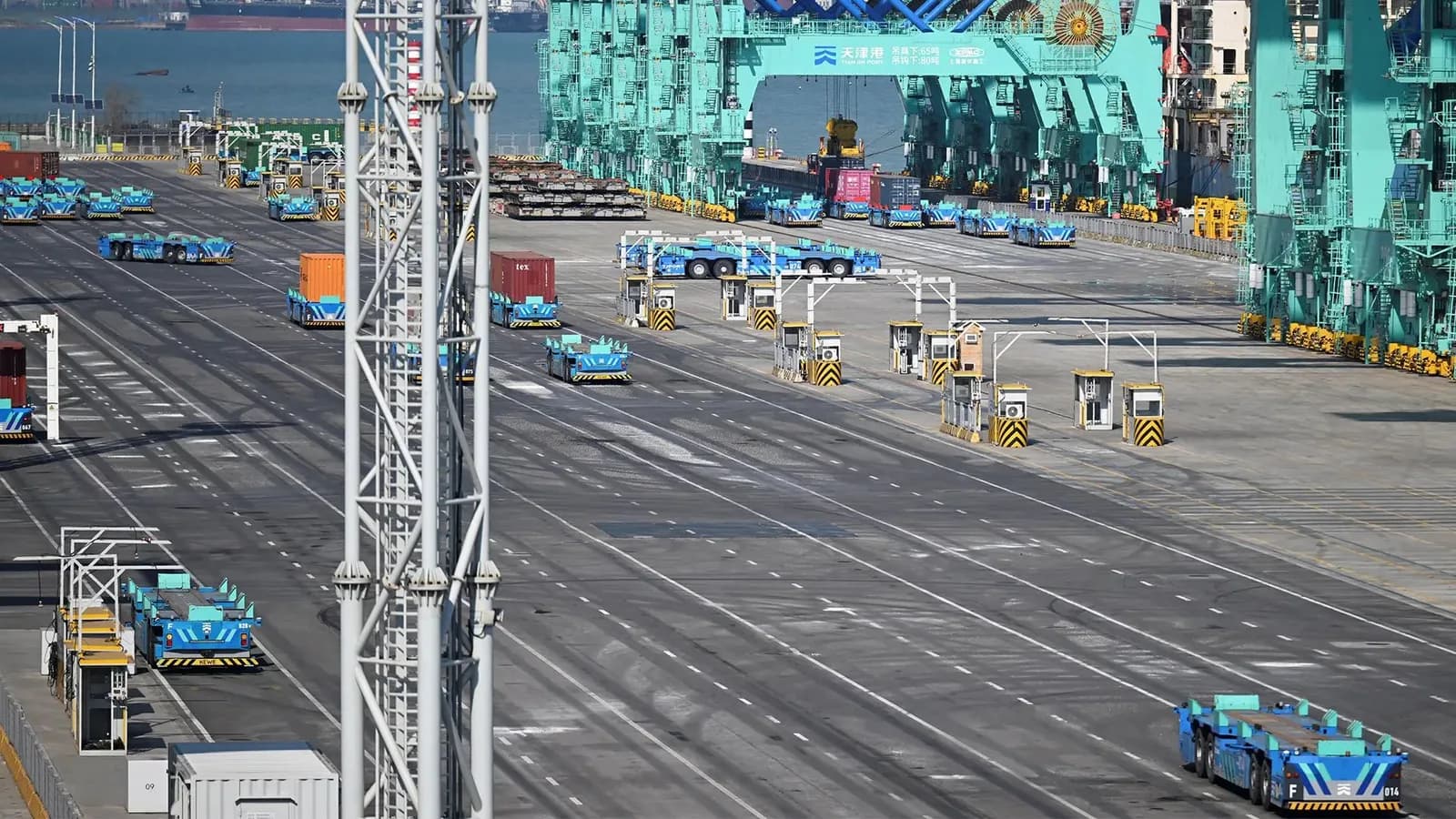
Cranes are used in ports and must often place large containers into tight slots while the crane is moving. Control must be accurate despite differing environmental factors. Scientists have created an autonomous control system called Autane, which can be applied to current cranes in order to enable them to perform such tasks.
The authors are Jun Yang, Zheng Tian, Junming Hong, Qin Rao, Jinya Su, Huan Chen and Shihua Li from the Hong Kong University of Science and Technology (Guangzhou), Southeast University and Shanghai Master Matrix Information Technology.
Autane has been designed for rubber tire gantry (RTG) cranes. These are vehicles which span several containers and can move items between warehouses and transport. Unlike new technology, Autane can be added to current port equipment.
Sensors power precision crane operations
Autane gathers data from cameras, LiDAR (light detection and ranging), global navigation satellite systems (GNSS) and inertial measurement units (IMUs). From this it can recognize where it is, analyze containers and recognize other vehicles, people and objects. Data is analyzed and merged according to the environment.
Furthermore, Autane applies a technique known as simultaneous localization and mapping (SLAM). This allows it to both recognize where it is and construct a map of its surroundings. It then utilizes this to refine a crane’s navigation and behavior. The scientists combined elements of perception, planning, control and operation/maintenance so that the crane can effectively work alongside transport.
Containers can be up to 39.4 feet (12 meters) long, but just 3.15 inches (8 centimeters) in diameter at the points used to secure them. Components must also be placed with an accuracy of 1.2 inches (3 centimeters). As containers are suspended by wires, they can be affected by wind and rain, causing them to oscillate. Nevertheless, the university says Autane can function in winds of 34 mph, in rain of 1 inch (25 millimeters) a day and with 164 feet (50 meters) of visibility.
“Autane successfully addresses the difficult problem of achieving precise sub-centimeter control of large cranes, whilst simultaneously enabling far reaching high accuracy environmental perception,” the scientists stated.
Autane delivers measurable gains in container handling
Autane has been trialed in ports in Shanghai, Ningbo, Suzhou and Hong Kong. The Hong Kong University of Science and Technology (Guangzhou) states that it has now been fitted to over 60 devices on five different (across multiple generations) crane types.
It achieved a job completion rate of 91.23%. Autane was also able to average 25.93 container relocations an hour. This was said by the university to be on a par with the skills of skilled crane drivers. Around 90% of intermittent issues can be addressed automatically by the system and there is automatic sensor re-adjustment.
To date, the university states that over 4.8 million twenty foot equivalent units (TEUs) have been processed by the port equipment fitted with Autane, with no safety issue arising. Meanwhile, the abstract of the Science Robotics paper highlights that over two million TEUs have been managed by Autane in an autonomous manner. Again, these statistics are taken from separate sources.
In an effort to limit staff’s exposure to unsafe environments, Autane is intended to manage complex crane behavior. Staff can then continue to manage port processes. The implementation of Autane therefore demonstrates how current port equipment can be enhanced with autonomy.
The research paper “Autane: An autonomous crane for sustained port operations” has been published in the journal Science Robotics.
Source: https://interestingengineering.com/transportation/autane-autonomous-control-port-cranes
Get the latest news delivered to your inbox.
Related articles