
Boeing 777 boosts hypersonic testing capacity by 35% for US defense programs
Stratolaunch is adding a Boeing 777-200ER to its hypersonic testing fleet, giving the company another...
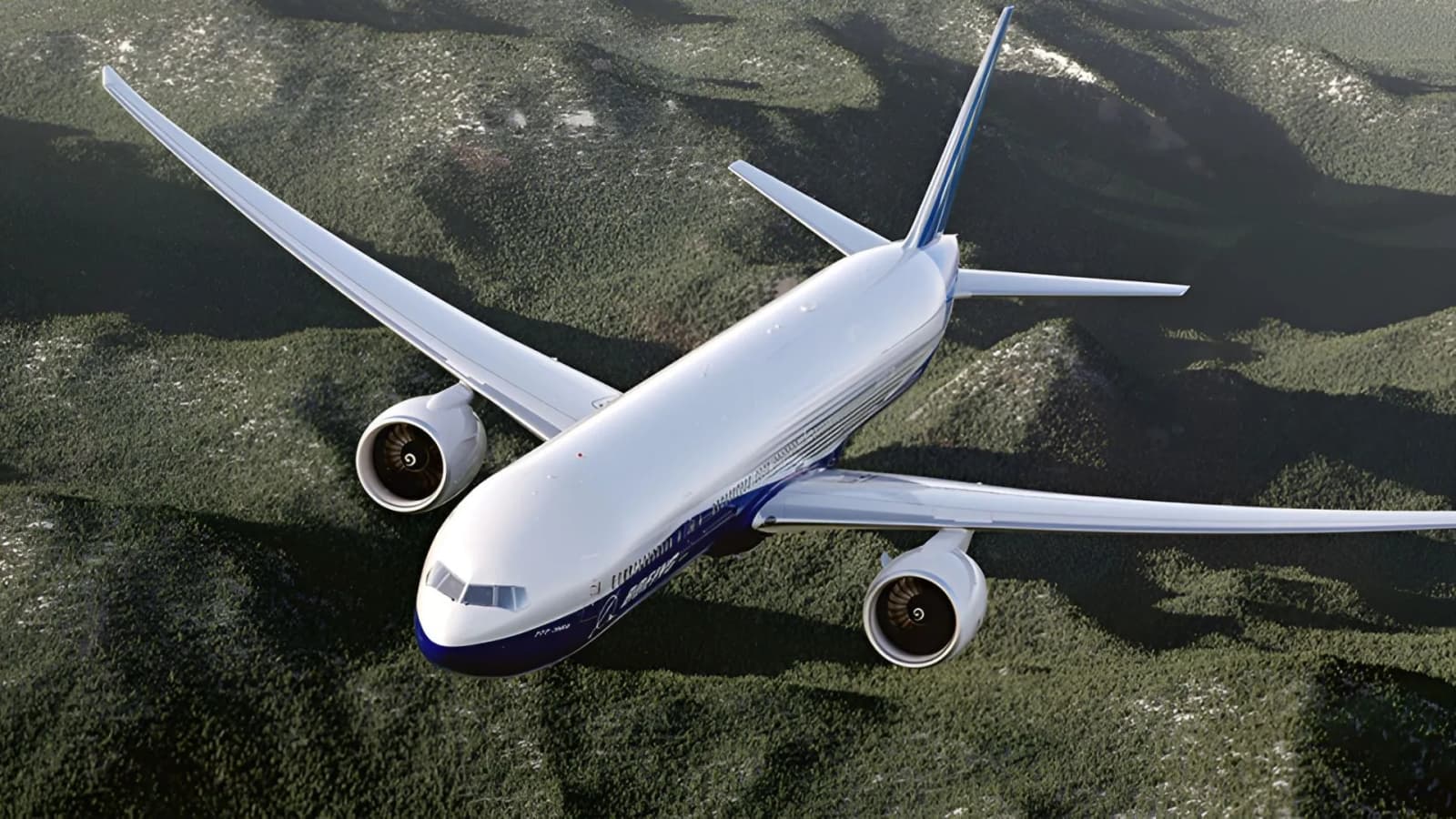
Stratolaunch is adding a Boeing 777-200ER to its hypersonic testing fleet, giving the company another aircraft capable of carrying its Talon-A vehicles into the air.
The Mojave, California-based company announced the acquisition on Sept. 30. It said the additional carrier will raise its overall flight capacity by 35 percent and expand where it can conduct missions.
The 777 will join Stratolaunch’s existing carrier aircraft, Roc and Spirit of Mojave. Engineers will modify the widebody to release Talon-A vehicles through its fuselage.
That work should finish in 2027. Once operational, the aircraft will give Stratolaunch another option for putting reusable hypersonic test vehicles into flight.
Bigger fleet for flight testing
Stratolaunch has been expanding its flight operations as demand for hypersonic testing increases. Adding another carrier could give customers more opportunities to schedule missions without relying on a single aircraft.
The company also expects the larger fleet to support operations from different locations. That matters for test programs that require specific ranges, weather conditions, or mission profiles.
Three carrier aircraft could also support parallel missions. Stratolaunch said the additional capacity will help reduce scheduling constraints and support a higher flight cadence.
The 777 brings another advantage through its size and range. Engineers can use the aircraft as a reusable first stage, carrying Talon-A to altitude before releasing it for a hypersonic flight.
That approach allows the test vehicle to begin its mission from the air. It can also help researchers collect data during flight profiles that ground-based launch systems cannot easily reproduce.
Talon-A is driving demand
Talon-A has become the centerpiece of Stratolaunch’s hypersonic testing business. The autonomous vehicle launches from a carrier aircraft and conducts high-speed atmospheric tests before returning for recovery.
Stratolaunch said it passed 10 successful hypersonic flights with Talon-A in July. The milestone came several months after the company secured a $90.8 million contract under the Department of War Test Resource Management Center’s MACH-TB program.
That award covers air-launched capability test vehicles. The program gives Stratolaunch another major avenue for supporting U.S. hypersonic development.
Zachary Krevor, Stratolaunch’s president and CEO, said the 777 will strengthen the company’s ability to meet customer demand. “As demand for hypersonic technologies continues to grow, we’re building the operational scale to make routine hypersonic testing a reality,” Krevor said.
He added that the aircraft will provide greater flexibility as Stratolaunch works to increase its testing capacity.
Another carrier enters the mix
The 777 acquisition gives Stratolaunch three carrier aircraft with which to plan future missions. That additional aircraft could become particularly useful as government and commercial programs seek more frequent flight opportunities.
Hypersonic development depends heavily on flight testing and the data collected during those missions. More available carrier aircraft can give engineers additional chances to evaluate vehicles and onboard systems under real flight conditions.
The new Boeing 777 will not enter service immediately. Stratolaunch must first complete the modifications needed to accommodate Talon-A and its air-launch requirements.
Its planned 2027 completion will mark another step in the company’s effort to expand its testing infrastructure. Once the aircraft joins the operational fleet, Stratolaunch will have more room to schedule missions and respond to customers seeking additional hypersonic flight data.
Related articles

Vivo’s X Fold 6 accidentally feels like a throwback
It's a quirk of the release calendar that when Vivo's X Fold 6 launched in China this June, it was just another foldable.

Elon Musk’s Grokipedia has a ‘newly refreshed’ design
Grokipedia, SpaceXAI's AI-powered competitor to Wikipedia, recently started incorporating edits again, and today, it got some design tweaks as part of a v0.
Quantum technology could transform the way we detect radio signals with more sensitive RF sensors
A new agreement signed between an American institue and an Australian university is set to...
Light-based processor aims to tackle power, bandwidth limits of electronic GPUs
Q/C Technologies, a San Francisco-based developer of optical computing systems, is teaming up with a...
High-tech computing capabilities to be tested in lunar orbit for future data centers around moon
A new commercial payload agreement will demonstrate advanced AI computing capabilities in lunar orbit. Starcloud...

Humanoid robot fleet decommissioned in wild Terminator-style leap into molten steel
Figure has gone full Terminator with its retired humanoid robots, sending them into a vat...