China debuts domestically built 4,000-kilowatt rescue ship with 360-degree propulsion
China has completed its first batch of five domestically designed medium-sized maritime rescue vessels, strengthening...
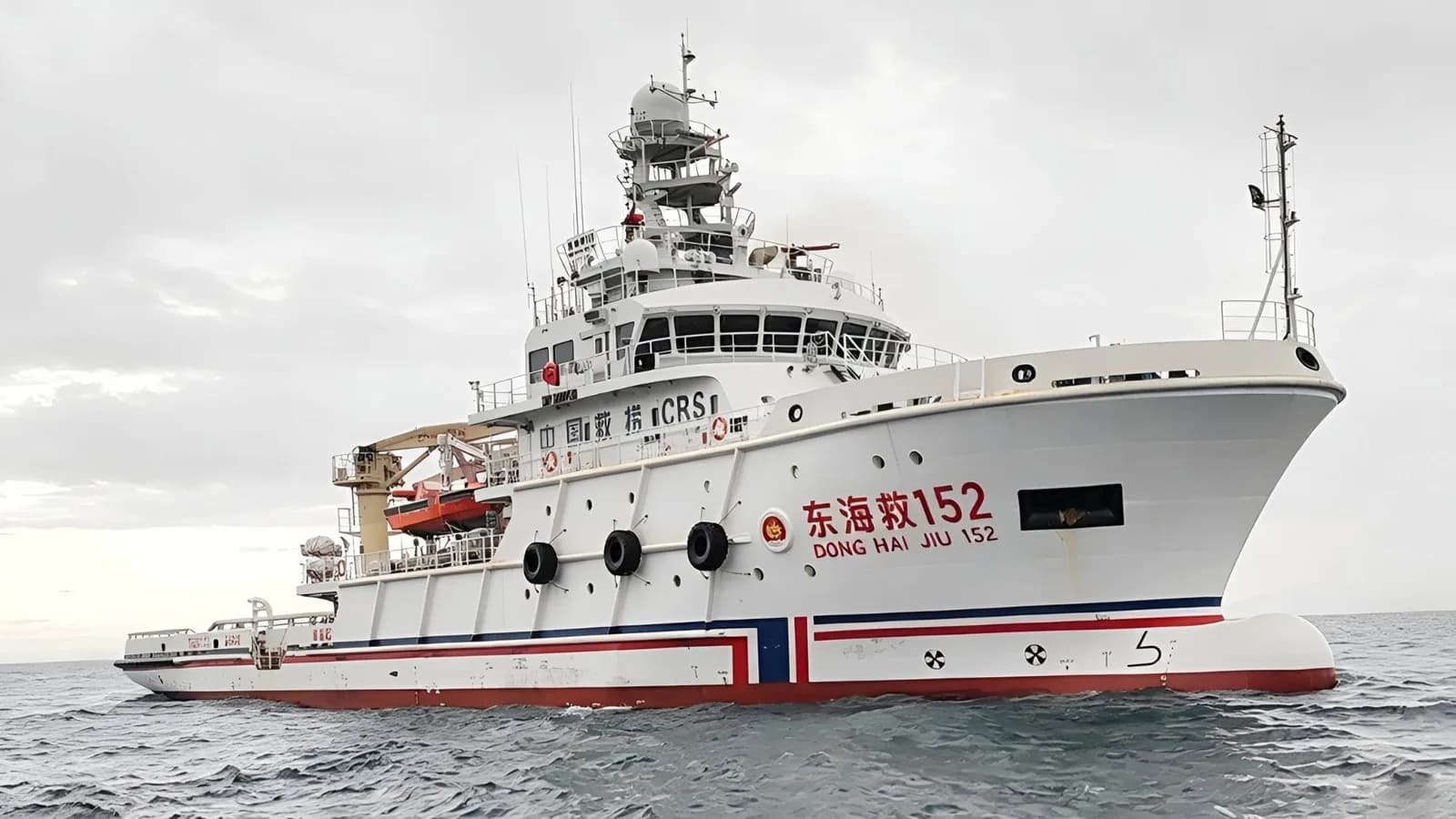
China has completed its first batch of five domestically designed medium-sized maritime rescue vessels, strengthening its ability to respond to emergencies along its coastline. The final vessel, Donghai Jiu 152, officially joined the Ministry of Transport’s Donghai Rescue Bureau on November 13, 2026.
The 4,000-kilowatt vessel brings several specialized capabilities to China’s eastern coastal waters. Its propulsion and positioning systems allow crews to operate in challenging maritime conditions. The ship can also support rescue missions involving large numbers of survivors.
The delivery marks the end of a nearly seven-year procurement program. China delivered the first vessel, Donghai Jiu 151, in December 2019.
Designed for coastal emergencies
Measuring 69.5 meters (228 feet) long and 14.6 meters (48 feet) wide, Donghai Jiu 152 targets rescue operations across China’s eastern waters. Its hull and onboard systems accommodate demanding conditions along exposed coastlines.
The vessel can withstand strong winds and carries an external firefighting system. It also has enough capacity to accommodate up to 100 rescued people. That capacity gives rescue crews additional flexibility during large-scale maritime emergencies.
Its equipment also supports operations beyond conventional search and rescue missions. An advanced azimuthing electric propulsion system provides precise maneuverability. This setup helps the vessel navigate confined waters and maintain control during demanding operations.
A Class 2 dynamic positioning system (DP-2) further expands its operational capabilities. The system helps the ship maintain a designated position without relying entirely on conventional anchoring. Such technology proves particularly useful when crews conduct operations near islands, reefs, or other difficult coastal terrain.
Electric propulsion improves control
Dynamic positioning plays an important role in modern offshore and maritime operations. DP-2 systems use computerized controls to coordinate propulsion and maintain a vessel’s position. They can compensate for external forces such as wind, waves, and currents.
Donghai Jiu 152 also carries a three-point anchoring arrangement. Captain He Feng said the system helps the vessel remain stable in shallow water. It can maintain that position under Sea State 3 conditions, according to CCTV News.
That capability supports diving operations, which require a relatively stable working platform. Maintaining position in shallow water can prove difficult when currents and changing weather affect a vessel. The additional anchoring arrangement gives the crew another way to manage those conditions.
Seven-year construction program
China began receiving the first vessel in this series in December 2019. The Donghai Rescue Bureau took delivery of Donghai Jiu 151 on December 25 that year. The vessel established the foundation for four subsequent ships.
In December 2022, China State Shipbuilding Corporation (CSSC) signed contracts for four additional vessels. The shipbuilder developed the new designs using Donghai Jiu 151 as their foundation.
The subsequent vessels also incorporated upgrades to digital systems and network connectivity. These improvements aim to support better coordination during maritime rescue operations.
Completing the five-vessel program gives China’s rescue authorities additional coverage across nearshore waters. The broader emergency response network combines vessels of different sizes with maritime, land, and aerial resources. Together, these assets help authorities coordinate operations across varying distances and rescue scenarios.
The new fleet also addresses a gap in China’s nearshore emergency response capabilities. Its medium-sized vessels can handle missions that may demand more capacity than smaller rescue boats provide. Their specialized equipment also allows crews to tackle operations in challenging coastal environments.
Source: https://interestingengineering.com/military/china-electric-propulsion-rescue-fleet
Get the latest news delivered to your inbox.
Related articles