China makes 99.9999% pure hydrogen chloride to boost domestic chip production
A single stray impurity or molecule can ruin an entire batch of microchips. To prevent...
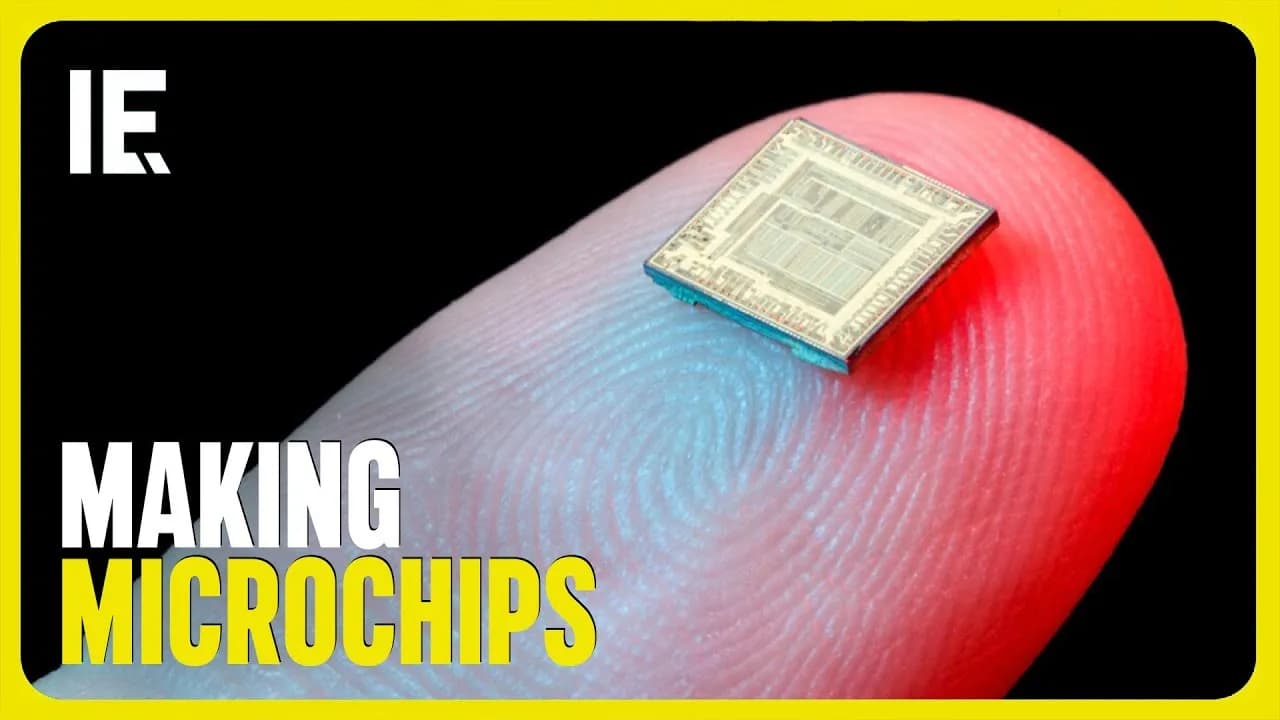
A single stray impurity or molecule can ruin an entire batch of microchips. To prevent microscopic defects during fabrication, semiconductor manufacturers use specialty gases refined to near-perfection.
China expanded its supply of this key material in a push to localize chipmaking. Haohua Yuhang, a subsidiary of state-owned chemical giant Sinochem Holdings, has entered the trial production stage for ultra-high-purity hydrogen chloride, according to a report from Science and Technology Daily.
Reportedly, the facility achieved good results on its very first run. Testing confirmed that the gas reached a purity level exceeding 99.9999 percent, with total impurities capped at no more than 0.2 parts per million.
Silicon wafers serve as the foundation for modern electronics, so keeping them spotless ensures that subsequent manufacturing stages remain accurate.
Key microchip chemical
Microchips are the essential brains, memory, and control systems for nearly all modern electronics. With the rising demand for these devices, it has become important to maintain material purity during manufacturing.
Semiconductor manufacturers depend on ultra-high-purity hydrogen chloride gas to clean and prepare silicon wafers at a microscopic scale.
When this gas reacts with silicon or trace metals, it converts the impurities into gaseous byproducts that are easily pumped out of the reaction chamber without leaving any physical residue. This selective chemical action removes surface imperfections and native oxides, and leaves the underlying silicon crystal undamaged. This entire process leaves the wafer completely smooth, and new layers form properly without defects.
Standard hydrogen chloride is a common industrial chemical. Refining it to electronic grade requires an entirely different level of precision. So achieving a purity level exceeding 99.9999 percent is a major chemical engineering challenge.
Standard industrial HCl contains trace amounts of moisture, nitrogen, oxygen, carbon dioxide, and various chlorosilanes. To drop total impurities below 0.2 parts per million, producers use specialized fractional distillation columns made of high-grade, corrosion-resistant alloys. They also use advanced cryogenic and adsorption purification systems to filter out even molecular-level contaminants.
For those strict semiconductor standards, the Sinochem project team redesigned its distillation and purification methods, making multiple technical adjustments before finalizing the production process.
China boosts domestic supply
Semiconductor fabs depend on this ultra-pure gas for several delicate steps in wafer fabrication. Technicians use it to polish silicon wafers, etch microscopic patterns, and treat surfaces before growing new semiconductor layers.
International semiconductor supply chains depend on specialized chemical inputs to keep production lines running smoothly. Reports also suggest hydrogen chloride as a vital specialty gas within this global manufacturing network. Without steady access to these high-purity materials, chipmakers cannot sustain the complex fabrication processes needed for modern electronics.
China already hosts domestic suppliers in this niche market, including Zhejiang-based specialty gas producer GrandiT Technology. Still, the arrival of a state-backed powerhouse like Sinochem adds significant muscle to the country’s homegrown capacity.
For now, the Haohua Yuhang facility remains in its trial phase. Scaling up from successful initial tests to continuous, commercial-grade output will be the next big hurdle for China’s semiconductor material ambitions.
Ongoing research and development continue to advance quality control in the semiconductor gas sector. For example, the Korea Research Institute of Standards and Science (KRISS) established purity testing procedures for 15 high-purity semiconductor gases, along with six certified reference materials. These standardized tools allow manufacturers to verify measurement precision and maintain strict quality standards accurately.
Get the latest news delivered to your inbox.
Related articles