China’s 10-ton electric aircraft completes first piloted flight with three aboard
The Commercial Aircraft Corporation of China (COMAC) said its CE-25A electric aircraft completed its first...
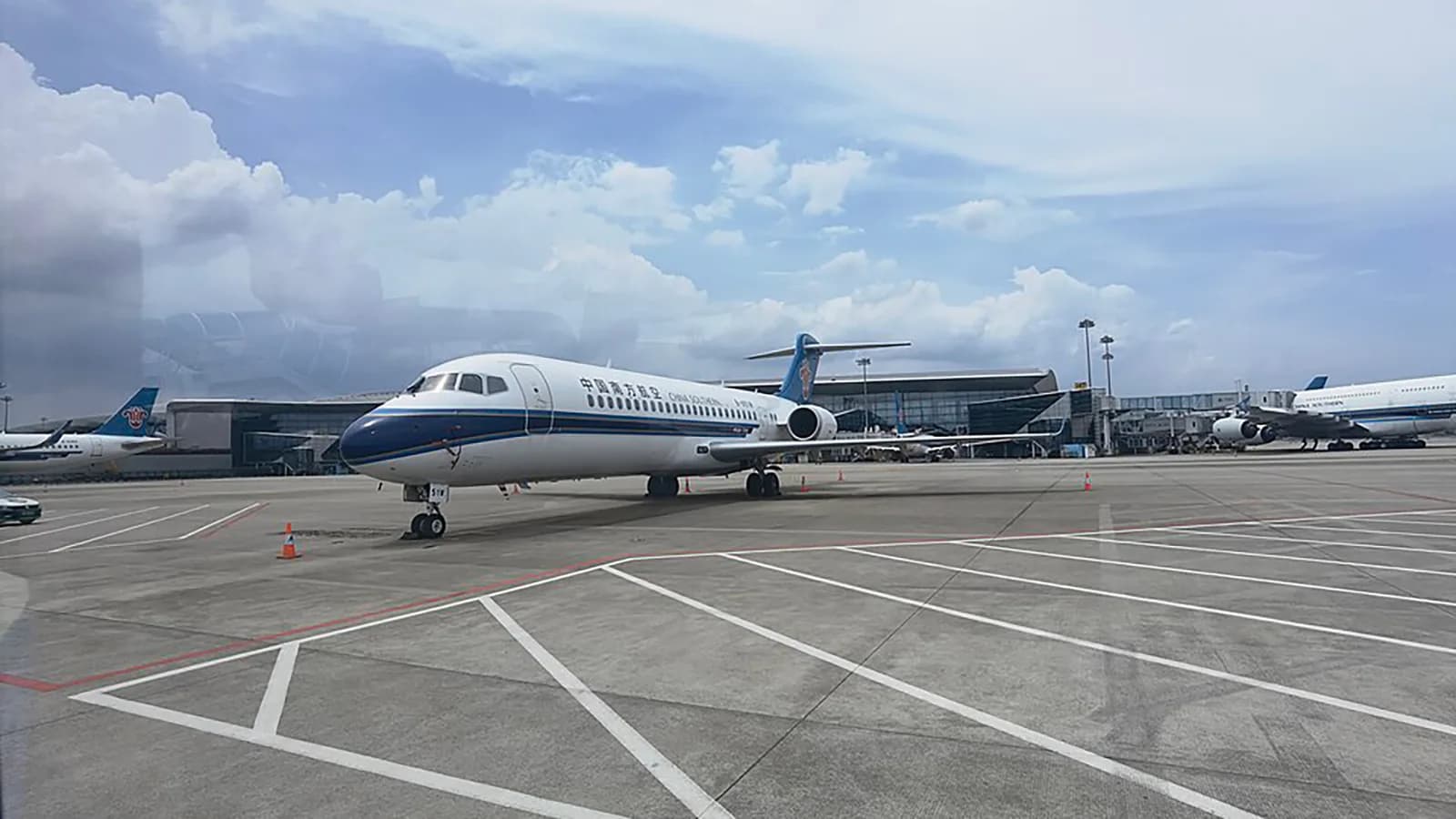
The Commercial Aircraft Corporation of China (COMAC) said its CE-25A electric aircraft completed its first flight with a crew on board on Nov. 14 in Binzhou, Shandong province. Two pilots and one flight-test engineer were aboard, according to a company statement carried by Chinese state media. COMAC said the aircraft operated normally and all indicators met expectations.
The test lasted 57 minutes and 46 seconds, including 16 minutes and 38 seconds in the air, China Daily reported. The aircraft covered 37.5 miles (60.4 kilometers) while airborne. That’s a fraction of the 249-mile (400-kilometer) range COMAC lists for the design.
COMAC lists the CE-25A at 19 passengers, a maximum takeoff weight of 22,046 pounds (10 metric tons), a cruising speed of 186 miles per hour (300 kilometers per hour) and a cruising altitude of 7,874 feet (2,400 meters). Instead of turbofan jet engines, it uses electric motors that drive fans mounted above the wings.
Ten ducted fans and a battery partner
COMAC developed the aircraft with battery maker Contemporary Amperex Technology Co. Limited (CATL), Shanghai Jiao Tong University and other partners, according to an official post by Binzhou’s cyberspace administration. COMAC and CATL formed a joint venture in July 2023. China eVTOL News, citing public records, named the venture COMAC Times (Shanghai) Aviation Co., Ltd.
The propulsion system has 10 electric ducted fans, five on each wing, according to China eVTOL News. A ducted fan is a propeller-like fan inside a round casing. COMAC calls the layout distributed propulsion, meaning thrust comes from several small units instead of one or two large engines.
COMAC explained the name in its statement. The “E” stands for electric, “25” for compliance with China Civil Aviation Regulations Part 25 (CCAR-25), the airworthiness rules for transport-category aircraft, and “A” for the first product. The company designed the aircraft mainly for flights between cities.
The aircraft made its first uncrewed autonomous flight on Feb. 2 and has completed 19 uncrewed autonomous validation flights, COMAC said.
What the flight doesn’t show
Public sources don’t confirm which battery powered the flight, China eVTOL News reported. It said Chinese industry reports have linked the aircraft to a CATL battery with a cell energy density of 500 watt-hours per kilogram, a measure of stored energy per unit of weight. Global Times called the Nov. 14 flight a “smart flight” but didn’t say what the autonomy system controlled. The range and cruise speed are design figures, not flight results.
The Civil Aviation Administration of China (CAAC) has accepted COMAC’s type certificate application, which begins the airworthiness review rather than ending it. Heart Aerospace’s X1 flew for 27 minutes on Aug. 12 in Plattsburgh, New York, and the company says it’s the largest battery-electric aircraft ever flown.
Yang Fengtian, an academician at the Chinese Academy of Engineering, said commercial electric aircraft should advance step by step, with integrated validation before model application, Global Times reported. COMAC announced the flight on Nov. 14, and Xinhua and China Daily carried its statement.
Source: https://interestingengineering.com/transportation/china-ce-25a-electric-aircraft-flight
Get the latest news delivered to your inbox.
Related articles