China’s robots scale Mount Taishan’s 3,100 steps faster than human climbers
China’s robotics technology is advancing rapidly. A striking example of this progress was on display...
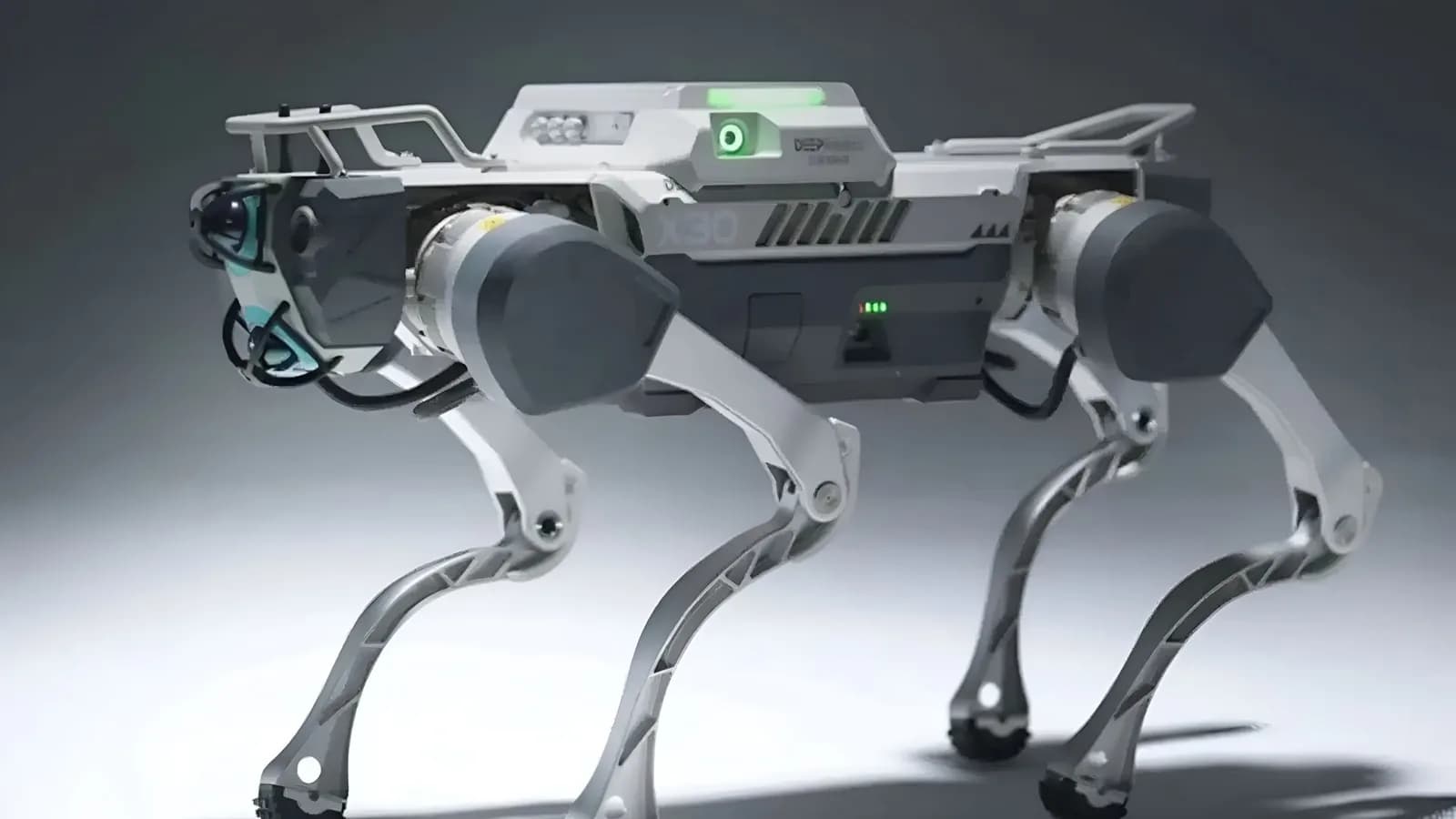
China’s robotics technology is advancing rapidly. A striking example of this progress was on display in Shandong Province in eastern China, where a climbing competition for robots was held on Mount Taishan, one of the country’s best-known mountains.
The participating machines demonstrated their ability to negotiate difficult mountain paths, while also showcasing speed, balance and technical precision.
Around 90 teams took part in the event, held on Monday. The teams represented major companies, universities and research institutions. The main course ran for approximately 3.9 kilometers, from Hongmen to Zhongtianmen on Mount Taishan.
Tough terrain tackled for the race
Along the route, the robots had to climb more than 3,100 steep stone steps and overcome an elevation gain of about 600 meters. The aim was not simply to test speed, but also to assess how effectively the machines could move across difficult and uneven terrain.
Both humanoid robots and quadruped robots took part. Some moved cautiously, placing each step with care, while others appeared capable of climbing the stairs at a faster pace.
A person typically takes around one and a half to two hours to complete the route on foot. The robots participating in the competition, however, completed it in less than an hour.
According to China Central Television (CCTV), a quadruped robot developed by Beijing Lingyi Technology, a wholly owned subsidiary of Hangzhou-based Unitree Robotics, secured first place in the race. It completed the course in 43 minutes and 41 seconds. Throughout the run, the robot continued across rough ground and narrow mountain paths, demonstrating its mobility and stability.
The smallest quadruped robot in the competition was UNIUBI AI’s Cyvet. The company told the Global Times that, during a test, the robot autonomously covered the full route from Hongmen to Zhongtianmen in just 35 minutes and 47 seconds.
To handle these challenges, the company equipped its quadruped robot with LiDAR technology. This allows the robot to scan its surroundings and distinguish between steps, rocks, and narrow passages. The system creates a 3D point-cloud map of the terrain, helping the robot identify a suitable path and navigate forward.
The competition was not limited to speed. It also included tasks such as carrying loads, humanoid robot racing, and inspection in difficult environments.
The Shandong company brought three different models to the event: two quadruped robots, the Y30 and E15, and one humanoid robot, the E1, which secured second place. The E1 humanoid robot developed by a Shandong-based robotics company also performed well, completing the route in 36 minutes and 18 seconds and securing second place in its category.
The competition was broadly divided into two categories: speed races and specialized technical challenges. Four official events were organized under these categories. They included humanoid robot racing, load-carrying by legged robots, and mountain climbing with the assistance of exoskeletons.
China’s robotics industry continues to expand
According to the World Robotics 2026 report, China accounted for approximately three-fifths of the global share in 2025.
Figures from China’s Ministry of Industry and Information Technology indicate that more than 400 humanoid robot models were available in the country and that over 40,000 units were produced in the first half of 2026.
China’s robotics industry is also expanding rapidly, with continued work underway on industrial robots and humanoid machines.
Xiang Ligang, president of the Beijing Institute of Intelligent Robot Industry, told the Global Times that robot competitions could become an indicator of technological progress, much as early exhibitions of aircraft and automobiles once captured public attention.
According to Xiang, such competitions give robotics companies an opportunity to identify weaknesses in their technologies and make improvements. When robots from different companies operate in the same environment, their performance can also be compared more easily.
Source: https://interestingengineering.com/ai-robotics/china-humoinoid-robot-quadruped
Get the latest news delivered to your inbox.
Related articles