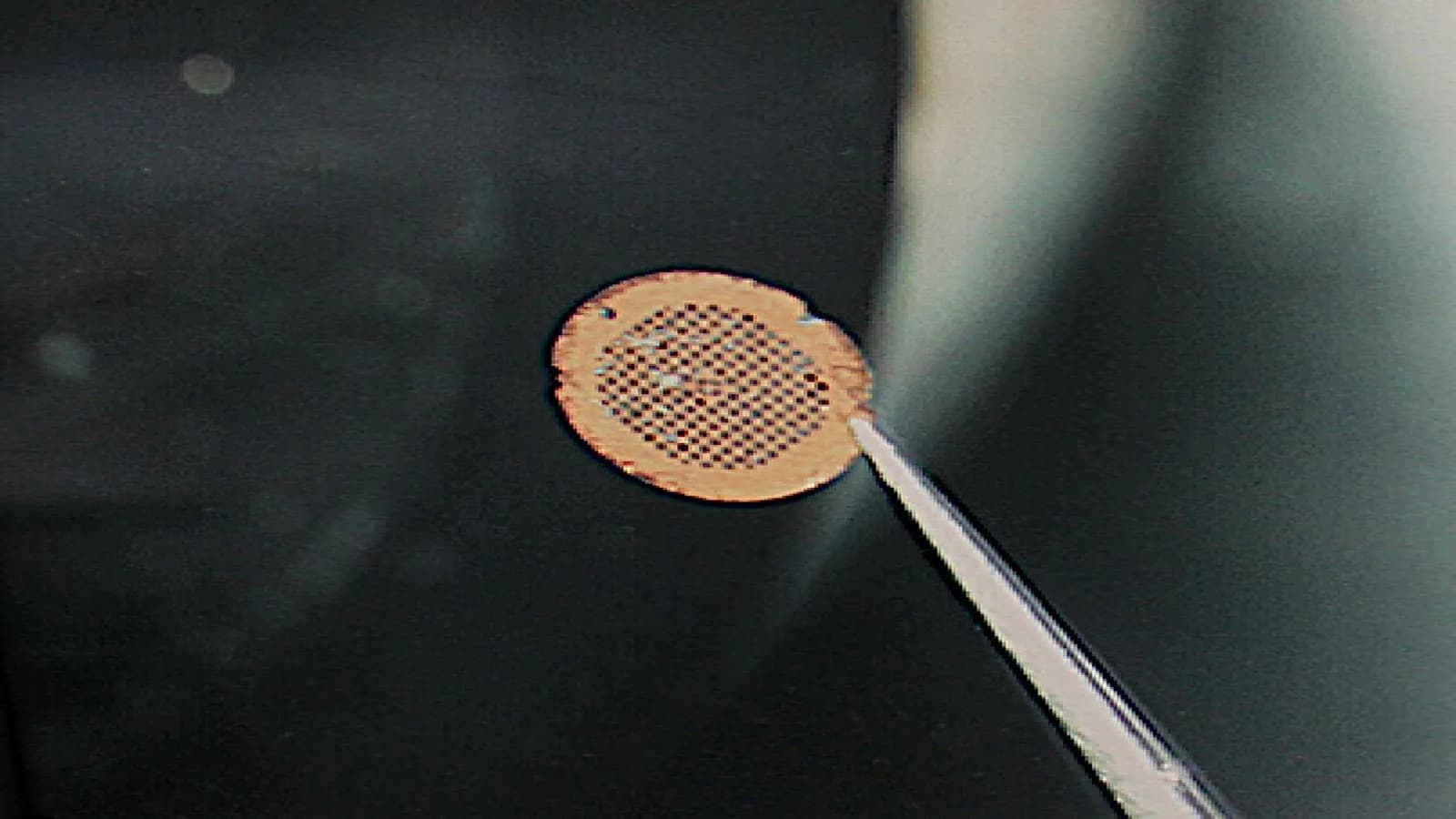
Chip-scale blue lasers aim at atomic clocks, underwater data links and smoke sensing
Blue lasers are easy to make. Making one whose frequency is both extremely stable and...
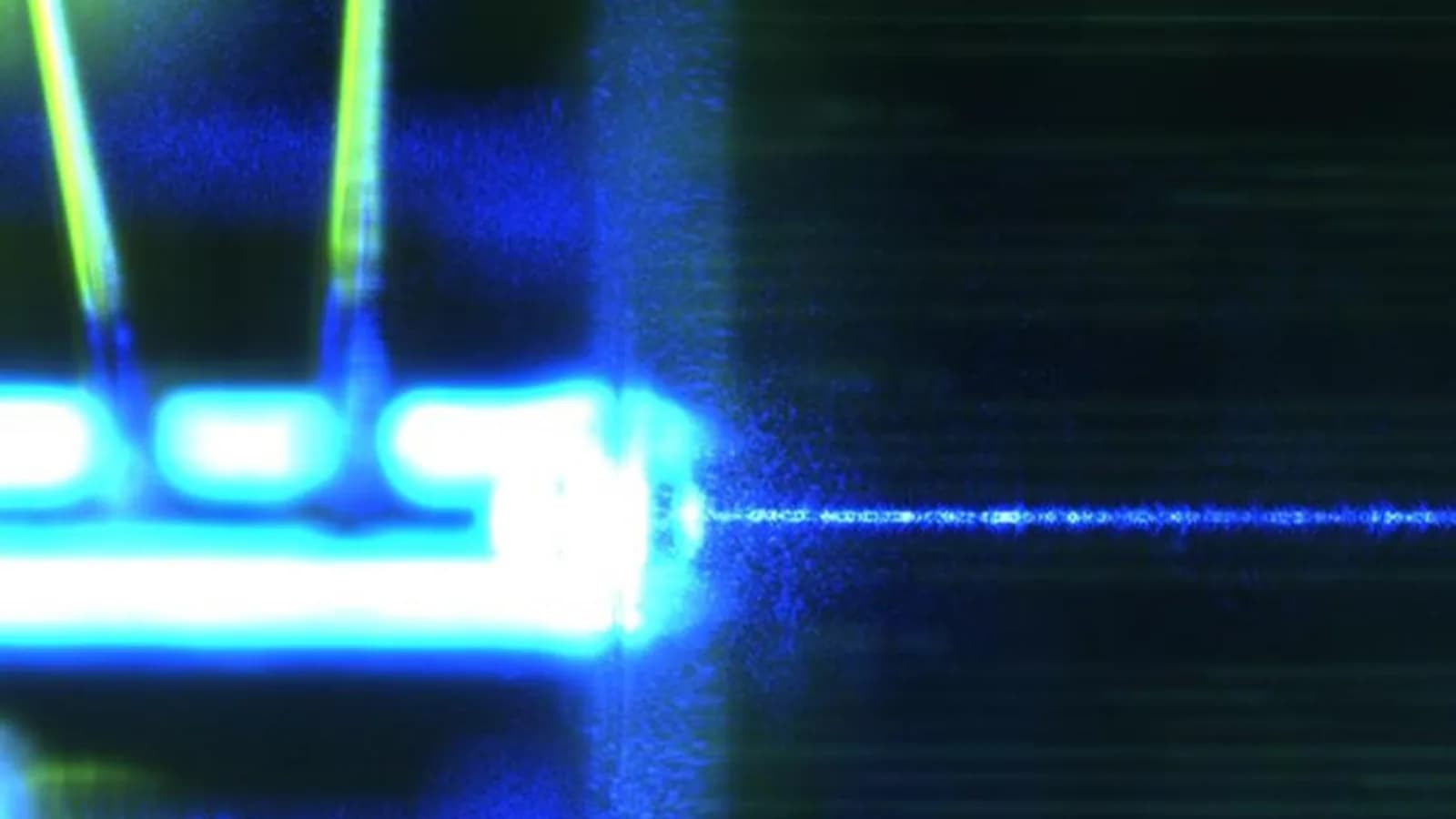
Blue lasers are easy to make. Making one whose frequency is both extremely stable and quickly adjustable on a chip is the hard part, and researchers say they have taken a step toward it.
A team from EPFL in Switzerland, Purdue University, and Aarhus University in Denmark reports a chip-based blue laser system in Nature Photonics. It combines strong suppression of laser noise with rapid electronic frequency tuning. The results point to smaller, more practical alternatives to the complex optical equipment precision laser work usually requires.
Why blue is hard
At short wavelengths, even microscopic imperfections in the structures that guide light through a chip can scatter it and introduce unwanted fluctuations. “Making blue laser light is relatively easy nowadays,” said Nick Volet, an associate professor of integrated photonics at Aarhus University. “The challenge is keeping its frequency extraordinarily stable while being able to change it extremely quickly.”
Thin guides, light feedback
The team’s fix was to make the light-guiding structures extremely thin. One design uses waveguides just 25 nanometers thick, thousands of times thinner than a human hair. That pushes more of the light into the surrounding material, away from the imperfections that would disturb it.
The chip also feeds a small fraction of light back into the laser to help stabilize its frequency. Electrically controlled components then adjust the frequency quickly.
The numbers
Two measures describe the result. Linewidth is a gauge of how pure a laser’s color is, and a narrower line means a more stable laser. Tuning range is how far the frequency can be shifted.
In one chip design, the team reached laser linewidths below 30 kilohertz. In another, the frequency tuning range approached 900 megahertz.
The two best results came from different designs. Combining them in a single device is the next key step, the researchers say.
Smoke, water and atoms
To show what the laser could do, Aarhus doctoral researcher Asger Gardner spent five months at EPFL helping characterize the laser. He ran experiments that detected smoke particles and designed a demonstration that sent information through 30 centimeters (about 12 inches) of water.
The researchers say such experiments illustrate how precise control of blue light could support optical communication and sensing. The laser’s wavelength is also relevant to cooling strontium atoms, an important technique in optical atomic clocks and quantum research.
A broader program
Volet said the collaboration shows how international work can advance research and give young researchers real scientific roles. The study also reflects Aarhus University’s wider work in integrated photonics, which spans blue and ultraviolet lasers and mid-infrared light sources being developed by the spin-out company QVersion. Innovation Fund Denmark provided support.
The release doesn’t say how much output power the laser delivers or how it compares with the best bulky laboratory systems. For now, the work is a demonstration on a chip, not a finished product.
Get the latest news delivered to your inbox.
Related articles