World’s largest active tokamak targets vacuum 100 billion times lower than air
Teams in Japan and Europe have sealed the vacuum vessel of JT-60SA, the world’s largest...
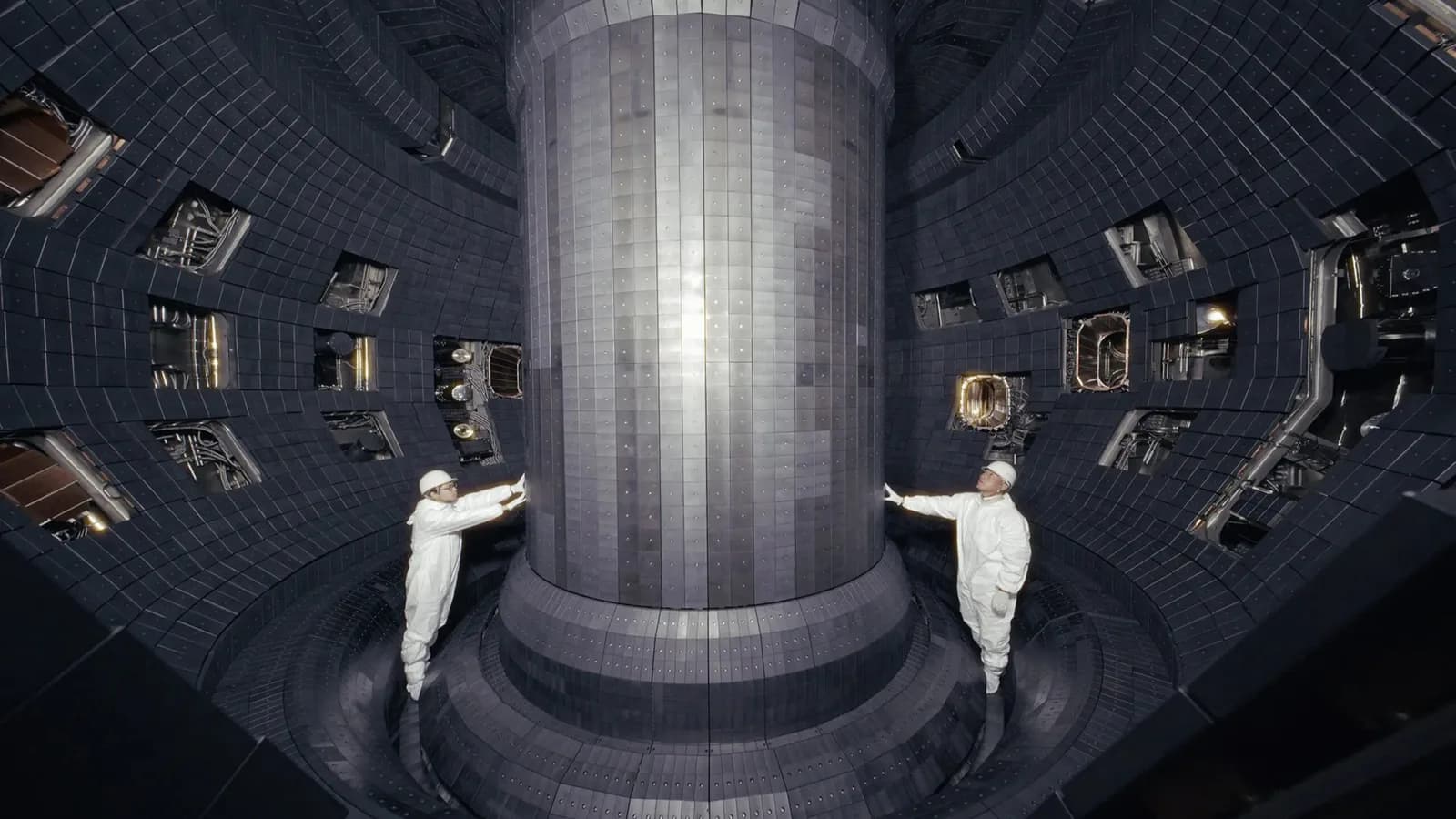
Teams in Japan and Europe have sealed the vacuum vessel of JT-60SA, the world’s largest active tokamak, and started pumping it down after months of upgrades, ahead of plasma operations expected to begin in early 2027, according to Fusion for Energy (F4E).
A tokamak is a doughnut-shaped machine that uses magnetic fields to confine plasma, a gas heated until it becomes the fourth state of matter. JT-60SA sits in Naka, Ibaraki Prefecture, Japan. Europe and Japan built it under the Broader Approach agreement, with F4E and Japan’s National Institutes for Quantum Science and Technology (QST) managing their contributions.
The vessel must reach an ultra-high vacuum before the machine’s superconducting magnet coils, which carry current without resistance at very low temperatures, can be cooled and the first plasma shots can follow. A research campaign called OP2 is set to begin shortly after those shots, F4E said.
Carbon tiles and new instruments
JT-60SA made its first plasma in 2023 and has since been upgraded. Teams began commissioning of the enhanced machine in March by starting up some systems at room temperature, including new in-vessel coils and their power supplies, according to the release.
Inside the vessel, a dozen technicians worked on three levels of scaffolding. They turned a bare steel surface lined with cables and cooling pipes into a wall of dark-gray tiles made of carbon-based materials, the release said. Japanese technicians inspected the new first wall, the layer that faces the plasma, in November, and the vessel was closed shortly after, according to a photo caption.
The teams also mounted diagnostic systems, instruments that measure plasma conditions, including Europe’s Thomson scattering and vacuum ultraviolet (VUV) divertor spectrometer. The work buzzed for months, then went quiet within weeks. With everything finished on time, the teams cleaned the reactor and closed all its ports. Leak tests confirmed the vessel was tightly sealed, the update said.
The pump-down and what follows
JT-60SA needs a vacuum of 10⁻⁶ pascals (Pa), a unit of pressure, which the organization said is around 100 billion times lower than the air people breathe. Pump systems, including nine European cryopumps that trap gas on very cold surfaces, will work in turns so no dust remains in the vessel or the cryostat, which insulates the cold magnets.
Then the coils will be cooled, and first plasma shots are expected next year. OP2 will push the machine to unprecedented levels of current, advancing toward long-pulse and steady-state (continuous) plasma, the EU body, F4E, said. The experiment team selected 23 experiments addressing priorities relevant to the International Thermonuclear Experimental Reactor (ITER), under construction in France.
The release doesn’t say how low the pressure has fallen; 10⁻⁶ Pa is a target. An earlier release from F4E said new experiments were expected to start at the end of 2026; this one gives early 2027 for plasma operations without explaining the difference.
Many European experts will travel to Naka over the coming year, some for long stays. F4E published the update Nov. 23.
Source: https://interestingengineering.com/energy/world-largest-tokamak-plasma-2027
Get the latest news delivered to your inbox.
Related articles