
Concrete supercapacitors could turn buildings into giant energy storage systems
Turning concrete buildings into large clean-energy storage systems is no longer just a futuristic idea....

Turning concrete buildings into large clean-energy storage systems is no longer just a futuristic idea. As cities push to eliminate carbon emissions, energy-storing cement could soon become the standard foundation for modern construction.
The team at Harbin Institute of Technology in China has developed a 3D-printable, cement-based supercapacitor that stores energy without sacrificing structural integrity. It is said to be strong and efficient. And if scaled, it could redefine urban architecture.
“If building materials could not only support structures but also store energy, sense their surroundings, and even interact with people, buildings would become more than passive shelters. They could become truly smart environments,” said Jing Zhong, the study’s corresponding author.
Charged concrete
Renewable energy has a storage problem. Solar panels and wind turbines generate vast amounts of clean power, but storing that energy locally usually requires heavy, expensive battery banks.
Supercapacitors store and release energy rapidly without relying on slow chemical reactions, and can handle millions of charging cycles. Embedding these devices in foundational slabs or stairwells lets structures store peak daytime solar energy and release it instantly on demand. This approach turns load-bearing concrete into active power storage, thereby reducing the need for external battery setups.
Previous cement-based devices suffered from poor interfacial mechanical strength and slow ion transport through the thickness.
The team achieved this by mixing carbon nanotubes, carbon black, and cement into a highly conductive printable ink. Using a 3D printer, they deposited the mixture onto concrete slabs in a tight, finger-like interlocked pattern. As the cement hydrated, tiny water-filled pores formed throughout the matrix — creating high-speed pathways for charged ions to move between electrodes with minimal resistance.
Innovation means little if the building collapses.
Fortunately, rigorous testing proved the energy-storing slab maintained a compressive strength comparable to commercial concrete used in everyday construction. To demonstrate its real-world potential, the researchers wired three printed devices together on a single slab. It instantly lit an array of LEDs.
In the near term, the technology could run emergency illumination, power safety sensors, or keep structural health monitoring networks alive during blackouts. All without external wiring.
Future of urban energy
As per the study, this concrete supercapacitor delivers strong electrical output, storing 22.52 μWh cm–2 of energy density. It delivers 0.49 mW cm-2 across a 1.0V operating range. At the same time, the tech resists 23.00MPa of compressive force, matching the strength standard of structural concrete used in buildings. These results confirm that construction materials can double as effective power units without sacrificing the ability to support heavy loads.
The technology is not without its hurdles. While the cement supercapacitor runs smoothly under moderate heating and cooling, performance drops when temperatures plunge to zero degrees Fahrenheit (-18°C). Cold weather freezes ion movement within the hydrated pores, throttling power output. Fortifying the material against harsh winters remains the team’s primary hurdle before commercial deployment.
Still, the potential is huge. Frequent charging from renewable sources allows these concrete supercapacitors to satisfy specific building power demands through continuous energy cycles. Zhong notes that this routine storage and release process creates a viable pathway for structures to supplement their own electricity needs.
The findings were published in the journal ACS Nano.
Related articles

New center bids to supercharge nuclear isotope production for deep-space missions
Canada is moving to expand its role in supplying nuclear isotopes that could power spacecraft...
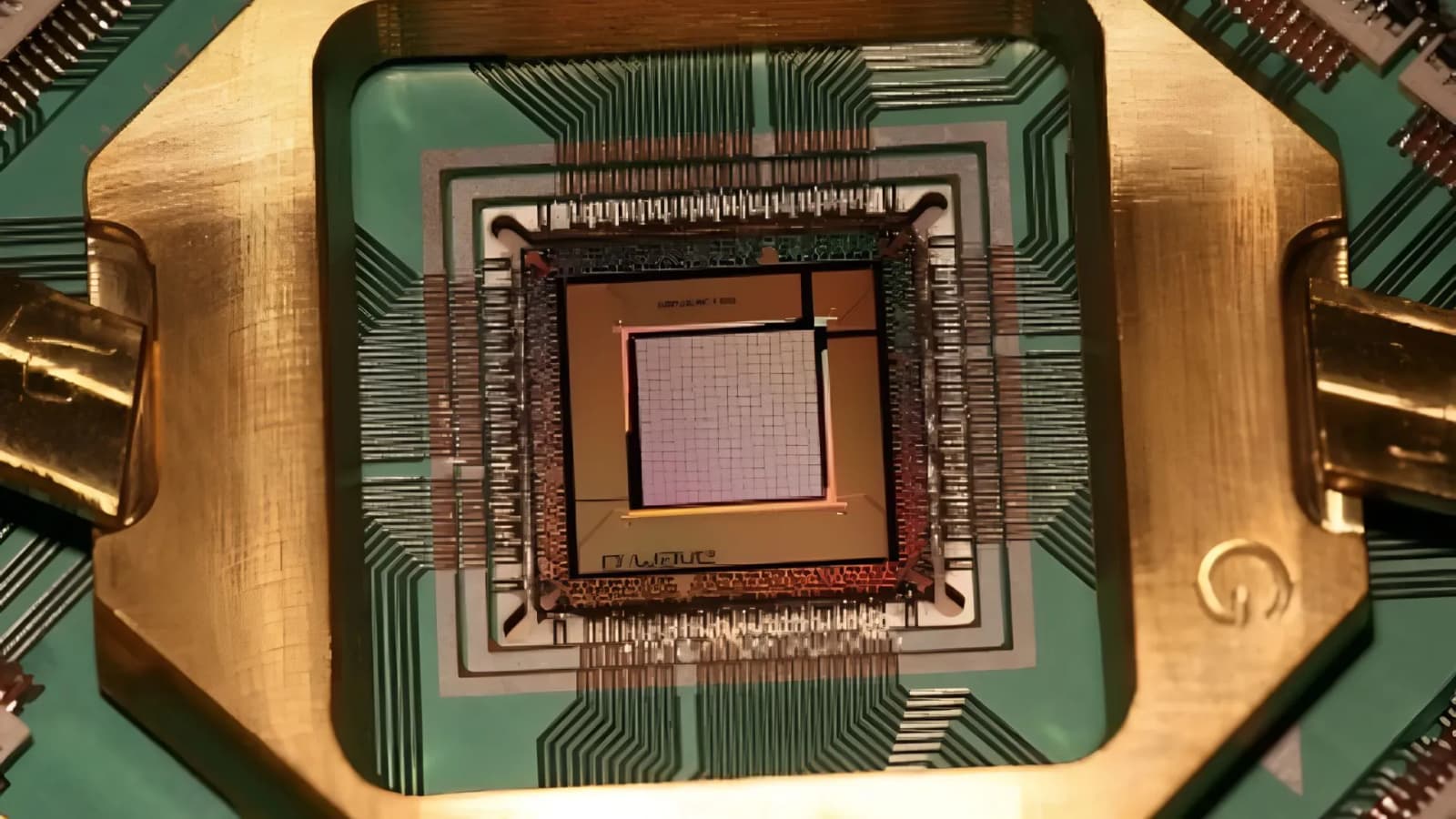
Schneider tests quantum chip that improves home energy forecasting by up to 41%
Australian government-backed Silicon Quantum Computing (SQC), whose investors include telecom giant Telstra and Commonwealth Bank,...

Digital twin tech from US, Korea could predict toxic ammonia leaks on new ships
The US, South Korea and Germany have recently joined forces in order to develop a...

Mapped: The World’s Digital Leaders in 2026
Which economies are the most digitally connected? See how 159 economies rank in the ITU’s 2026 ICT Development Index.

Breaking up (with Elon Musk) is hard to do
In a throwback to MySpace-style internet drama, Shivon Zilis announced that she and the father of four of her children, Elon Musk, had broken up on X.

OpenAI’s Dot agent is enterprise software that can also order your dinner
It's a tale as old as last week: OpenAI's new agent platform, called Dots, is full of cute little guys who can do your bidding.