Crewed patrol boat turned into autonomous gunboat in BAE Systems’ live-fire naval trial
In rough seas and extreme heat, human focus eventually frays. Algorithms do not. During a...
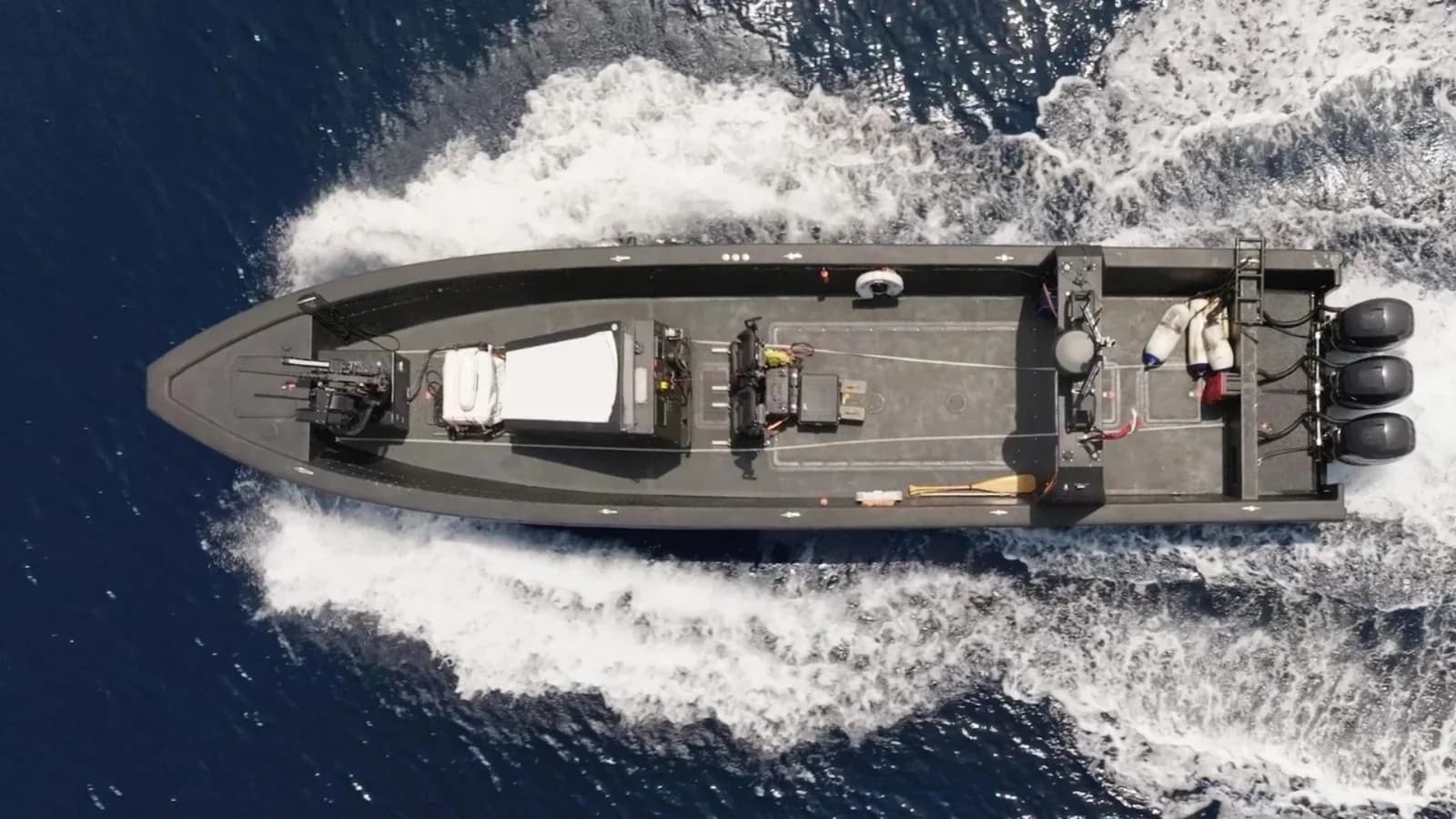
In rough seas and extreme heat, human focus eventually frays. Algorithms do not. During a recent live-fire trial, BAE Systems proved that existing, crewed boats can be transformed into autonomous, high-precision patrol craft in a matter of days.
It shows navies can modernize their existing fleets without buying new ships. Nautomate runs on the same core software as BAE Systems’ Herne autonomous underwater vehicle, demonstrating a scalable architecture across different maritime domains.
“This successful trial represents a critical step forward in deployable autonomy. It not only proves we can retrofit advanced autonomous control, but also deliver precise, mission-critical capability,” said Mike, the project lead
Trial scenarios
Engineers mounted the company’s Nautomate autonomous control system onto a P38, a 14-meter, 60-knot fast intercept craft built by Omani manufacturer Der’a. Never designed for unmanned operations, the third-party vessel served as a testbed to prove that Nautomate is vessel-agnostic and rapidly deployable.
“A key objective was to prove our autonomy is vessel-agnostic and can be rapidly deployed,” explained Mike. “We needed to bring all the equipment separately to another country, assemble and integrate it in a number of days, then travel to a firing range several hours’ travel from shore. To bring all those elements together and successfully demonstrate the live firing – on two consecutive days – was a real achievement.”
Testing stretched across two demanding scenarios. In the first, the uncrewed craft patrolled open water, spotting and pursuing a simulated threat entirely on its own.
Next came live weapons integration. Pairing Nautomate with a Seahawk remote weapon station built by UK-based MSI, the vessel locked onto a target using a .50 caliber machine gun. Notably, the system kept a human in the decision loop.
“Once the coxswain identifies the target as a threat and grants permission, authority is handed to the weapon station to fire at will – on only that agreed target,” said Mike.
Cross-domain architecture
The results were decisive. Operating at high speed in challenging sea conditions, Nautomate struck the target from roughly one kilometer away while expending less ammunition. A highly trained former Royal Marine operating the same weapon station manually had to close the distance to around 500 meters before scoring direct hits.
“The system demonstrated exceptional accuracy. For comparison, we had a highly trained former Royal Marine operate the weapon station manually as a comparison,” Mike noted.
Apart from high accuracy, the trial shows a practical advantage for modern naval operations. Long patrols in blistering heat take a heavy toll on human endurance, eroding concentration during monotonous watch duties. Offloading navigation, tracking, and precision stabilization to software frees human operators to focus strictly on tactical judgment and rules of engagement.
Navies could soon use one autonomous brain across both new and older vessels, turning legacy hulls into a modern unmanned fleet.
Major navies are increasingly supplementing costly crewed warships with smaller, lower-cost unmanned vessels. Building warships takes years and billions of dollars, creating severe shipyard issues. Vessel-agnostic kits solve this problem cleanly, allowing defense ministries to retrofit existing patrol boats and rapidly scale up their fleets at less cost.
Get the latest news delivered to your inbox.
Related articles