
CVN 79: Second boat of 100,000-ton Ford class nuclear powered carrier is 99% complete
The U.S. Navy has taken preliminary acceptance of the future USS John F. Kennedy (CVN...
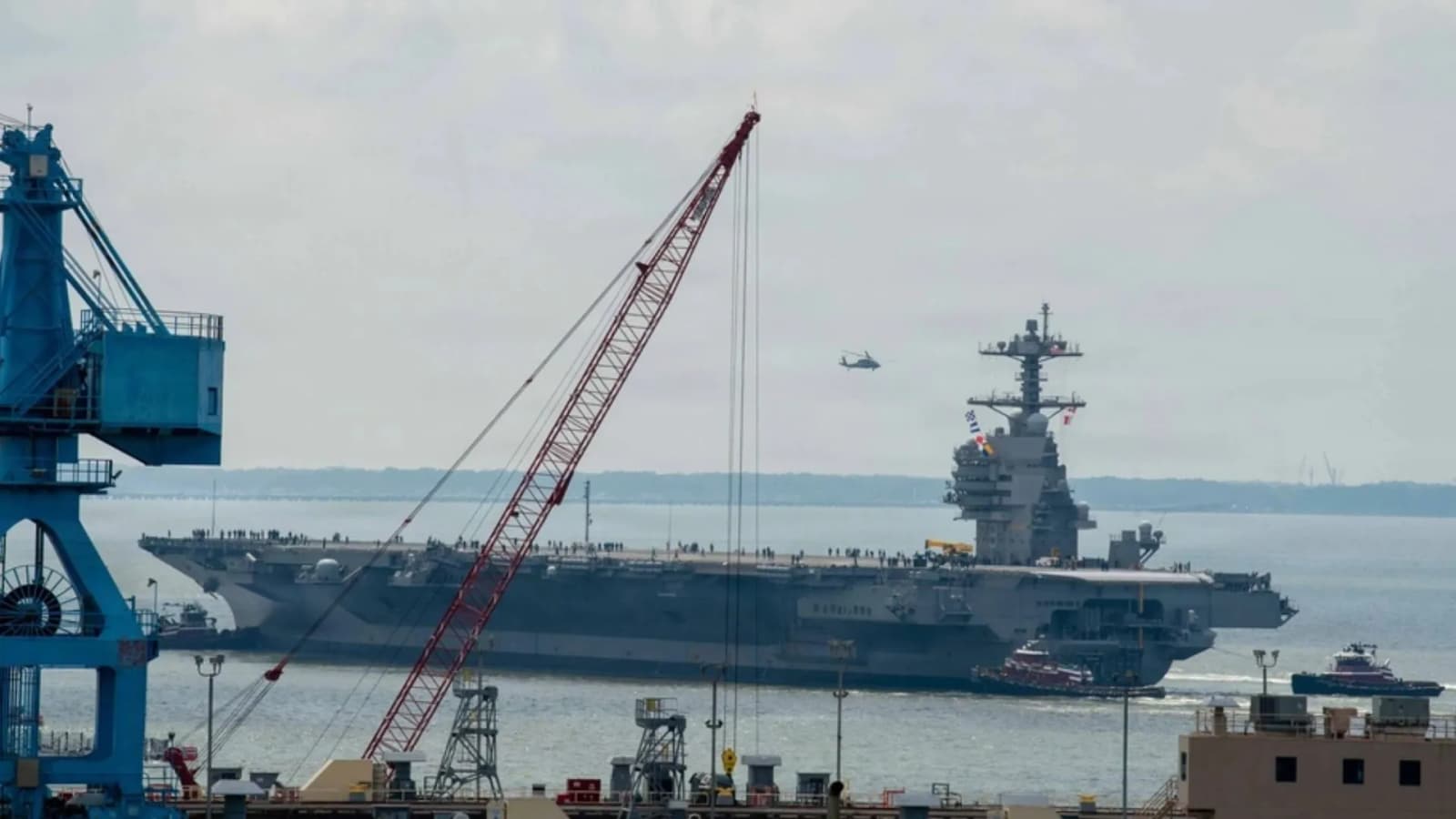
The U.S. Navy has taken preliminary acceptance of the future USS John F. Kennedy (CVN 79), allowing the aircraft carrier and its crew to begin additional at-sea testing and training while Newport News Shipbuilding completes the vessel’s remaining systems work.
The milestone was reached on September 29 following the carrier’s successful completion of Acceptance Trials in August. John F. Kennedy is being built by Newport News Shipbuilding, a division of HII, and remains on schedule for formal delivery to the Navy in spring 2027.
Preliminary acceptance does not mean the carrier has formally entered Navy service. Instead, it allows the ship and its crew to conduct more testing and build proficiency underway while the shipbuilder continues final systems testing.
“Achieving preliminary acceptance marks a new phase for the ship and her crew, allowing them to get more water under the keel as they test and train underway,” said Capt. Mark Johnson, the Navy’s program manager for Gerald R. Ford-class new construction.
Carrier is nearly complete
According to the Navy, John F. Kennedy is approximately 99 percent complete, with all major systems now finished. Newport News Shipbuilding is concentrating on final ship systems testing, including testing of the remaining four Advanced Weapons Elevators.
The Advanced Weapons Elevators are a major part of the carrier’s weapons-handling system, moving weapons and other ordnance between the ship’s magazines and the flight deck. Completion and testing of the remaining elevators is therefore among the work still required before formal delivery.
The Navy says preliminary acceptance lets a continue shipboard testing and crew training without waiting for every remaining shipbuilder activity to be completed. This parallel approach is intended to put CVN 79 on the fastest available path toward delivery and eventual combat readiness.
Second Ford-class carrier moves closer to delivery
John F. Kennedy is the second carrier in the Navy’s Gerald R. Ford class, following the USS Gerald R. Ford (CVN 78). The class incorporates new systems and design changes intended to improve aircraft launch and recovery operations, weapons handling, and overall carrier operations.
For Kennedy’s crew, the latest milestone means more time underway to become familiar with the ship while testing continues. The Navy and shipbuilder can also use this period to identify and address issues that emerge during operations at sea before formal delivery.
The carrier previously completed its Acceptance Trials in August, an important testing phase in which the Navy evaluates whether the ship’s major systems and capabilities meet required performance standards. The subsequent preliminary acceptance marks a transition toward more extensive underway activity.
The Navy’s current plan calls for formal delivery of John F. Kennedy in spring 2027. Until then, the ship will continue undergoing testing, training, and final construction work.
Final testing continues before delivery
Although the carrier is almost complete, the remaining work illustrates why preliminary acceptance is not the same as operational readiness. The final Advanced Weapons Elevator tests and other ship systems testing must still be completed before the Navy formally accepts the vessel for service.
The Navy says the arrangement allows its sailors to gain additional experience operating the ship while Newport News Shipbuilding finishes its remaining responsibilities.
For CVN 79, the represents a step between construction and formal delivery. The carrier can now spend more time underway, but it remains in the testing and training phase as the Navy and HII work toward its planned 2027 delivery.
Source: https://interestingengineering.com/military/uss-john-f-kennedy-preliminary-acceptance-2027
Related articles

Samsung’s new SmartTag is smaller, longer-lasting, and works with iPhones
Samsung has announced its third-generation Bluetooth tracker, the Galaxy SmartTag 3.

Samsung gives its two-year-old Galaxy Tab S Plus an overhaul
Since the Galaxy Tab S10 line, Samsung has updated its flagship Ultra tablet annually, but alternates its regular and Plus variants.

Here’s how tech leaders will self-police AI safety under Trump’s deal
We now have the full details of the "morally binding" AI safety deal announced by President Trump yesterday, in which top executives agreed to self-regulate their artificial intelligence technology.

Vuzix introduces Shrike: Configurable 3,000-nit defense waveguide display for drones
Vuzix Corporation has introduced its Shrike display platform and begun shipping initial evaluation units to...
China deploys 14,764-foot robot for deep-sea exploration in South China Sea
China has reportedly launched a domestically developed deep-sea robot capable of operating at depths of...

Apple’s ‘HomePad’ will reportedly launch on October 13th
Apple's long-rumored smart home hub will reportedly be revealed on October 13th.