
China deploys 14,764-foot robot for deep-sea exploration in South China Sea
China has reportedly launched a domestically developed deep-sea robot capable of operating at depths of...
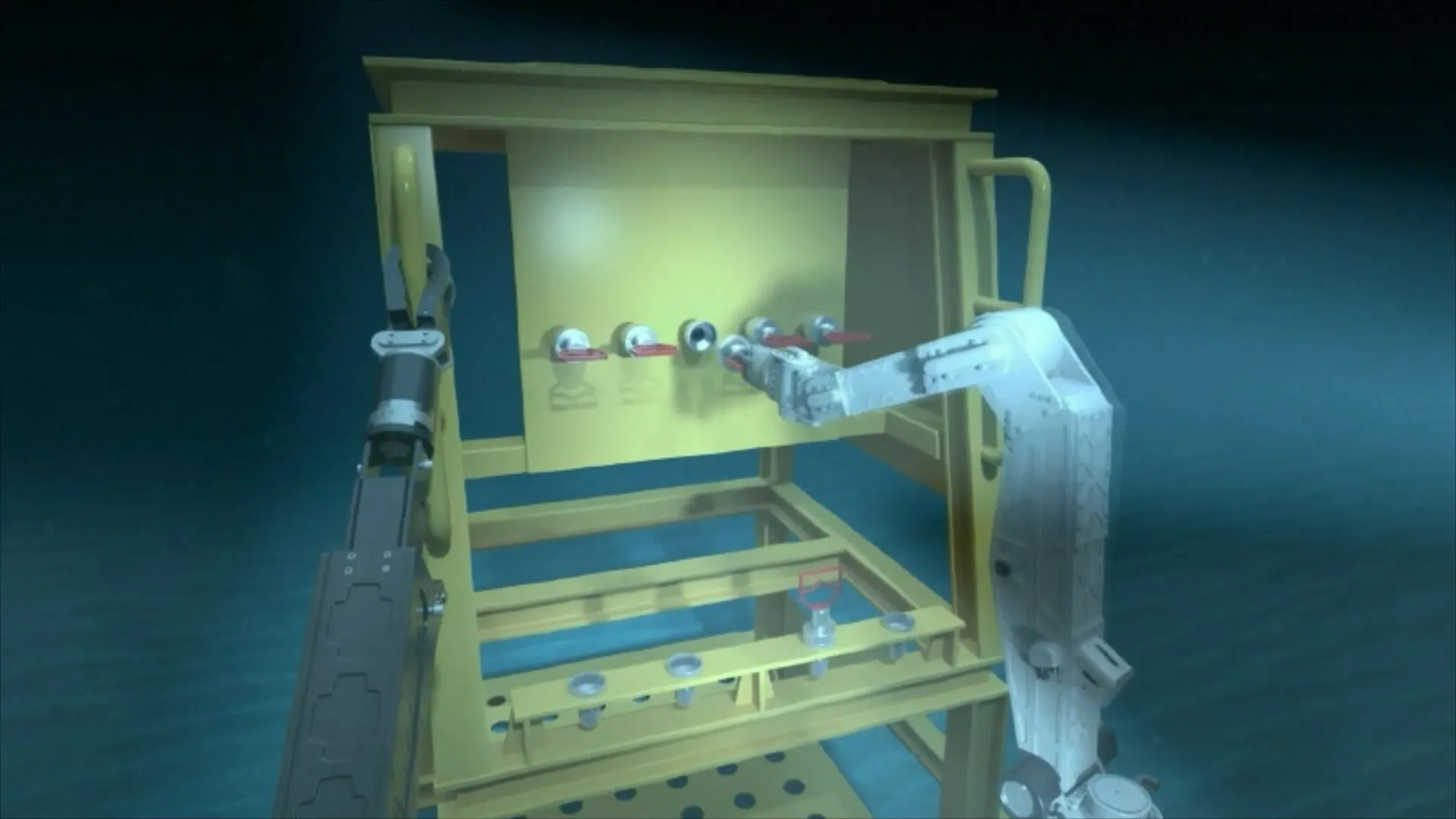
China has reportedly launched a domestically developed deep-sea robot capable of operating at depths of up to 4,500 meters (14,764 feet) for a scientific expedition in the South China Sea. This added another piece to the country’s growing fleet of underwater exploration technologies.
The 4,500-meter-class work-class robot departed Weihai Port in Shandong on September 28 and is heading to the South China Sea for a joint expedition with the Harbin Institute of Technology’s Weihai branch, according to Chinese state media. The mission is intended to test the complete system under real-world conditions and help move the technology from laboratory development toward industrial applications.
The robot is equipped with a domestically developed seven-axis multifunction hydraulic manipulator. It incorporates technologies developed to address more than 30 technical challenges, including pressure-resistant sealing, high-power propulsion, long-distance underwater communications and multimodal autonomous navigation.
It is designed for tasks including deep-sea oil and gas operations, underwater pipeline inspections, mineral-resource exploration, scientific sampling and emergency salvage.
Built for the extreme deep sea
According toCTGN, the vehicle’s 4,500-meter operating class puts it in an environment where pressure, communications, and navigation become major engineering challenges. China’s latest system is part of a broader push to develop domestically produced equipment that can operate farther below the surface and perform increasingly complex tasks.
The country’s deep-sea capabilities have expanded across remotely operated vehicles (ROVs), autonomous underwater vehicles (AUVs), and other robotic systems. In 2025, for example, China’s Haiqin 6,000-meter-class (19,685-foot-class) ROV reached 4,140 meters (13,583 feet) in the South China Sea while collecting biological and sediment samples. The system was also deployed alongside the full-ocean-depth Haidou-1 for coordinated underwater operations.
China has continued to expand its ability to investigate the seabed this year. Its Mengxiang drilling vessel recently reached the 5,000-meter (16,404-foot) level while obtaining basalt samples from the South China Sea basin. Two ROVs also operated for more than 358 hours in total at depths of around 4,000 meters (13,123 feet) during the mission.
Mapping the seabed for resources
Deep-sea robots can provide access to environments that are difficult and expensive for conventional vessels and human crews to investigate. That makes them useful for geological surveys, environmental monitoring and the search for mineral resources.
China has been building increasingly detailed maps of seabed resources. In April, the China Geological Survey reported a geochemical dataset covering more than 10,000 survey stations in China’s eastern waters. Researchers mapped the locations and concentrations of dozens of elements, including iron, manganese, copper and rare earth elements.
Chinese geological researchers have also specifically identified deep-sea rare earths, polymetallic nodules and other seabed resources as targets for exploration. A separate deep-sea drilling and monitoring robot tested in the South China Sea earlier this year collected more than 2,000 sets of geological and environmental measurements. It was identified for potential use in exploring deep-sea resources.
Underwater robots are also gaining military relevance
The same technologies that let underwater robots map the seabed can also support maritime security and military operations. China has developed larger autonomous underwater vehicles capable of seabed mapping and long-duration operations. At the same time, military-related systems have been demonstrated for underwater reconnaissance, target detection and mine-related missions.
That development is occurring alongside rapid progress in autonomous underwater swarms. On August 29, a team from Northwestern Polytechnical University and Xian Tianhe Maritime Technologies deployed 116 small autonomous underwater vehicles in a 50-by-20-meter (164-by-66-foot) swimming pool.
The vehicles navigated in formation without human intervention for 34 minutes and covered 500 meters (1,640 feet), setting a Guinness World Record for the most autonomous underwater vehicles operating simultaneously.
The swimming-pool demonstration and the new 4,500-meter work-class robot represent different ends of the underwater robotics spectrum. One tests coordinated autonomy among large numbers of small vehicles, while the other is designed to perform physical work at extreme depths.
Together with China’s expanding seabed mapping, drilling, and underwater vehicle programs, they point to a growing effort to develop robotic systems that can survey, monitor, and work in parts of the ocean that remain difficult for humans to access.
Source: https://interestingengineering.com/ai-robotics/china-deploys-deep-sea-robot
Related articles

Samsung’s new SmartTag is smaller, longer-lasting, and works with iPhones
Samsung has announced its third-generation Bluetooth tracker, the Galaxy SmartTag 3.

Samsung gives its two-year-old Galaxy Tab S Plus an overhaul
Since the Galaxy Tab S10 line, Samsung has updated its flagship Ultra tablet annually, but alternates its regular and Plus variants.

Here’s how tech leaders will self-police AI safety under Trump’s deal
We now have the full details of the "morally binding" AI safety deal announced by President Trump yesterday, in which top executives agreed to self-regulate their artificial intelligence technology.
Vuzix introduces Shrike: Configurable 3,000-nit defense waveguide display for drones
Vuzix Corporation has introduced its Shrike display platform and begun shipping initial evaluation units to...

Apple’s ‘HomePad’ will reportedly launch on October 13th
Apple's long-rumored smart home hub will reportedly be revealed on October 13th.
Texas A&M students build 50-pound drone that lifts 110 pounds
A team of Texas A&M University aerospace engineering students has built a 50-pound drone capable...