8 months to 3 weeks: US firm’s tool unlocks 10x more simulations for aircraft design
U.S.-based aviation and logistics startup Poseidon Aerospace is using artificial intelligence (AI) to test and...
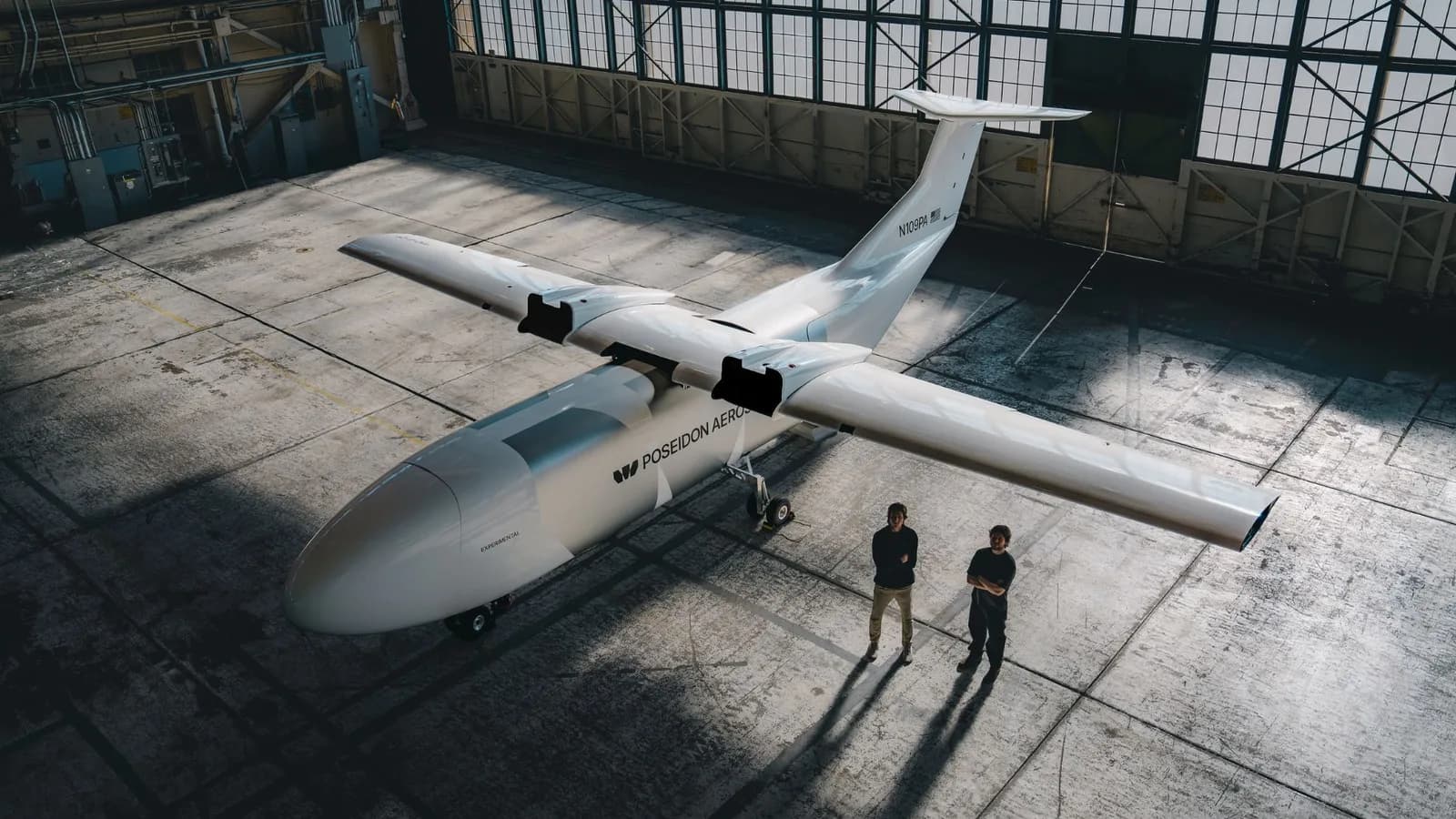
U.S.-based aviation and logistics startup Poseidon Aerospace is using artificial intelligence (AI) to test and improve its autonomous cargo aircraft on a computer before it ever flies.
To conduct these tests, the company is using AI tools developed by Flexcompute, a Boston-based physics simulation and AI company founded in 2015.
The AI automatically prepares the aircraft’s digital model for aerodynamic simulations, allowing engineers to predict how it will perform in the air much faster than before.
Using conventional methods, building the aircraft’s aerodynamic database—a collection of performance data used to understand how the aircraft behaves under different flight conditions—took nearly eight months.
Now, that timeline has been drastically shortened. The use of AI-powered geometry preparation and simulation tools has reduced the time required to generate the database from eight months to just three weeks, the company said in a statement on Tuesday (November 17).
The faster workflow also allows engineers to run 10 times more simulations, helping them refine the aircraft’s design before building and flying it.
Poseidon Aerospace designs, manufactures, and operates unmanned cargo aircraft for regional freight transport and defense logistics in remote areas with limited infrastructure. Its flagship aircraft, Egret, is a 50-foot autonomous freighter capable of carrying up to 4,000 pounds (1,814 kg) of cargo while operating from short paved or unpaved runways without relying on conventional airport infrastructure.
Building ‘Physics Twin’
But how can the company evaluate an aircraft that hasn’t been built yet?
To make that possible, Poseidon is creating a highly accurate virtual copy of the aircraft, called a “Physics Twin,” using GeometryAI and Flexcompute Flow (formerly Flow360).
Instead of waiting until the real aircraft is built and flown, engineers test its performance on a computer throughout the design process.
This approach is different from building a traditional digital twin that is typically used to monitor an aircraft after it has been built; a Physics Twin is created before the aircraft exists.
The new method uses the laws of physics to predict how the aircraft will behave, allowing engineers to compare different designs, identify potential problems, and make improvements long before any hardware is manufactured or flight testing begins.
For Poseidon, the biggest benefit isn’t just speed; it’s giving engineers more time to explore and refine new aircraft designs.
“With a small engineering team, we want AI to expand what our engineers can explore, not add complexity,” said Rohan Sharma, Ph.D., vice president of engineering at Poseidon Aerospace.
“GeometryAI gets our aircraft geometry ready for simulation, Flexcompute Flow gives us answers quickly, and our internal Python workflow with an AI agent connects the process end to end. The result is less time managing tools and more time engineering the aircraft, making design decisions, and closing trade studies.”
According to the company, adopting the technology has accelerated parts of its engineering workflow by 25 times. Design studies that were expected to take about 200 days can now be completed in just over a week.
“Regional air cargo is ripe for aircraft informed by bleeding-edge design techniques,” said Vera Yang, president of Flexcompute. “We’re removing computational bottlenecks, enabling innovators like Poseidon to ask better questions, explore more designs, and bring transformative aircraft to market demonstrably faster and safer.”
Source: https://interestingengineering.com/innovation/8-months-3-weeks-us-aerospace-company
Get the latest news delivered to your inbox.
Related articles