
Arctic secrets revealed: Seven-year hydrophone record exposes what lurks beneath the ice
A hydrophone sitting half a kilometer beneath the Beaufort Sea has spent seven years listening...
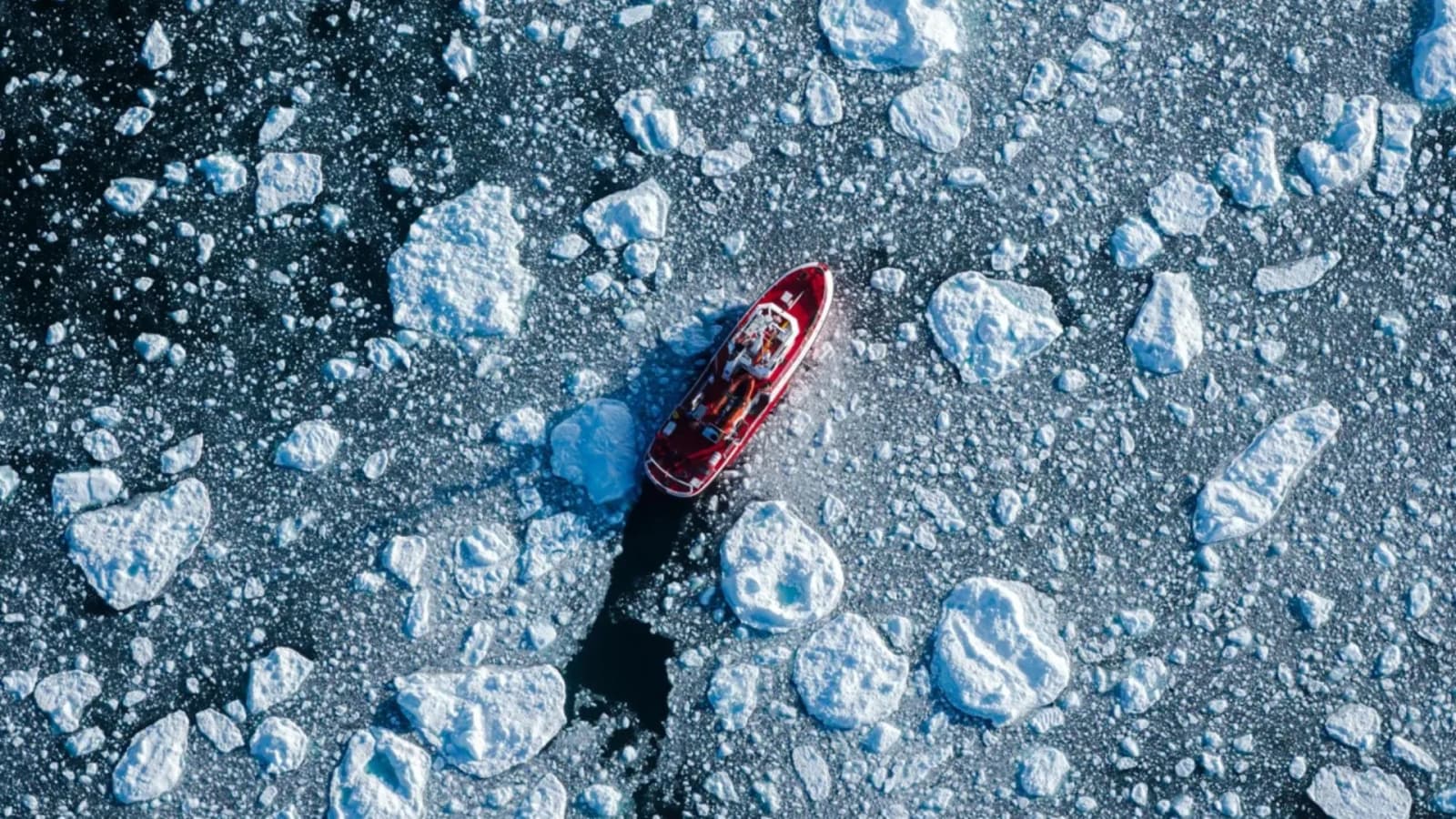
A hydrophone sitting half a kilometer beneath the Beaufort Sea has spent seven years listening to the Arctic.
Its recordings reveal how dramatically the underwater environment changes throughout the year. That matters for scientists trying to spot signals from earthquakes, explosions, and human activity.
Researchers at Los Alamos National Laboratory analyzed the continuous recordings to establish a long-term acoustic reference for the region. Such records remain uncommon in the Arctic, where harsh conditions make sustained monitoring difficult.
The team used data from one of NOAA’s Ocean Noise Reference Station sensors. The station sits 500 meters below the sea surface and records sounds traveling through the water.
That long view gives researchers something they rarely have in the Arctic. It shows what normal underwater conditions sound like before an unusual event enters the picture.
Ice turns into signal
Sea ice plays a major role in shaping that acoustic environment. Its influence becomes especially pronounced during the Arctic winter.
Moving and deforming ice produces substantial underwater noise. Summer brings a different pattern, with waves becoming a dominant source of sound.
Those seasonal shifts can complicate event detection. A signal that stands out during one season could become harder to distinguish during another. “Before you can reliably detect something unusual, you have to understand what’s normal,” said Siobhan Niklasson, the study’s lead author.
Niklasson and her colleagues used the seven-year record to examine those changing conditions. Their analysis shows how the acoustic background varies across the year.
The researchers also identified noise from seismic surveys that use air guns to investigate geology beneath the seafloor. Such surveys add another human-made source to the Arctic soundscape.
Ocean carries distant signals
Hydrophones can detect sounds that travel considerable distances through seawater. That capability makes them useful for monitoring remote parts of the Arctic.
Earthquakes can generate underwater acoustic signals that reach sensors far from their origin. Explosions can create distinct signals as well, depending on their location and surrounding conditions. Ship traffic adds another layer to the acoustic picture. So do waves, wind, and marine activity.
Separating those sounds requires more than simply detecting an increase in underwater noise. Scientists need enough background data to determine whether a signal represents something unusual.
The Los Alamos study provides that context at one Arctic location. It also shows how environmental conditions can influence what monitoring systems can detect.
Demand surges
The timing matters as activity across the Arctic continues to change. Retreating sea ice is opening waters that were once difficult to reach for much of the year.
More ships and resource exploration could introduce additional acoustic activity. Geopolitical interest in the region also creates greater demand for reliable monitoring.
A longer acoustic record could help researchers track those changes against an established baseline. It could also improve their understanding of when natural noise masks signals of interest.
The study does not attempt to create a single system for monitoring the entire Arctic. Instead, it provides a detailed reference for interpreting sounds recorded beneath the Beaufort Sea.
Seven years of continuous listening now give researchers a clearer picture of that underwater environment. The findings could help determine what stands out when the Arctic gets unusually loud.
The study was published in the Journal of the Acoustical Society of America.
Source: https://interestingengineering.com/innovation/arctic-hydrophone-seven-years-sounds
Related articles

Quantum battery: Scientists use charging to balance power, stable energy delivery
A collaboration of researchers from various parts of the world has identified the fundamental limits...
High-speed water droplets could damage supersonic vehicles, study reveals
A team of Boston University (BU) researchers led by Associate Professor Sheryl Grace is studying...

US scientists find solid battery material moves lithium ions rapidly above 260°F
A promising solid battery material lets lithium ions move rapidly when heated above 260°F (400...

Argonne scientists evaluate gravity-driven safety systems for advanced nuclear reactors
Even when a nuclear reactor goes dark, it is not truly asleep. The chain reaction...

Ranked: The Top Research Hospitals by Reputation in 2026
Charité leads the top research hospitals by reputation in 2026, as eight countries place institutions in the global top 10.
100x-brighter fourth-gen X-rays: China fires first 2.2-GeV electron beam at HALF
China has achieved a landmark milestone in the construction of its most advanced scientific instrument...