
Deep drilling project targets hot rock for water-free geothermal power in New Mexico
U.S. geothermal energy developer XGS Energy will drill a deep vertical well in New Mexico...
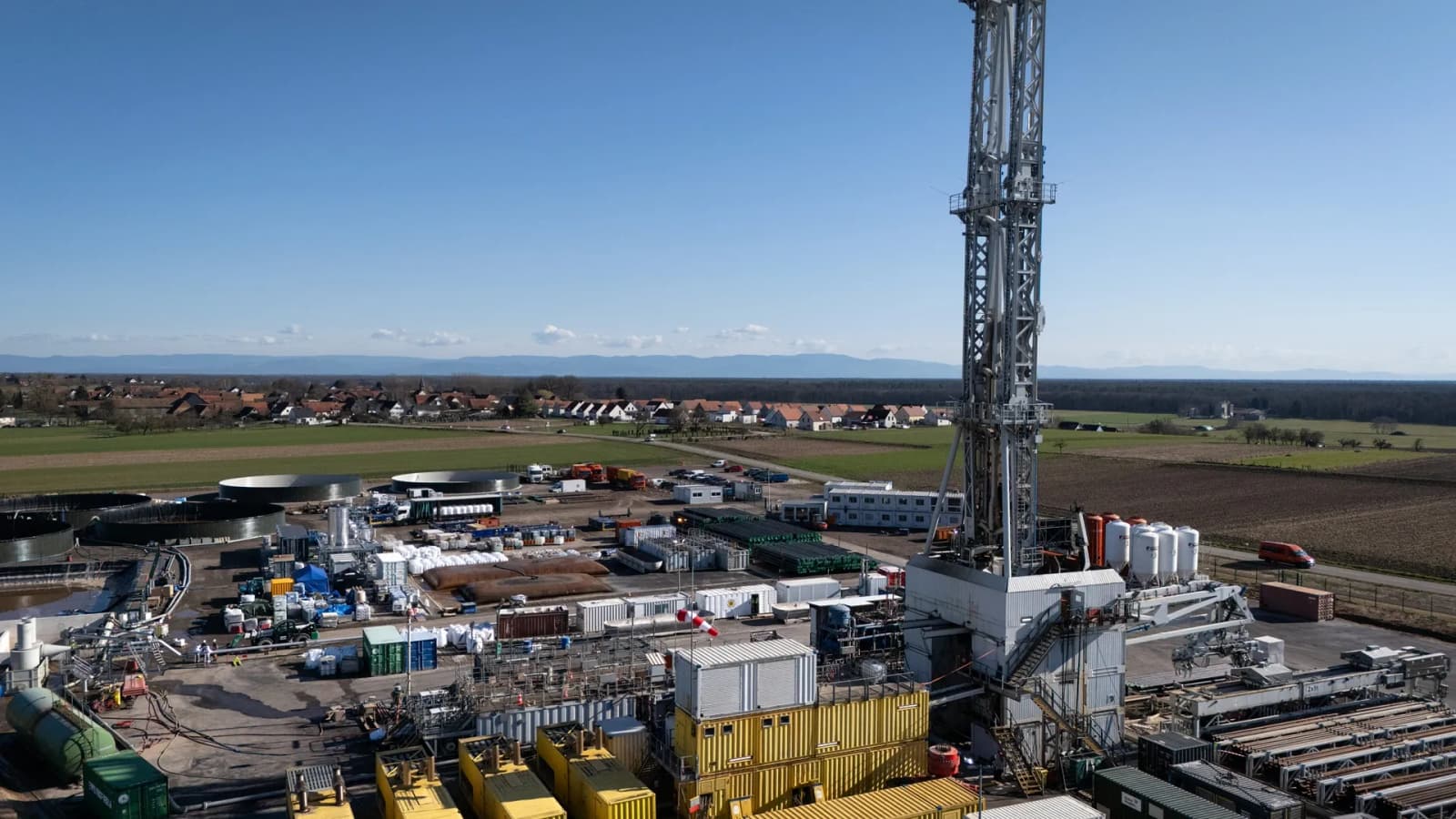
U.S. geothermal energy developer XGS Energy will drill a deep vertical well in New Mexico to gather underground data needed to develop commercial-scale geothermal power that does not consume water.
The U.S. Department of Energy selected the Houston-based company for federal funding as part of a $99 million program covering 21 geothermal projects across the country. XGS will work with Baker Hughes, New Mexico Tech and Sandia National Laboratories on the project.
The appraisal well will collect downhole temperature measurements, logging information, core samples and continuous drilling data. XGS plans to use those findings to better understand underground heat resources and design future geothermal wells in the region.
The project is particularly relevant to New Mexico because XGS’ geothermal system is designed to operate without consuming water. That could allow developers to tap underground heat in areas where geothermal resources are available but water is scarce.
Drilling reveals hidden heat
Unlike conventional geothermal projects that depend heavily on naturally occurring underground water, XGS is developing a closed-loop system that circulates a working fluid through sealed wells. Heat is transferred from surrounding rock into the system rather than extracting hot groundwater from underground formations.
The upcoming well is primarily an appraisal project rather than a commercial power-producing well. Information collected during drilling will be used to improve thermal and geological models and reduce uncertainty before larger projects are developed.
“New Mexico sits on a substantial and exciting geothermal resource, and we’re grateful to the Department of Energy for investing in the subsurface data needed to transform our nation’s abundant geothermal resources into affordable, reliable American energy,” said Lucy Darago, chief commercial officer of XGS Energy.
Baker Hughes will bring drilling, formation evaluation and industrial expertise to the project, while New Mexico Tech and the New Mexico Bureau of Geology and Mineral Resources will contribute regional geological and geothermal expertise. Sandia will provide its experience in drilling technology and improving drilling efficiency.
“We look forward to drilling this important appraisal well,” said Al Vickers, chief operating officer of XGS Energy. “The geological and operational data we collect in New Mexico will tighten our thermal and geologic models, inform how we design and construct wells across the region, and, in doing so, help us take another important step toward unlocking geothermal resources at scale in New Mexico.”
Water limits lose grip
Next-generation geothermal technologies are designed to expand geothermal power beyond locations that already have the combination of heat, water and permeable rock required by conventional plants.
XGS says its approach separates geothermal energy production from dependence on natural water resources and specific geological conditions. The company ultimately aims to use the technology to provide continuous electricity to the grid in locations with accessible hot rock.
The New Mexico project will also examine how drilling can be made more efficient and less expensive. Sandia said its contribution will draw on decades of work involving drill-bit performance, drilling costs and operational efficiency.
New Mexico Tech, meanwhile, plans to use experience from the project to support geothermal workforce training, including its geothermal certificate program.
The DOE selection does not yet guarantee that XGS will receive federal money. The company must first undergo award negotiations with the department, and DOE can cancel negotiations or withdraw the selection before funding is issued.
Related articles

From 420 to 936 ppm: Why rising CO2 makes indoor plant biofilters a necessity
A new study from Yale University and collaborating institutions has shown that building-integrated plant and...