
Mercedes-Benz tests ceramic solid-state battery promising safer, fast-charging EVs
Mercedes-Benz will test ProLogium’s latest Gen4 lithium ceramic battery cells as the German automaker evaluates...
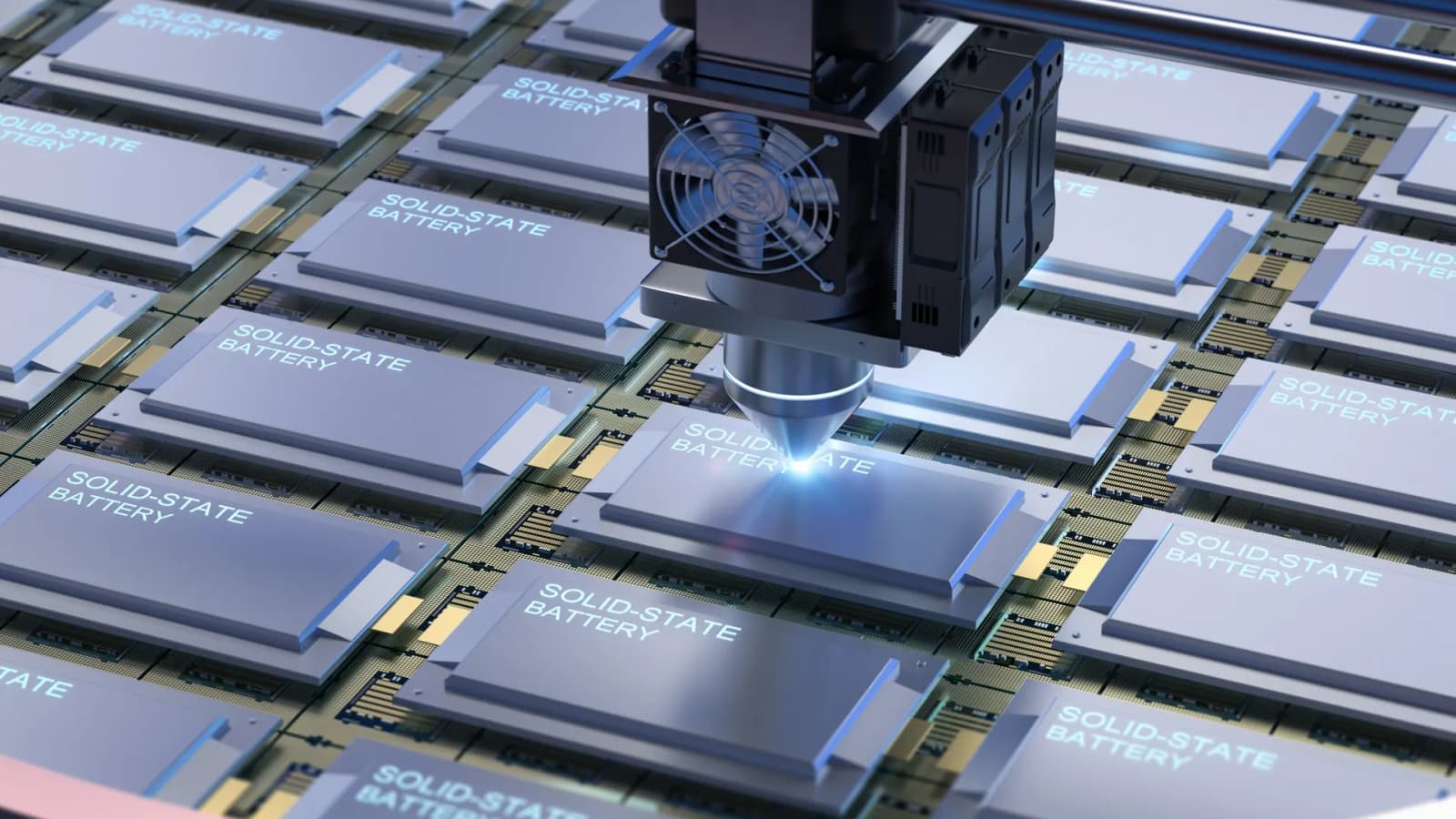
Mercedes-Benz will test ProLogium’s latest Gen4 lithium ceramic battery cells as the German automaker evaluates next-generation battery technology for future electric vehicles.
The companies have signed a joint testing agreement that gives Mercedes-Benz priority access to ProLogium’s Gen4 Superfluidized Inorganic Next-Generation Lithium Ceramic Battery cells.
The cells will undergo electrical, thermal, and safety testing at Mercedes-Benz facilities and specialized external institutes. The program will assess whether the technology could eventually be integrated into future vehicle platforms.
ProLogium says its Gen4 platform is designed to balance five areas: safety, performance, energy density, scalable manufacturing and cost. The technology combines a non-flammable inorganic electrolyte, ceramic separator and an active safety mechanism while targeting fast charging, high power output and low-temperature performance.
Ceramic battery enters testing
The agreement expands a partnership between Mercedes-Benz and ProLogium that dates to 2016. The automaker is also a strategic investor in the Taiwanese battery developer.
The companies have previously worked on different lithium ceramic battery formats, including pouch and prismatic cells, as well as ProLogium’s Bi-Polar technology. Their collaboration has moved from early cell development and validation toward evaluating batteries for possible vehicle applications.
“Over nearly a decade, our collaboration with Mercedes-Benz has evolved from early cell development and validation to testing our latest Gen4 technology for future vehicle applications,” said Vincent Yang, founder and CEO of ProLogium.
The Gen4 design follows ProLogium’s earlier hybrid-solid-state Gen3 technology. Its newer approach, introduced in 2025, is intended to combine characteristics associated with solid-state and liquid battery designs while addressing manufacturability and cost.
Mercedes-Benz will now put those claims through its own testing process before determining whether the cells are suitable for automotive use.
“By combining ProLogium’s pioneering solid-state battery approach with Mercedes-Benz’s deep battery development, testing and integration capabilities, we are taking the next step in exploring advanced battery technologies for future electric vehicles,” said Jörg Burzer, Mercedes-Benz Group’s chief technology officer for development and procurement.
Gigafactories target larger scale
ProLogium is also expanding production capacity as it moves the technology toward larger-scale automotive deployment.
Its Taoke Gigafactory in Taiwan has completed GWh-scale manufacturing validation and currently supports C-sample production, demonstration vehicle programs and preparations for commercial production.
The company is also building a gigafactory in Dunkirk, France. Its first phase is designed for 4 GWh of annual production capacity, expected to be progressively reached by 2030. The site is ultimately planned for a capacity of up to 44 GWh.
The European plant is intended to replicate manufacturing processes developed in Taiwan and eventually supply enough cells to support EV platforms in Europe.
ProLogium says it has delivered more than 2.4 million battery cells since commercializing its solid-state technology in 2013, including around 10,000 automotive battery samples.
Related articles

Here’s the Tesla Semi… again
Remember the Tesla Semi? The long-gestating, heavy-duty truck first introduced in concept form in 2017 is finally in volume production as of April 2026 - nearly a decade after its initial…
General Motors rolls out first EVs using batteries with 100% recycled critical minerals
General Motors has built new electric vehicle batteries using cathode materials containing 100 percent recycled...
Ready, set, jet: Italy to pit F-35B fighter jet against Ferrari SF90 in ground race
The Italian Navy plans to find out whether one of its F-35B fighter jets can...
100 GWh CATL EV battery factory starts trial runs with two production lines
CATL has begun trial production of battery cells at its new factory in Debrecen, Hungary,...

Saudi Arabia’s new Exobot EVs make the Cybertruck look normal
The Kingdom of Saudi Arabia is mostly known for its global dominance over petroleum production and oil reserves - not necessarily cars and auto manufacturing, and certainly not electric vehicle…
New nanoscale electrode design could unlock lighter, longer-range EV batteries
South Korean researchers have developed a nanoscale electrode design that could help make electric-vehicle batteries...