OpenRouter drops three inference providers and pulls 125 endpoints from zero data retention after prompt leaks
AI routing platform OpenRouter off-boarded three inference providers, removed 125 endpoints from Zero Data Retention eligibility and notified affected customers after Dragos canary-token research exposed data leaks across the AI supply chain.
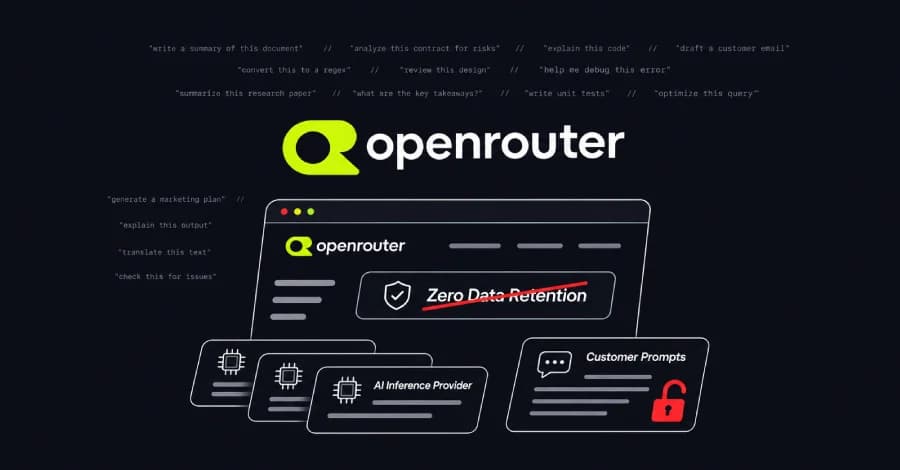
OpenRouter, a gateway that routes customers' AI requests to a pool of third-party providers, said on November 22 that it has off-boarded three inference providers, removed 125 endpoints from Zero Data Retention (ZDR) eligibility and notified all potentially affected customers.
The move follows the Dragos canary-token research covered by egov.mn yesterday, in which researchers seeded about two million prompts with unique links and credentials between July and November and watched who used them, exposing leaks of user data across the AI supply chain.
What OpenRouter said
OpenRouter said the findings did not show any breach of or unauthorized access to OpenRouter itself, but revealed problems at specific inference providers. The ZDR removals cover providers flagged by the researchers plus additional endpoints removed as a precaution. The company is adapting the researchers' testing approach to run the checks on an ongoing basis, verifying network paths to find requests and responses forwarded to third parties, and will require assurances and validation before restoring ZDR eligibility. It did not name the three providers it removed.
What providers have disclosed
According to The Hacker News, Phala said an attacker took control of one of its inference servers and could view request data while it was being processed; requests to its DeepSeek V4 Flash model between October 21 and November 8 should be treated as exposed and any secrets in them rotated. Together AI said an unauthorized party downloaded stored prompt samples from June and July after an AI coding agent committed a credential to a public GitHub repository, and it has made zero data retention the default for new accounts. Novita confirmed that a routing configuration issue sent some MiniMax requests on to MiniMax's official API.
"A privacy flag doesn't help when the attacker is already inside," wrote HD Moore, Dragos's chief research officer. The researchers are now working with about a dozen providers. Their advice to users: choose upstream providers deliberately, verify that privacy settings actually change where requests go, and keep credentials out of prompts.
Sources: OpenRouter, The Hacker News
Get the latest news delivered to your inbox.
Related articles