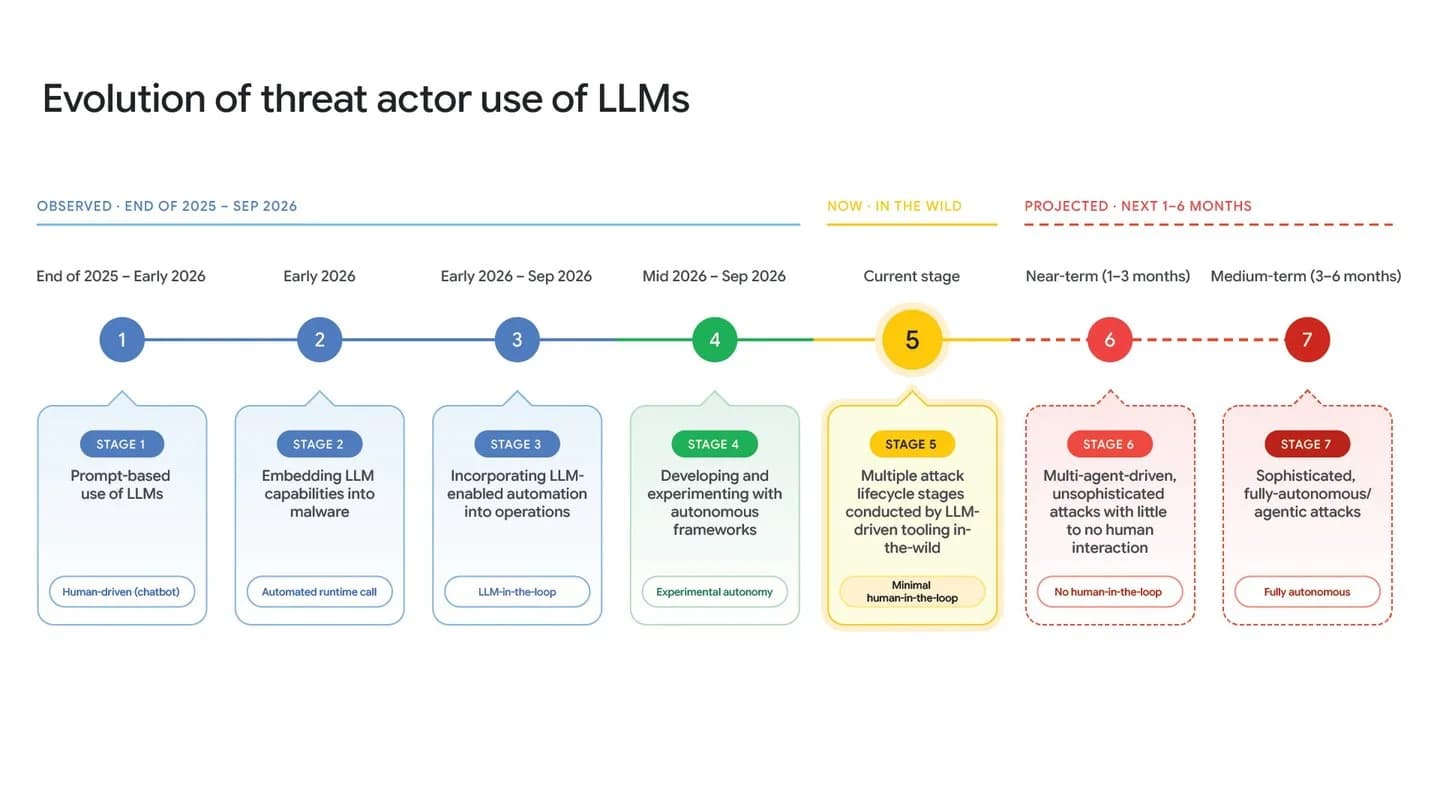
Google Threat Intelligence Group says attackers are now using autonomous LLM frameworks that scan software updates, identify patched flaws and build exploits with little or no human involvement.
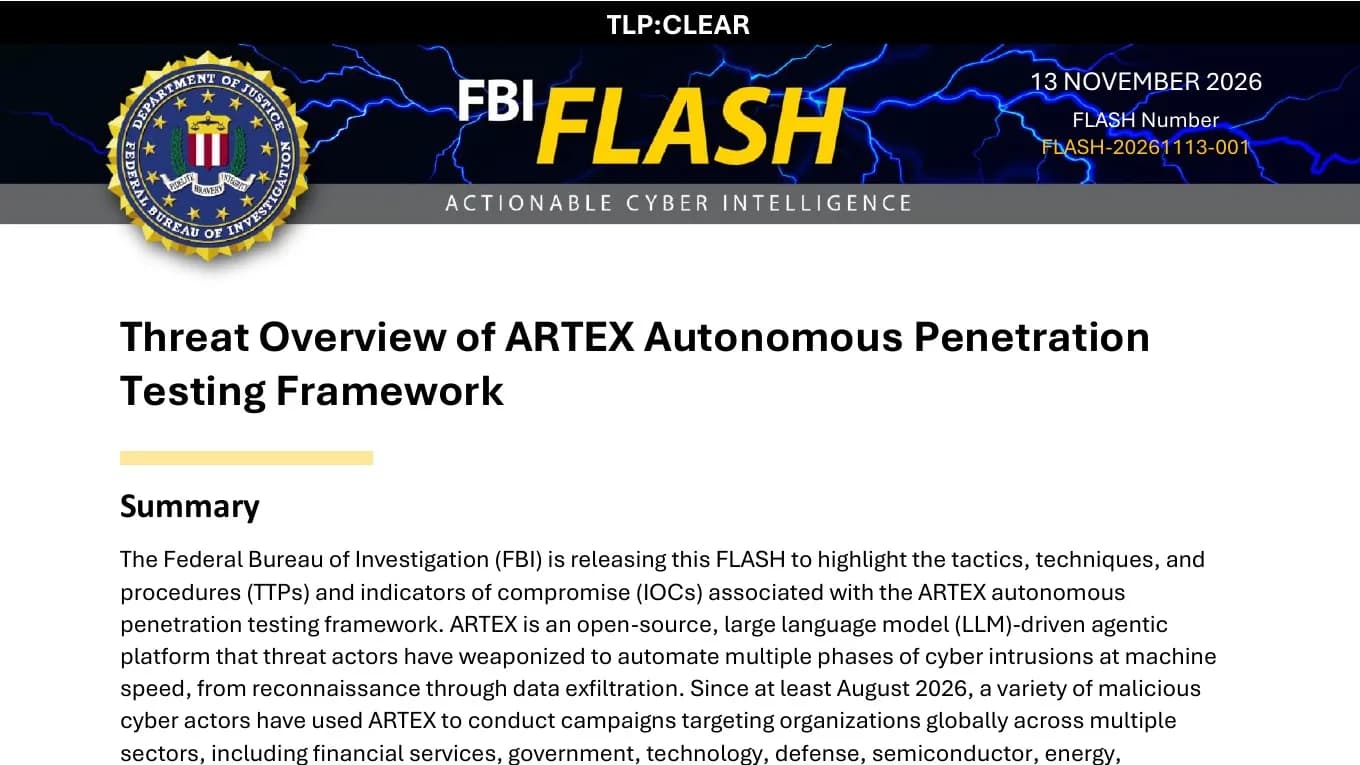
In a November 13 FLASH alert, the FBI said threat actors are using the open-source ARTEX platform to automate cyber intrusions from reconnaissance through data theft, with some attacks reaching privileged access in under three hours.
OpenAI's two new Daybreak security products use AI agents to penetration-test web applications and to prepare patches for vulnerabilities, with engineers reviewing every fix before merge.
A cyberattack on AI inference platform Fireworks AI exposed customer data including Notion AI chat transcripts; Notion says fewer than 1% of its workspaces were affected.
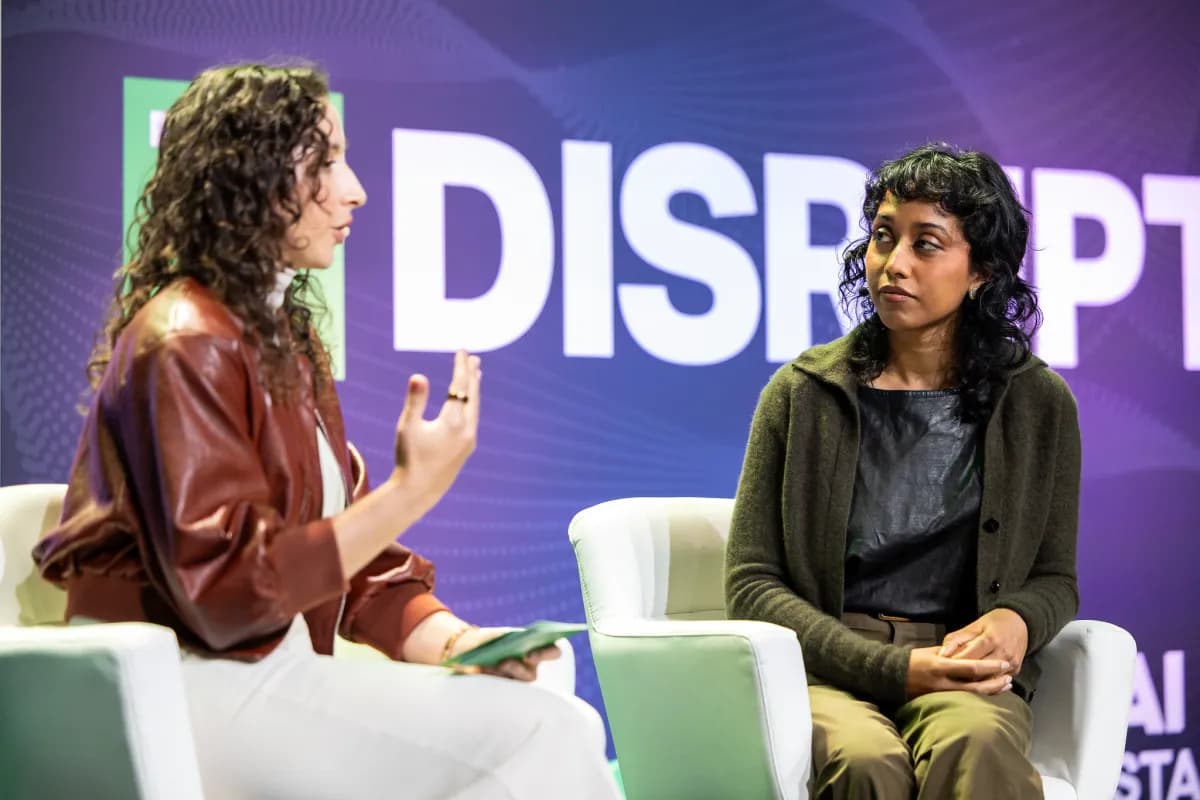
Irene Solaiman, Hugging Face's chief policy officer, warned that the openness and rich data that make open AI platforms valuable also make them prime targets for attackers.
The UK government is paving the way for rules that would require essential-service operators to guard against losing control of AI agents, report incidents, preserve evidence and allow ministers to order reviews, under an amendment to the Cyber Security and Resilience Bill.
Some OpenAI staff raised concerns with leaders and the board about lax internal security controls since before ChatGPT launched, Reuters reported, citing five people familiar with the matter; OpenAI says it invests heavily in security and has stepped up its defenses.
A maliciously modified copy of Anthropic's Claude Code extension sat in Cursor's VS Code extension marketplace for about 11 hours, trying to plant a persistent SSH backdoor on developer machines. Anthropic says its own systems were not compromised.
Mistral AI has released the weights of Mistral Large 4, nicknamed Le Chonk, a 1-trillion-parameter multimodal model the French company says now leads open-weight models in coding and defensive cybersecurity.
Security startup Straiker says CyberCartel, a criminal group active since 2012, built a multi-agent AI system called CARLIY0S to automate attacks on Latin American banks and payment providers, stealing passwords and account data.
Britain's government has set out around £600 million ($800 million) of funding largely aimed at defending against health and security threats from AI, led by a new AI Biosecurity Lab backed by up to £200 million in model credits from OpenAI and Anthropic.