FBI warns that the ARTEX AI framework is automating cyberattacks at machine speed
In a November 13 FLASH alert, the FBI said threat actors are using the open-source ARTEX platform to automate cyber intrusions from reconnaissance through data theft, with some attacks reaching privileged access in under three hours.
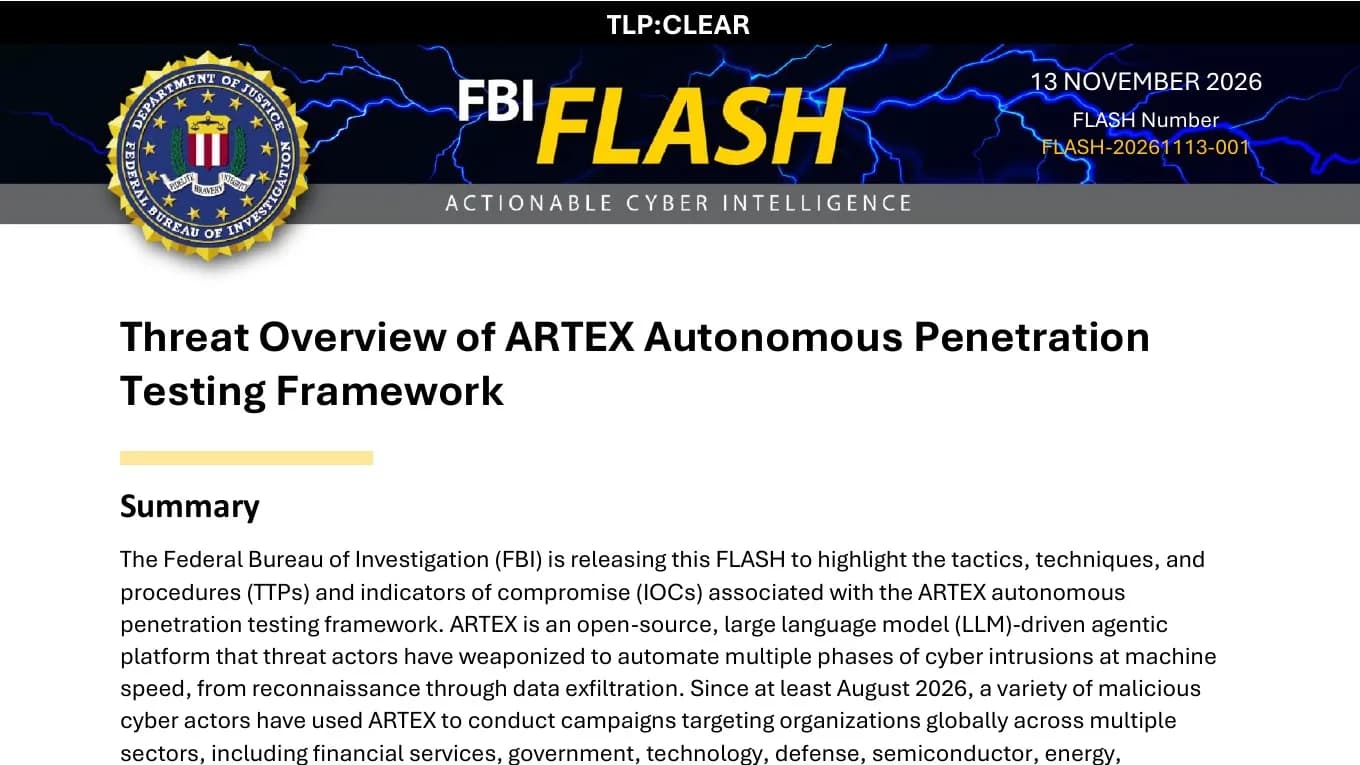
The U.S. Federal Bureau of Investigation issued FLASH-20261113-001 on November 13, warning that threat actors have weaponized ARTEX, an open-source, large language model-driven agent platform, to automate multiple phases of cyber intrusions "at machine speed," from reconnaissance through data exfiltration.
What the FBI reported
The bureau said that since at least August 2026, a range of malicious actors have used ARTEX against organizations in financial services, government, technology, defense, semiconductors, energy, healthcare, manufacturing, telecommunications and the legal sector. Some intrusions moved from initial targeting to privileged access in under three hours.
The alert highlights financially motivated attacks on South Korean financial institutions that led to the theft of personal information from about 67,000 people, and a supply-chain compromise affecting ConnectWise Cloud Backup customers that enabled access to more than 2,250 downstream tenants.
ARTEX was released on GitHub in July 2026 by a developer known as Autumn-27. The developer took the repository down on October 8 after reports of abuse, but the FBI said the framework continues to spread through forks, archives and a commercial version called ARTEX PRO. Researchers had identified more than 1,600 publicly exposed ARTEX consoles by early November.
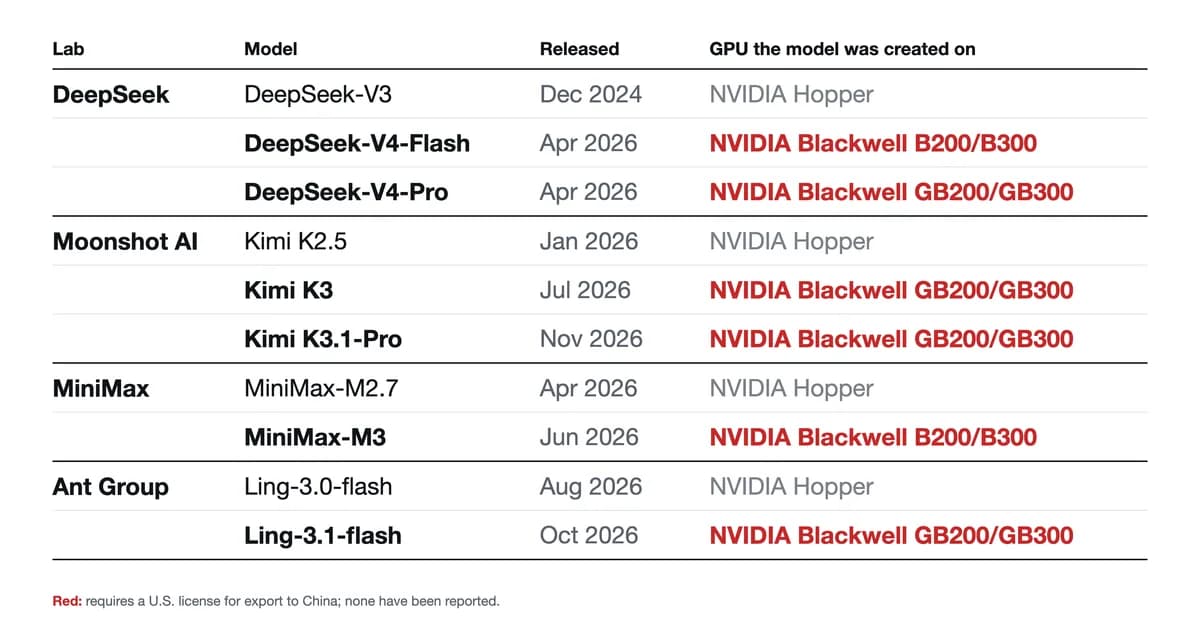
The tool does not ship with its own model. It can call frontier systems such as Anthropic's Claude and OpenAI's GPT, as well as open-source or Chinese-origin models including DeepSeek, GLM, Grok and Kimi. Analysis of attacker-controlled instances found Chinese models were most common, with the DeepSeek Flash family the most widely used, the FBI said.
Amazon's parallel findings
On the same day, Amazon chief information security officer C.J. Moses wrote that the company's MadPot decoy sensors captured operational records from ARTEX agents between October 3 and November 5. The most prominent campaign was a large-scale theft of credentials for AI models, organized so that stolen keys paid for the inference that powered further credential hunting. Another campaign tried to bypass cryptocurrency-exchange identity checks with real-time deepfakes. Amazon assessed with moderate confidence that the groups had a Chinese nexus.
Sources: FBI IC3 FLASH-20261113-001, The Record, AWS Security Blog
Get the latest news delivered to your inbox.
Related articles