DEEP Robotics deploys wheel-legged robot to automate inspections at Chinese cattle farm
DEEP Robotics has deployed a wheel-legged robot, LYNX M20, at a cattle farm to automate...
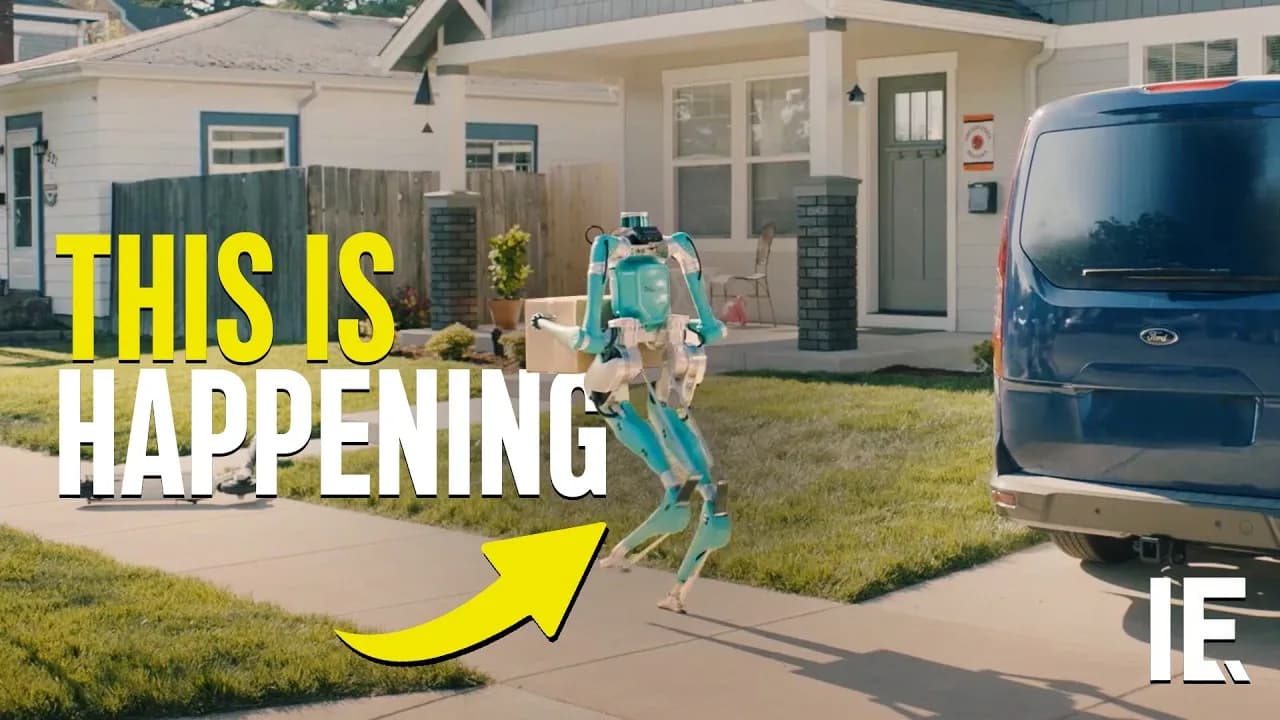
DEEP Robotics has deployed a wheel-legged robot, LYNX M20, at a cattle farm to automate livestock monitoring and farm inspections.
Developed with technology partner Cloudwise, the robot uses multimodal sensing to monitor cattle behavior, barn conditions, and farm infrastructure.
The deployment covers a farm spanning approximately 73 hectares at Funiu Animal Husbandry’s Hushan cattle farm in China’s Henan province.
The system aims to improve inspection frequency, detect changes more consistently, and support more efficient precision livestock management.
Automates cattle monitoring
The integrated system combines visible-light cameras, thermal imaging, and multimodal sensors to monitor cattle behavior, barn conditions, and farm infrastructure.
Robot dogs are heading to the farm!
DEEP Robotics' LYNX is now supporting 24/7 autonomous inspections at a cattle farm in China.
AI-powered monitoring helps detect unusual activity, track cattle behavior, and support smarter farm management.#DEEPRobotics #SmartFarming… pic.twitter.com/FrajwUmLml
— DEEP Robotics (@DeepRobotics_CN) November 21, 2026
The LYNX M20 uses a mobile sensing platform to gather information from different areas of the cattle farm, addressing limitations associated with fixed cameras and isolated environmental sensors. As it travels through barn aisles and between pens, the robot adjusts its camera position and movement in response to cattle changing their positions or postures. This allows its inspection system to capture observations from multiple viewpoints rather than relying on a fixed field of vision.
Its AI-enabled monitoring system can count cattle in individual pens and classify activities such as feeding, standing, and lying down. These observations are used to calculate the proportion of animals exhibiting particular behaviors, providing measurable indicators that farm managers can track over time. The system can also identify changes in cattle stride and weight distribution that may indicate early signs of lameness.
Additional capabilities include detecting rumination and counting chewing movements during close-range inspections, as well as identifying fighting between animals and generating alerts. Thermal imaging adds another layer of monitoring by screening cattle for abnormal surface-temperature patterns that could indicate potential health problems.
Enables smart livestock
The robot also collects environmental data while conducting its patrols. Its sensors measure temperature, humidity, and ammonia concentrations across different sections of the barns, allowing the inspection platform to generate spatial maps of environmental conditions. These readings can help identify poorly ventilated areas and localized pollutant concentrations that individual fixed sensors might overlook.
The system also monitors feed availability by estimating the proportion of forage remaining in feeding troughs and flagging sections that require replenishment. Infrastructure inspections run alongside these tasks, with the robot photographing damaged fencing and detecting unsecured barn doors. Observations are transmitted to the farm’s intelligent inspection platform, where staff can review collected data and receive notifications about abnormal conditions.
The LYNX M20 follows predefined inspection routes covering barn aisles, feeding areas, and designated points between pens. When its battery runs low, it autonomously returns to its charging station and resumes its patrol after recharging. This automated patrol-and-recharge cycle is intended to support continuous monitoring without requiring staff to operate the robot throughout its inspection schedule.
Another important part of the deployment is integrating robotic observations with the farm’s existing digital management systems. Information collected by the robot can be combined with data from smart ear tags, fixed AI cameras, environmental sensors, and production management platforms. This creates a broader picture of conditions at individual-animal, pen, and barn levels.
Inspection records also include photographs and timestamps, allowing managers to trace detected abnormalities, assign follow-up tasks, and verify corrective actions. Accumulated data can help identify recurring patterns in feeding behavior, animal activity, and environmental conditions, supporting adjustments to inspection schedules and farm management practices.
Source: https://interestingengineering.com/ai-robotics/china-deploys-robotic-farm-inspector
Get the latest news delivered to your inbox.
Related articles