Five-ton John Deere loader masters two-wheel stunts without direct human control
A five-ton skid-steer loader from John Deere has been trained to balance on two wheels...
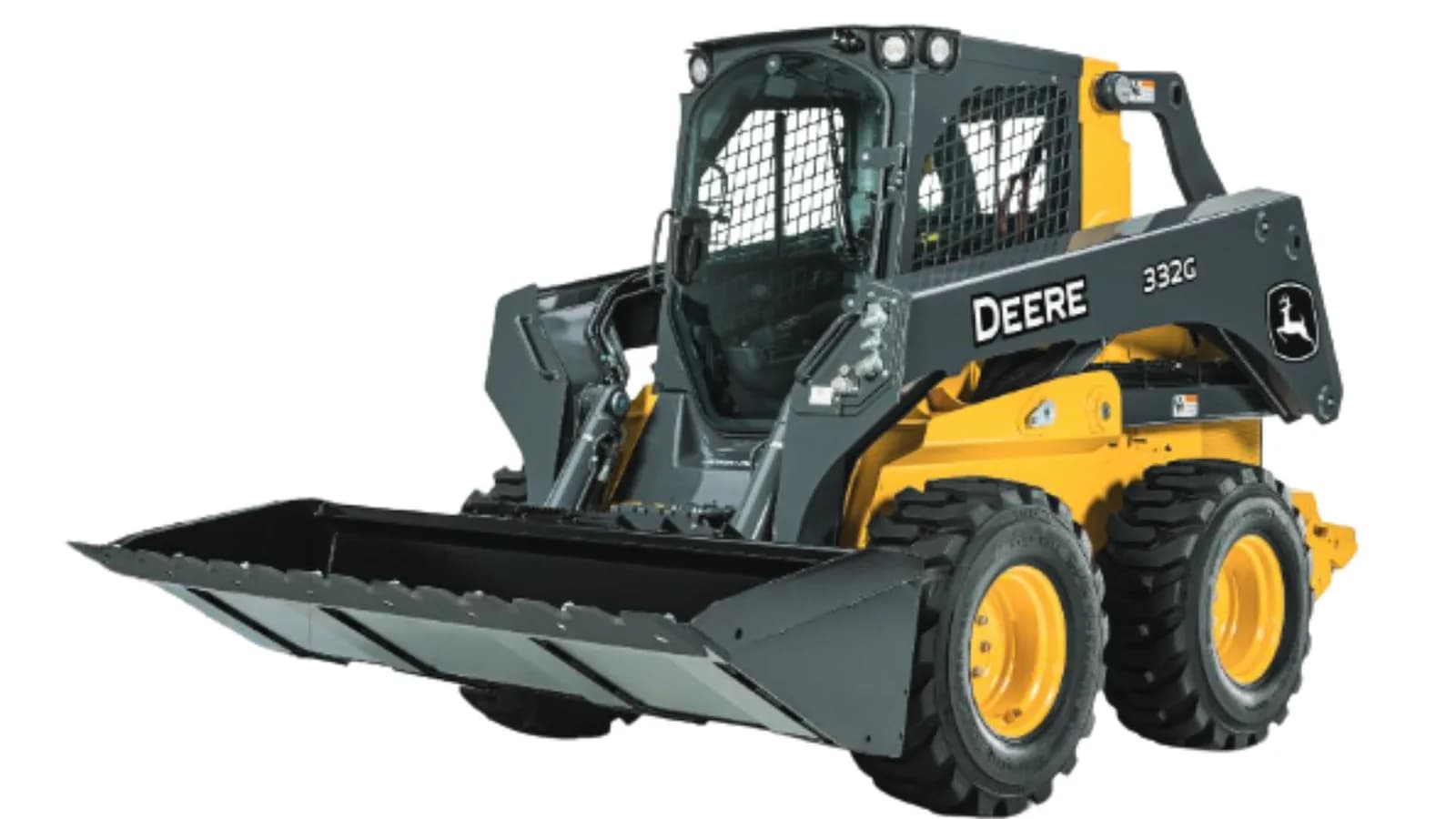
A five-ton skid-steer loader from John Deere has been trained to balance on two wheels and spin in a controlled manner. By using machine learning techniques, the loader model 332G can perform complex motions on rough terrain with no manual control.
Skid Steer Loaders are designed for transporting material and performing tasks on building sites, but have proved difficult to control due to their weight and hydraulics. Performing complex and extreme motions with these machines is challenging.
The system was created by researchers from ETH Zurich, Blue River Technology, Gravis Robotics and Intel, the research titled “Heavy metal acrobatics, learning dynamic control for skid-steer loaders”, explored whether it is possible to dynamically control a full size loader using machine learning.
From simulation to real-world acrobatics
Controlling the loader precisely is difficult. Variations in fluid movement, flexible components, nonlinear reactions and delays may occur. In addition, due to the weight of the machine performing extreme motions (balancing on two wheels) could be dangerous for the loader.
Reinforcement learning was used. This means that the agent within the system uses feedback to improve its performance. If the agent performs a helpful action it receives a reward, and if it makes a mistake it receives a penalty. Therefore, after many trials, it can improve.
Before attempting complex motions, the controller was trained within a simulation. Different conditions were applied so the loader was able to adapt in many ways. After training in simulation, the controller was implemented on the John Deere model 332G.
The trained controller from simulation to real world is called simulation to real world transfer. It allows control strategies to be tested in real world machinery. However, since there may be differences between the conditions in simulation and real world, care must be taken. In heavy machinery, this provides a way to train control systems to perform complex motions.
Heavy loader performs controlled stunts on two wheels
The 332G was able to raise its front section, balancing on two wheels, whilst balancing on two wheels the loader was able to navigate rough terrain following specific paths. Furthermore, it was able to perform controlled spins, without falling over.
During testing, the loader was able to move its front bucket forwards and backwards, whilst balancing on two wheels. It then returned to a four wheeled position safely. In order to perform these motions, the controller had to work to co-ordinate motion in wheels, hydraulics and balancing the centre of gravity of the loader.
This research could be useful for further research in applying machine learning control systems to construction, mining and material handling. The ability to perform unusual motions with this loader may allow researchers to create more advanced autonomous machinery for physically demanding tasks.
However, while the loader was able to perform certain experimental motions, it is not clear that this loader is suitable to perform routine tasks at construction sites autonomously. Furthermore, it is not clear that this system would be suitable to be used on normal working sites. More testing in practical environments would be necessary in order to understand how reliable the controller is in situations encountered by operators.
The study was published in the journal Science Robotics.
Source: https://interestingengineering.com/ai-robotics/john-deere-loader-balance-332g
Get the latest news delivered to your inbox.
Related articles