
Frog-inspired robot hops over obstacles, lands, and prepares to jump again using tiny motor
A robot small enough to fit in a palm can hop over a standard stair...
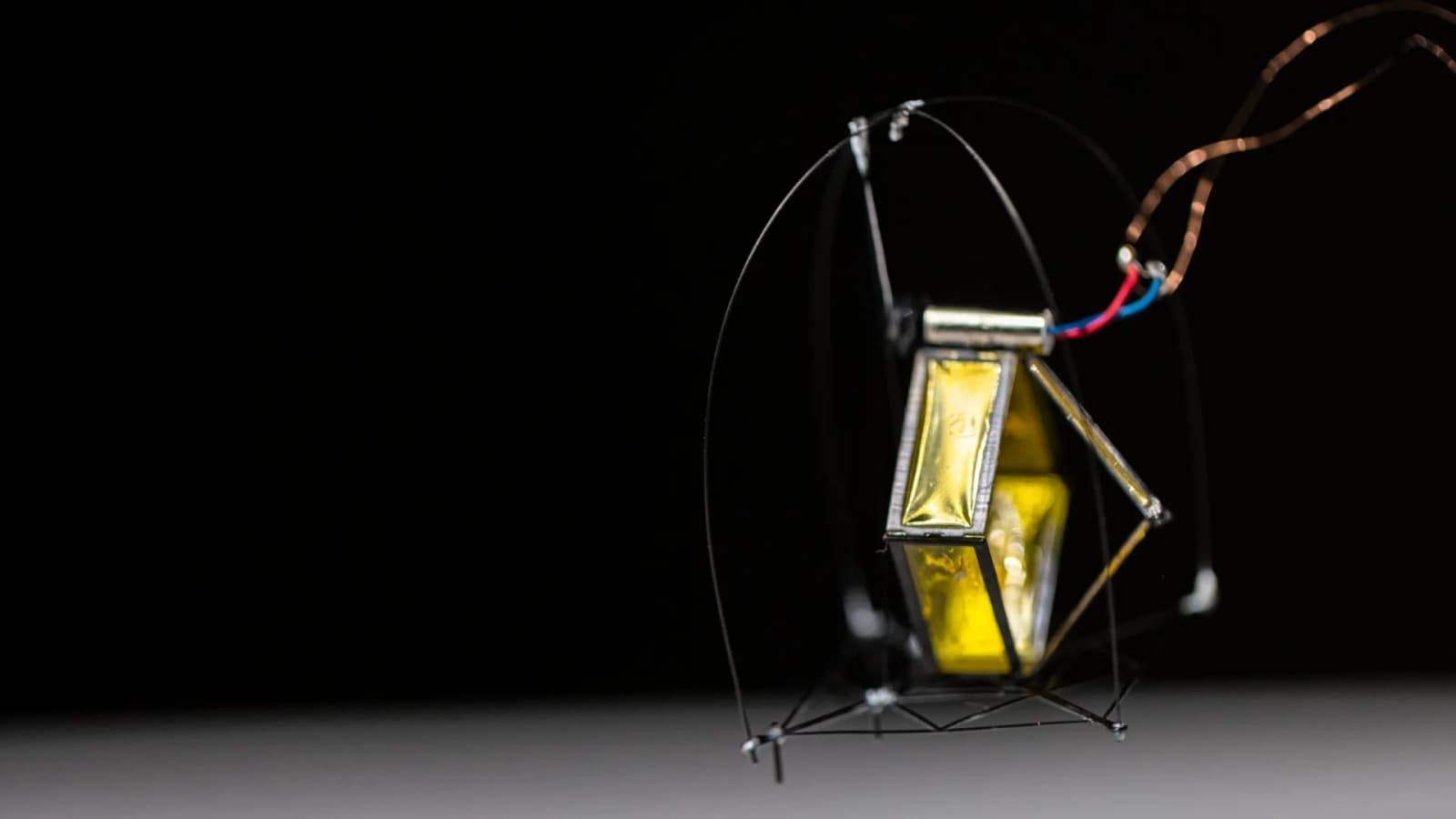
A robot small enough to fit in a palm can hop over a standard stair step, land, right itself, and jump again. Engineers at the University of Washington developed DirectHop to explore whether hopping could offer small robots a practical way to cross obstacles without flying.
The prototype uses a tiny electric motor and three folding legs to make repeated jumps. By changing the current sent to the motor, the researchers can set its jump height with single-centimeter accuracy.
The design could eventually help groups of inexpensive robots inspect oil refineries, monitor farms or explore other planets. For now, DirectHop is a prototype: it receives power through wires and cannot steer toward a destination.
A jump without springs
Many hopping robots borrow their mechanics from fleas. Springs store energy before releasing it in a jump, but that release makes the distance difficult to control. Springs and latches also become harder to build and operate as robots get smaller.
DirectHop takes a different approach. Its motor is connected by fishing line to a tower on the robot. When the motor accelerates, it winds up the line and climbs the tower, pulling the robot into the air.
Three hinged legs extend during the jump to keep the motor aligned with the robot’s foot.
“We found that a very small electric motor can accelerate fast enough to power a jump directly, the way a frog’s leg muscles directly power its hop,” said lead author Hanquan (John) Wang, a UW graduate research assistant in mechanical engineering.
“We also discovered that by adjusting the current going to the motor, we could make the robot jump specific distances,” he added.
Getting up for another hop
Landing presents another problem for a robot that must jump more than once. DirectHop tends to tumble in the air, so the team fitted it with a roll cage that supports it when it lands on its side.
The researchers could then right the robot 90% of the time by moving its motor back down the tower. That shifts its center of gravity and rolls it onto its foot, where it can prepare for the next jump.
The team drew inspiration for the roll cage from the shell of a box turtle, which can help the animal roll upright.
“In my mind, the three hardest challenges for hopping robots are the ability to vary jump length, self-right and reload for multiple hops,” said senior author Sawyer Fuller, a UW associate professor of mechanical engineering.
The path to independent movement
DirectHop still needs power and guidance to operate on its own. Wang and Fuller are working on onboard solar cells and a battery, along with a vibration motor for turning, retractable feet to adjust its hop angle, and a camera and electronics for navigation.
Their goal includes autonomous stair climbing: a robot that spots a step, determines the required jump, positions itself, and repeats the process after landing.
Wang estimates that a fully equipped version could cost about $10 to produce. If the team can solve the remaining challenges, groups of the robots could work alongside larger machines in places where losing an individual robot would not end the mission.
Source: https://interestingengineering.com/ai-robotics/tiny-hopping-robot-clears-a-stair
Related articles

OpenAI pauses training of its ‘most capable models’
As reports of OpenAI's models breaking containment, hacking sites, and generally getting out of control pile up, the company has made the decision to pause training of its most powerful models.

Can Cloudflare CEO Matthew Prince save the web from AI?
Today, I’m talking with Matthew Prince, who is CEO of Cloudflare. This episode is part of a two-part series on the future of business.
US startup develops drone propulsion system to boost range, payload and speed
Boston-based MagLev Aero is preparing a full-scale demonstration of its drone propulsion platform, which it...

What Northrop Grumman’s F/A-XX concept reveals about the Navy’s future carrier fighter
An aircraft carrier gives a fighter a moving runway, but it also limits the space...

Wind turbines reduce radar coverage by 7% and increase blind spots by 15%, study finds
A new Chinese study has found that offshore wind turbines can confuse shore-based radar systems....

Tesla close to making 1,000 Optimus humanoids a week, but robots struggle with tasks
Tesla has reported that it is now in a position to produce hundreds of its...