Honda develops wireless in-motion charging tech for EVs and large commercial vehicles
Honda and two Taisei Group companies say they have developed the core technology for a...
This story was prepared automatically by software.
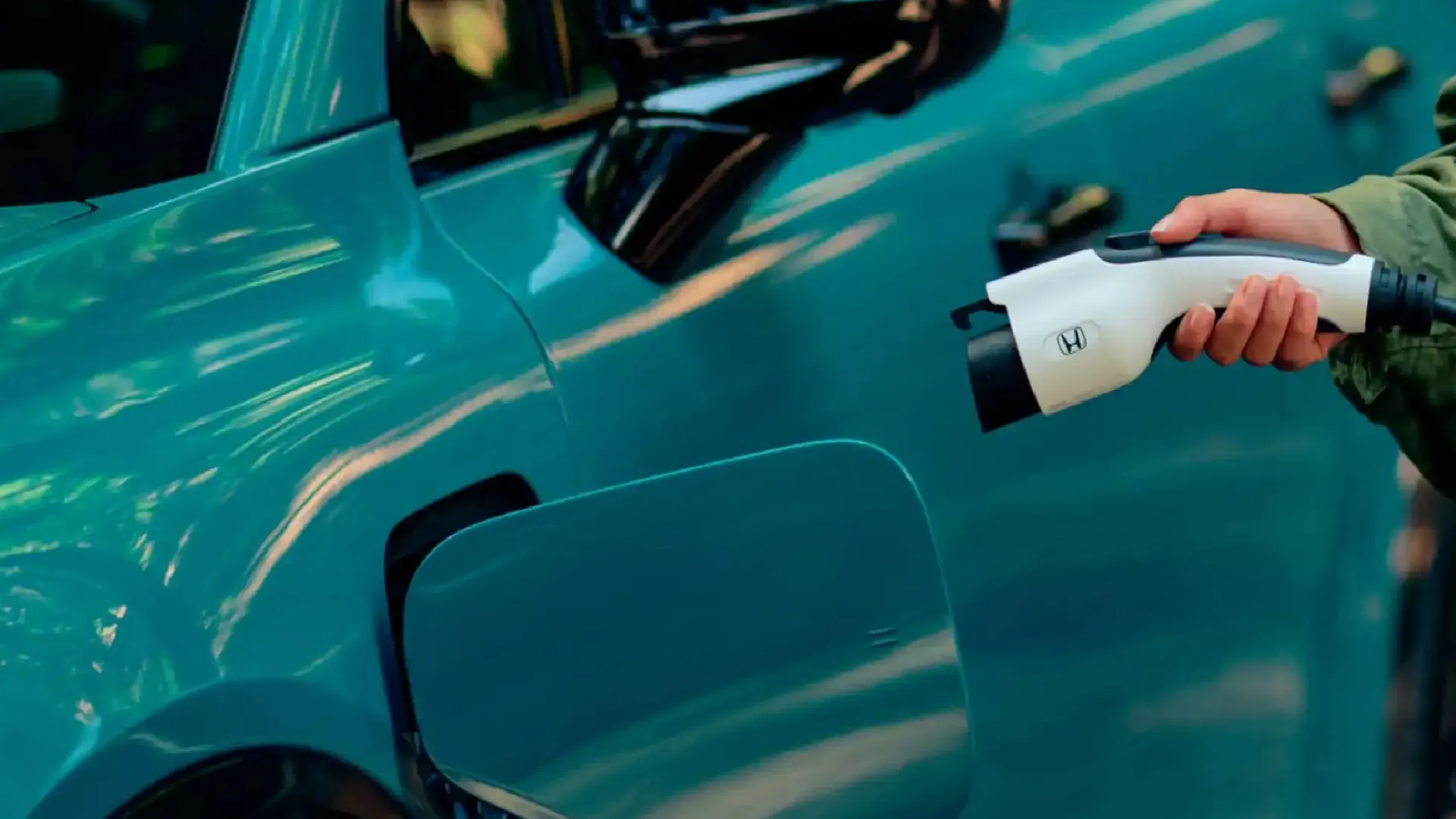
Honda and two Taisei Group companies say they have developed the core technology for a road that charges electric vehicles wirelessly as they drive, with large commercial trucks among its targets and public-road demonstration testing planned from Japan’s 2027 fiscal year, which starts April 1, 2027.
The magnetic coupling wireless power transfer road system comes from Honda R&D, Taisei Corporation and Taisei Rotec Corporation. Honda said it hopes dynamic wireless power transfer, or DWPT, will make EVs more convenient by cutting how often drivers must charge at home or at stations. It plans to start with logistics and transportation, where it expects the biggest benefit.
Three companies, three jobs
The system has three main parts: a DC power supply on the ground, a set of power-transmitter units embedded in the road and linked by DC connections, and a receiver unit on the vehicle. Taisei is developing the DC power supply. Honda R&D is building the in-road transmitter system and the vehicle-side receiver. Taisei Rotec is developing construction methods, and the three are jointly designing pavement structures, durability tests, upgrade methods and DC distribution tests.
Built to carry trucks
The units and pavement must withstand large vehicles with a gross weight of about 20 tons. Honda said it optimized the internal structure of the embedded units so the road holds up under long-term traffic from heavy commercial vehicles. Tests on a roadway at Taisei’s Future Technology Field in Satte, Japan, confirmed the effectiveness of the technology, pavement structures and construction methods intended for public-road tests with large vehicles.
A world first, Honda says
Honda says its in-road unit combines the inverter and coil in a single DWPT unit for the first time in the world, based on its research of publicly disclosed units as of the end of September 2026. The design enables DC power distribution, which, paired with the ground-based DC power supply, supports high-power transfer that is responsive and stable. DC distribution also simplifies wiring in embedded sections, cutting components and installation work.
The units are designed to be milled and embedded in existing pavement, with measures for uneven milled surfaces, and to be easier to upgrade during future repaving.
What comes next
Starting in late 2026, the companies will build a test roadway at Taisei’s T-FIELD/TAMRA site. They plan a loading test equal to 1 million wheel loads, based on 49 kilonewtons (about 11,000 pounds-force) per wheel using actual vehicles, along with DWPT performance tests and checks for electromagnetic field leakage. Later work will verify performance at up to 150 kilowatts for large commercial vehicles and reliability at high speeds.
The three will also join the Tateyama Project, a DWPT demonstration by East Nippon Expressway Company (NEXCO East) on the Tateyama Expressway in Chiba, Japan, starting in the 2027 fiscal year. Honda will show its DWPT work at the Japan Mobility Show Bizweek on Oct. 13-16 in Chiba and at the ITS World Congress on Oct. 19-23 in Gangneung, South Korea.
Source: https://interestingengineering.com/transportation/honda-taisei-in-road-wireless-charging
Related articles