Hypersonic impact turns diamond into graphite, could unlock next-gen shields
The phrase says diamonds are forever. Hypersonic ballistics say otherwise. In a recent experiment, researchers...

The phrase says diamonds are forever. Hypersonic ballistics say otherwise.
In a recent experiment, researchers at Texas A&M and Rice University marched an engineered diamond composite directly into a firing line. Then, they blasted it with aluminum projectiles flying at nearly eight times the speed of sound. The target not only withstood the strike but also morphed under fire.
Within microseconds of impact, portions of the ultra-rigid diamond composite underwent an instant, atomic-scale metamorphosis, turning into graphite. This sudden phase transition let the target act as an immediate shock absorber, dispersing kinetic energy at the molecular level thanks to graphite’s softer carbon structure.
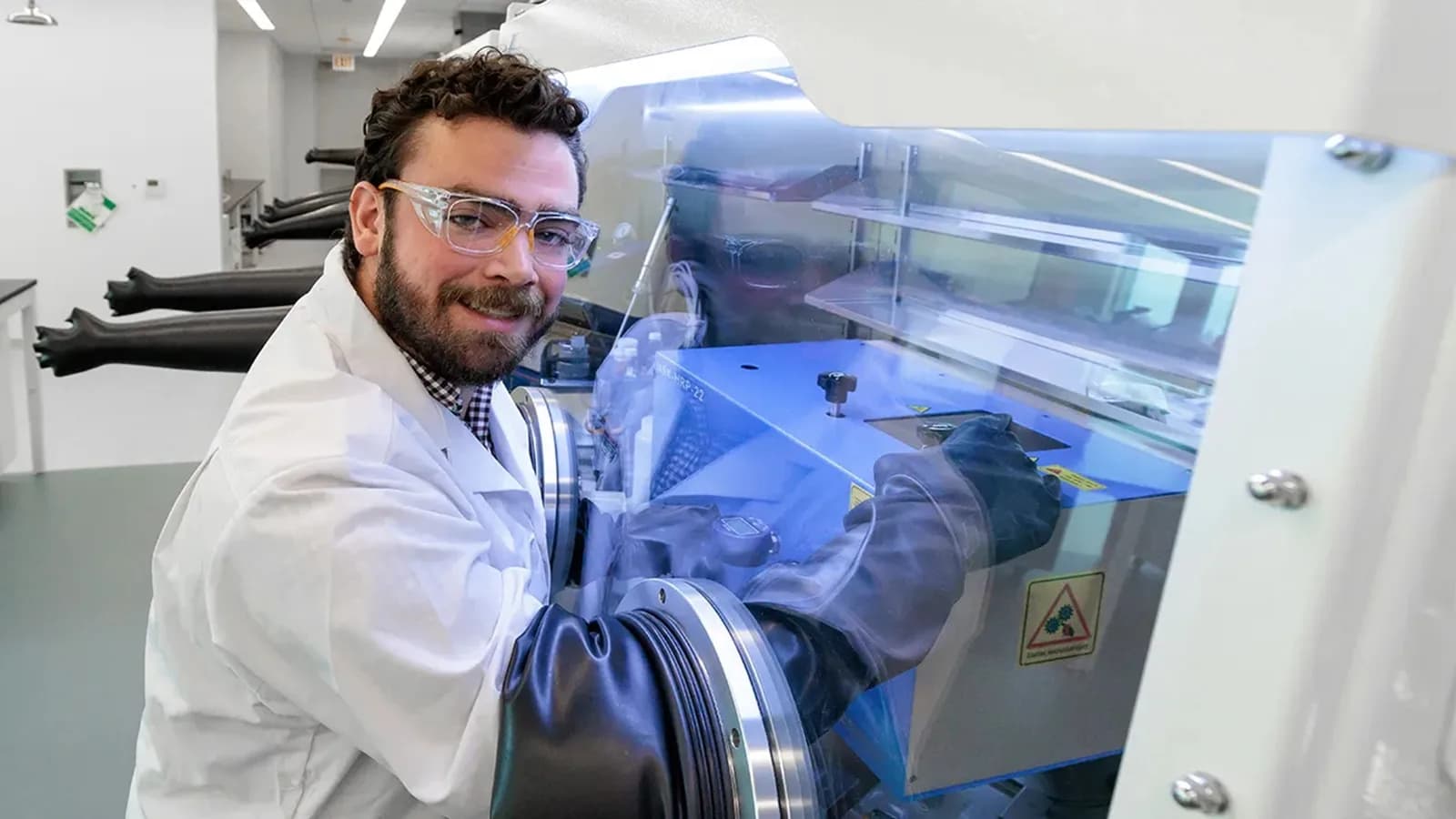
The study was spearheaded by doctoral candidate Aniket Mote and Dr. Thomas Lacy of Texas A&M, using a 45-foot two-stage light gas gun at the university’s Hypervelocity Impact Laboratory (HVIL).
“We found that portions of the diamond composite had transformed into graphite,” Lacy said. “It was exciting to observe this phase change in real time.”
Understanding how hard materials change their internal structure under intense mechanical stress provides defense and aerospace engineers with a fresh blueprint for advanced design.
Testing methodology
Extreme forces driving modern aerospace and defense systems expose structural materials to rapid deformation, crushing pressure, and sudden failure.
Studying the diamond-to-graphite transformation gives a clear look at these rapid physical reactions during high-velocity impacts. Experiments replicating hypersonic stress records phase changes in real time. It reveals exactly how super-hard composites transition between atomic states under intense shock.
To forge the target in the first place, Rice University scientists bound small diamond grains with cubic boron nitride and cobalt using spark plasma sintering. This was the process designed to stop traditional melting at high heat.
During testing, the team fired projectiles at speeds approaching Mach 8.45 (roughly 6,500 miles per hour). High-speed cameras and ultra-fast sensors caught the microstructural shift in real time.
“In the first test, we launched a cluster of 1 millimeter aluminum ‘buckshot’ projectiles traveling at nearly Mach 7.5. And in the second test, we fired a single, large 4 millimeter aluminum projectile at speeds approaching Mach 8.45,” Mote said.
Practical applications
Why does this matter? Hypersonic travel and space exploration depend on materials that refuse to shatter when pushed past normal physical limits.
Rather than using static hardness, future shielding could be designed to intentionally alter its state on impact, neutralizing catastrophic blows before they breach a craft’s body.
“The diamond-to-graphite transformation could help guide the design of next-generation materials for extreme environments, to serve national and global research interests,” Lacy said.
Diamonds might not actually last forever. But by giving up their rigidity when it counts, they might just save the next generation of materials.
This research demonstrates how ultra-hard materials respond to severe mechanical shock, providing insights into energy absorption during high-speed impacts.
Experts can tap into these findings to develop advanced protective shielding for aerospace systems, military vehicles, and space exploration craft. The resulting materials will better withstand extreme operational environments by dissipating explosive force at the structural level.
The study was published in Materials Today.
Source: https://interestingengineering.com/innovation/hypersonic-impact-turns-diamond-into-graphite
Get the latest news delivered to your inbox.
Related articles