
IBM’s 100-qubit chip advances self-correcting quantum computers with 5,000 operations
Researchers have demonstrated how a quantum computer can repeatedly measure and reset its qubits while...
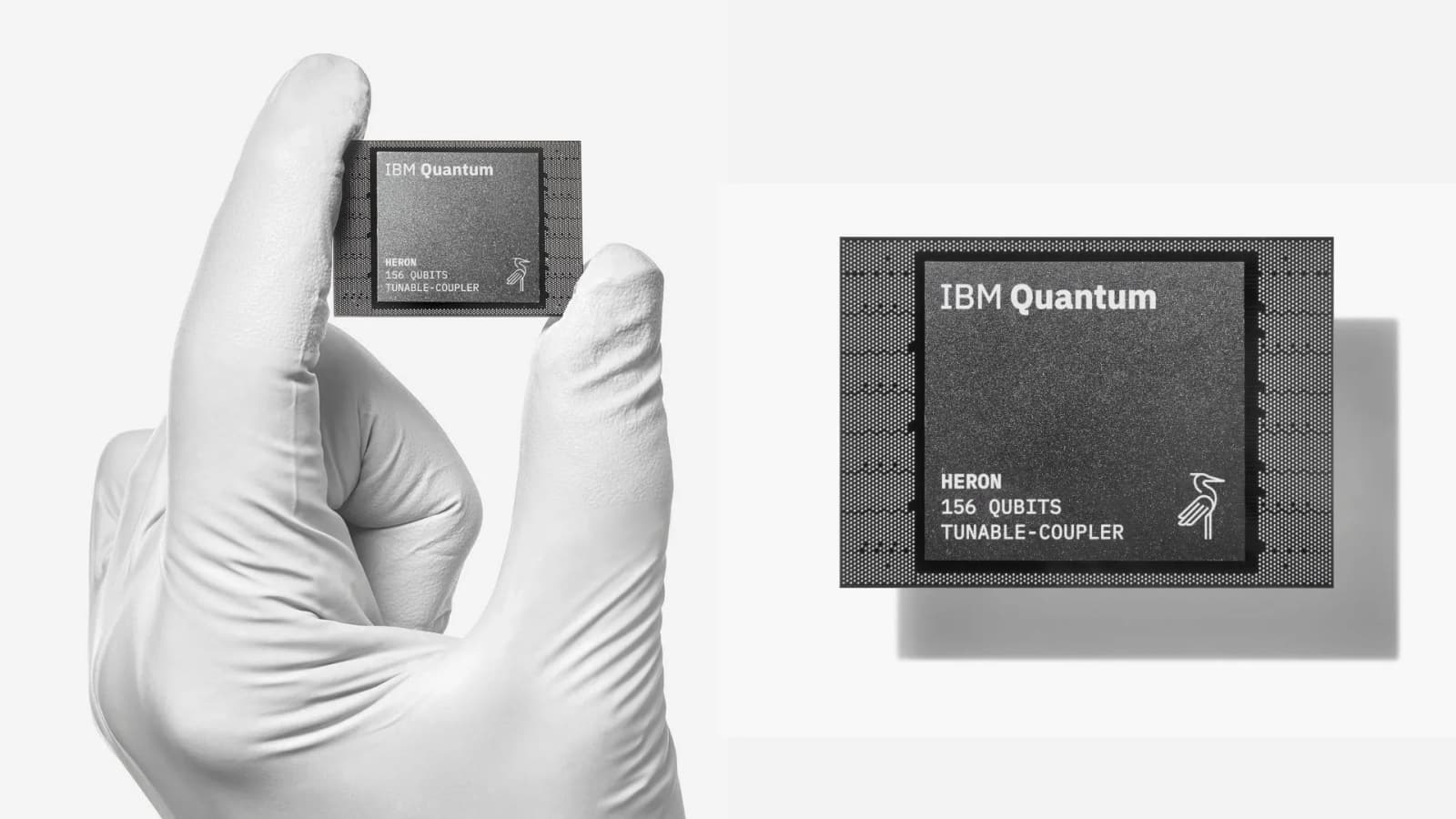
Researchers have demonstrated how a quantum computer can repeatedly measure and reset its qubits while calculations continue, helping tame chaotic behavior inside the processor. The experiment used up to 100 qubits and demonstrated a key technique for developing more reliable quantum machines.
The team included scientists from Rutgers University, IBM, and several collaborating institutions. Their findings, published in Nature Physics, also revealed a sharp transition between chaotic and controlled quantum behavior.
Resetting qubits to restore order
Quantum computers process information differently from conventional machines. Their qubits can occupy superpositions of states, giving them capabilities that classical bits cannot directly replicate. However, these fragile states can deteriorate through interactions with the environment and imperfections in hardware.
Errors can accumulate during calculations, eventually making results unreliable. Researchers must develop systems that detect and correct these errors while computations continue. This approach, known as quantum error correction, forms the foundation of fault-tolerant quantum computing.
The team tested its approach using an IBM Quantum Heron processor with 156 qubits. Researchers selected a connected chain containing up to 100 qubits for the experiment.
They alternated between two competing processes. One scrambled information across neighboring qubits, spreading disorder through the system. The other repeatedly measured individual qubits and reset them toward a predetermined state.
The experiment involved nearly 5,000 two-qubit operations alongside almost 5,000 measurement-and-reset cycles. This allowed researchers to investigate how repeated interventions could counteract the scrambling process.
Sharp shift from chaos
The researchers adjusted how frequently each process occurred to determine which behavior dominated. When scrambling happened more frequently, the system remained chaotic. More frequent measurements and resets instead pushed it toward an orderly, controllable state.
The most striking change occurred near a 50-50 balance between the two processes. A small adjustment in their relative frequency could trigger a dramatic shift across the system.
Physicists call this phenomenon a phase transition. It describes a collective change in a system’s behavior, comparable to water freezing into ice.
Justin Wilson, an associate professor of physics at Louisiana State University and a study coauthor, explained that random interventions could suppress otherwise unpredictable behavior. The researchers also found that the transition persisted in a quantum system, where its survival had remained uncertain.
The findings matched theoretical predictions. The transition also became more clearly defined as researchers examined larger systems, suggesting the effect extended beyond small experimental circuits.
Toward fault-tolerant computing
Real-time feedback could help future quantum processors manage errors throughout extended calculations. Instead of performing a single correction, a fault-tolerant machine must repeat these operations many times without destroying the information it processes.
IBM researcher Maika Takita said the experiment coordinated quantum operations, measurements, and resets thousands of times across a large system. She described this capability as an important step toward practical error correction.
The team also tested systems larger than those it could simulate using conventional computers. That comparison strengthened confidence in the theoretical explanation.
Researchers from the City College of New York, Iowa State University, Penn State, and other institutions also contributed to the work.
The demonstration does not establish a fully fault-tolerant quantum computer. However, it shows that present-day hardware can repeatedly intervene in a quantum system while operations continue, bringing scalable quantum computing closer to a central engineering goal.
Related articles

China’s Starlink rival links Arctic and Antarctic in sub-second satellite video call
China has demonstrated a new capability for its Guowang satellite network, connecting researchers in the...

Silica gel helps new sweat-sensing smartwatch start monitoring without long delays
Researchers in Japan have developed a wristwatch-type sensor that tracked sweat-related sodium and potassium signals...

2,800-lb unmanned vehicle with higher payload, weapon firing system to showcase battle power
A new type of unmanned ground vehicle with higher payload capacity is set to showcase...

Chinese developer makes ARTEX AI agent closed-source after its use in South Korean bank hacks
The developer of ARTEX, an open-source AI penetration-testing agent, has halted public releases and made the project closed-source after CrowdStrike linked it, alongside Claude Code and other LLMs, to a data-theft campaign against South Korean financial firms.

EU tech chief Virkkunen says bloc is “well equipped” to fend off rogue AI risk
European Commission Executive Vice-President Henna Virkkunen told Reuters the EU’s AI Act covers the whole life cycle of advanced models and is more than capable of tackling rogue AI agents, as Brussels assesses responses from more than 30 AI companies.

TypeSafe, maker of non-text AI model Jev, raises $870 million at $7.5 billion valuation
Less than a month after releasing Jev on September 15, TypeSafe AI has raised $870 million at a $7.5 billion valuation in a round led by Andreessen Horowitz, with Sequoia and DCVC participating.