NASA’s first 3D printer in orbit made a wrench, and its design lessons point to moon
A metal box with a glass door and a small white wrench now share a...
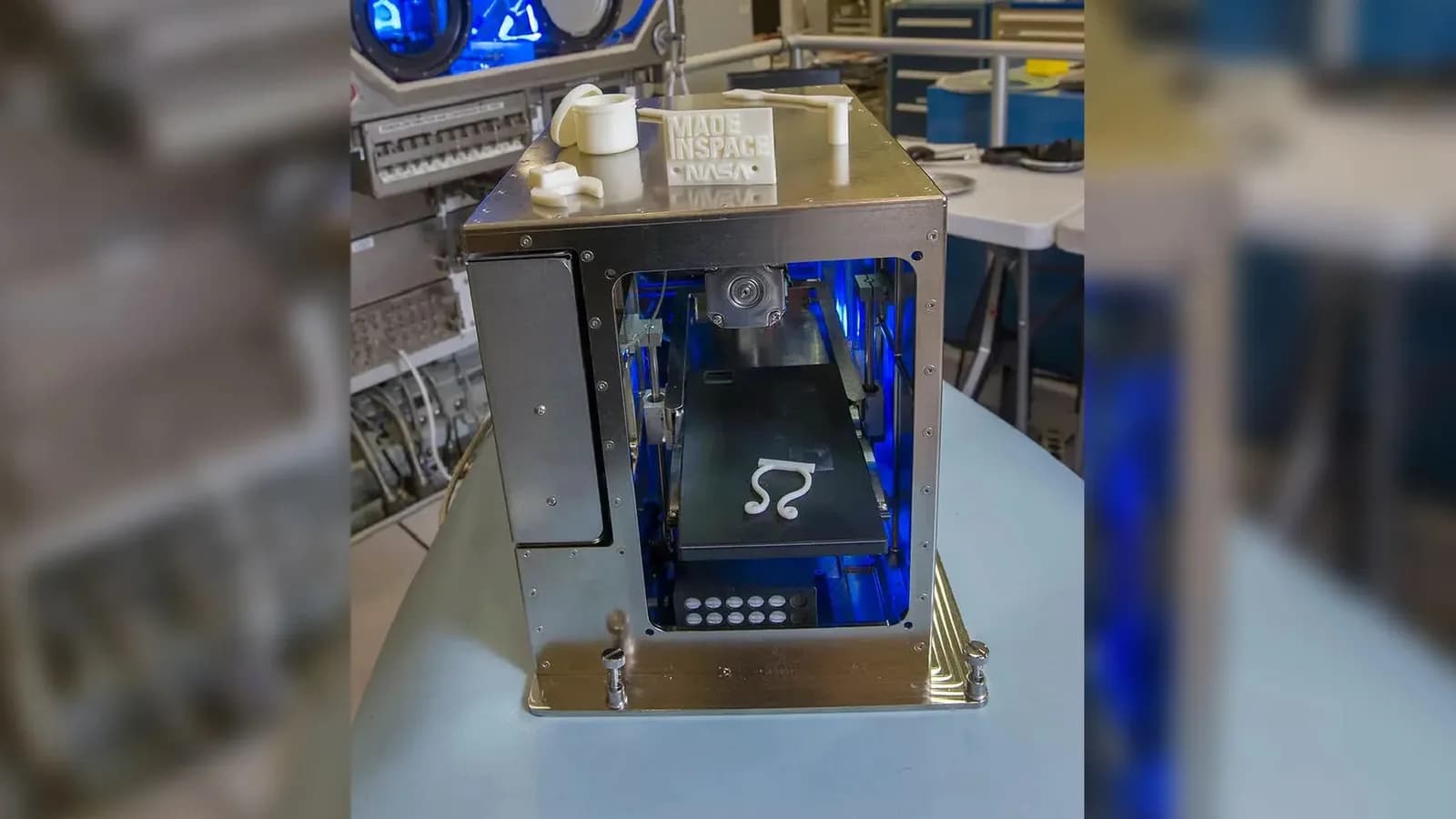
A metal box with a glass door and a small white wrench now share a display case at the National Air and Space Museum in Washington. The wrench was printed inside that box, the first 3D printer used in orbit, aboard the International Space Station.
The printer, built by Made In Space for a NASA experiment, shows what it takes to make tools aboard a spacecraft and what that could mean for a moon base.
Designed for station safety
NASA is cautious by habit, said Michael Snyder, Made In Space’s former CEO. On Earth, 3D printers can emit tiny particles that lodge in people’s lungs, and on the station there is no window to open.
The company placed the printing hardware inside a glass-doored enclosure to keep everything out of the station’s air, a design mindset Snyder called “NASA-like caution.”
Built for microgravity
Microgravity forced changes to standard printing hardware. Surface tension dominates in microgravity, Snyder said, so engineers adjusted extruder designs to push out material with enough force and lay each layer consistently.
The printer also had to be easy for busy astronauts to run. Material canisters swap out without touching settings, and Snyder likened releasing the extruder head to a seat belt.
Engineers shrank a device that normally draws about 1.2 kilowatts to a peak of 196 watts, with normal use around 150 watts. The hardware also had to fit in a single cargo transfer bag aboard a SpaceX Cargo Dragon capsule, a volume a little larger than a carry-on suitcase.
How the wrench happened
Testing followed a strict script: the first 20 parts were printed from files already loaded on the printer, and the 21st was meant to test an uploaded file.
Astronaut Butch Wilmore mentioned that he wished he had a wrench while doing light maintenance on the printer. The team asked NASA about swapping the uplink part for a ratchet wrench, expecting a no, and got a green light.
That came with conditions: the ratchet had to emerge fully assembled, so no loose piece could cause foreign object damage. NASA also asked for a label showing the wrench’s torque rating in case another astronaut picked it up.
The design took about a day and a half. The team uplinked the file on day five, and the wrench was in Wilmore’s hand that day, labeled “3 in.-lbs.” (0.34 newton-meters) in raised letters.
Next stop, the moon
On-demand tools and parts could reduce the need for Apollo 13-style improvisation when something breaks, but Snyder said the capability should not stop at plastic.
Made In Space had planned a metal additive manufacturing demonstration on the station with a second printer around 2020, but priorities changed. The European Space Agency began the first demonstration of 3D-printed metal aboard the station in 2024.
NASA’s long-term plans include a moon base, where astronauts printing their own parts would face different conditions. The moon’s biggest advantage is raw material, Snyder said: “There’s plenty of metal on the moon,” which can be extracted chemically, such as by heating regolith oxides.
Lunar gravity is one-sixth of Earth’s, which changes how hazards such as flames behave. “One-sixth gravity, it turns out, is worse than zero-g in some instances,” Snyder said.
Snyder said he does not think people can sustainably stay on the moon, in program or cost terms, “without being able to fix stuff.” The moon is about 238,000 miles from Earth.
Get the latest news delivered to your inbox.
Related articles