Sea salt could hold the key to making hard-to-see hydrogen flames safer at home
Hydrogen is being explored as a cleaner alternative to natural gas for cooking, heating and...
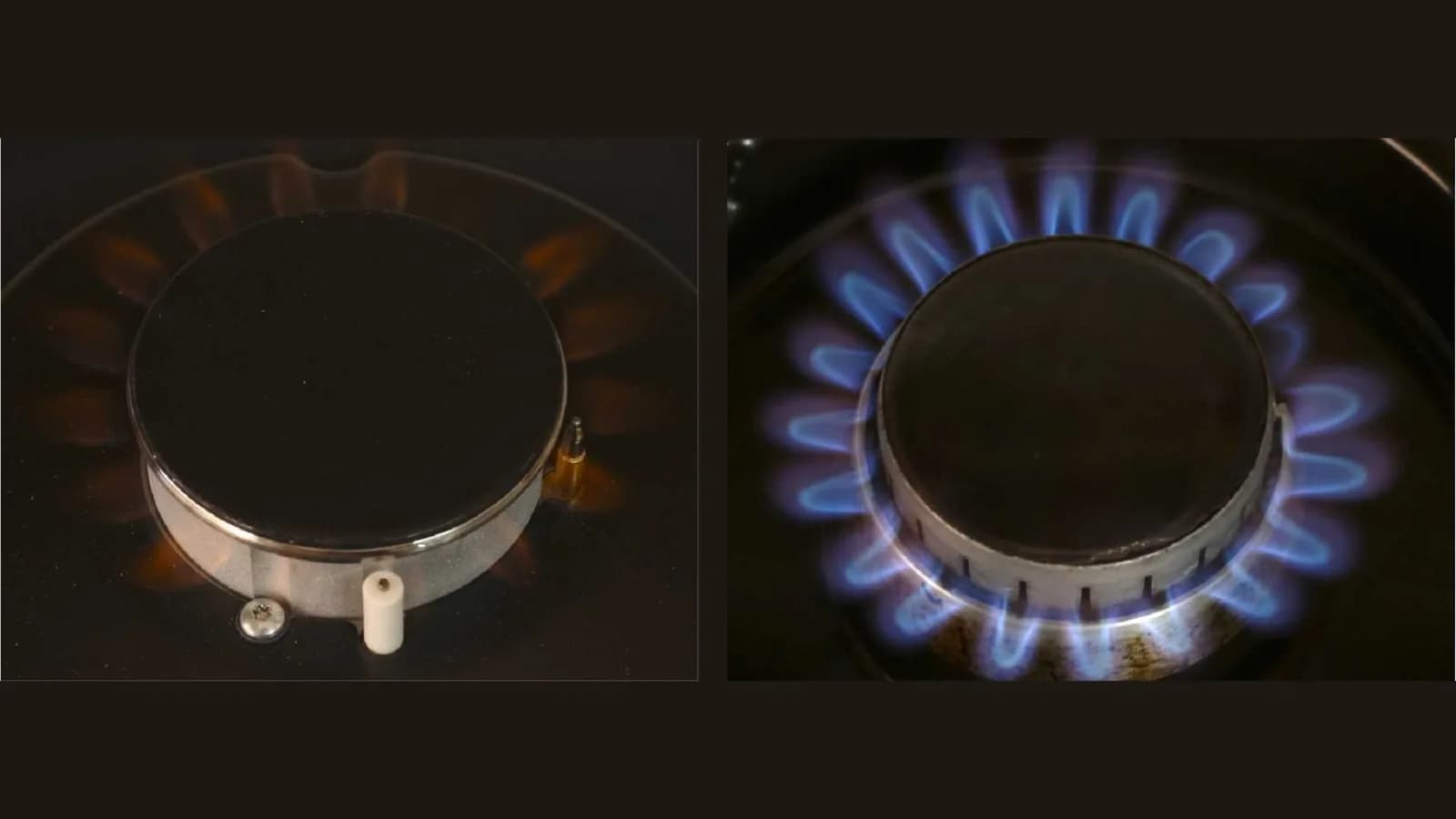
Hydrogen is being explored as a cleaner alternative to natural gas for cooking, heating and industrial applications. But it presents a safety challenge: its flames can be difficult to see.
Depending on surrounding conditions, a hydrogen burner may appear orange one day and nearly invisible the next, even when its settings have not changed. For kitchens and industrial sites, this unpredictability could complicate routine safety checks and make flame detection more difficult.
Researchers at Adelaide University have investigated why the appearance of hydrogen flames varies in real-world environments. Their study, points to atmospheric sodium particles as a key factor influencing flame color and visibility.
The findings could help engineers design hydrogen appliances and detection systems that remain dependable as environmental conditions change.
Sea salt particles can turn hydrogen flames orange
Sodium particles can enter the atmosphere from sea salts carried inland by sea breezes. When more sodium is present, hydrogen flames can emit stronger orange light and become easier to see. With fewer sodium particles, the orange glow weakens, making flames harder to detect by sight.
Lead author Professor Paul Medwell, from Adelaide University’s School of Electrical and Mechanical Engineering, said understanding hydrogen combustion in real environments is important if the fuel is to be used confidently in homes.
“We know that using hydrogen has great potential as a low emissions energy source. However, in order to encourage it to be used in homes with confidence, we must understand how it behaves in real environments.
“Our research helps explain why hydrogen flames can look different from one day to the next. That knowledge gives engineers valuable information to develop appliances and flame-detection systems that work reliably, regardless of changing environmental conditions.”
The study shows that flame visibility is not a constant feature of hydrogen burners. Atmospheric conditions can change what people see without any adjustment to the appliance.
Hydrogen’s invisible flame raises safety concerns for cooktops
Researchers monitored hydrogen flame emissions in laboratory conditions and at locations across Adelaide over two weeks, keeping flame settings constant. The sodium signal varied by more than 28 times between its lowest and highest measurements. Flames generally appeared more orange during sea breeze conditions, when sodium particles were carried inland, while lower sodium levels were associated with reduced brightness.
Comparisons with natural gas cooktops showed that hydrogen flames produce fewer visible emissions. Blue and red emissions were more noticeable in dark conditions, but flame color could not consistently confirm whether a flame was burning. The team therefore says appliance designs should include detection methods beyond visual checks.
Medwell continued, “As different energy sources have different characteristics, good engineering practice means understanding these differences, and designing accordingly.
“Instead of relying on flame colors, we can explore other options to confirm that a flame is burning. These include UV/ IR flame detection devices or thermal sensors.
“By identifying the factors that influence flame visibility, we can help inform the development of hydrogen appliances that are fit for purpose in real homes and other everyday settings.”
The research was conducted by Adelaide University, University of New South Wales, and Gas Infrastructure Research Australia. Its findings offer engineers practical information for developing hydrogen appliances and flame-detection equipment suited to changing atmospheric conditions.
The findings were published in Next Energy.
Get the latest news delivered to your inbox.
Related articles