Two Kepler satellites run US startup’s software in push toward orbital data centers
Sophia Space, a Pasadena, California, startup, said it has deployed its Sophia Orbital Operating System...
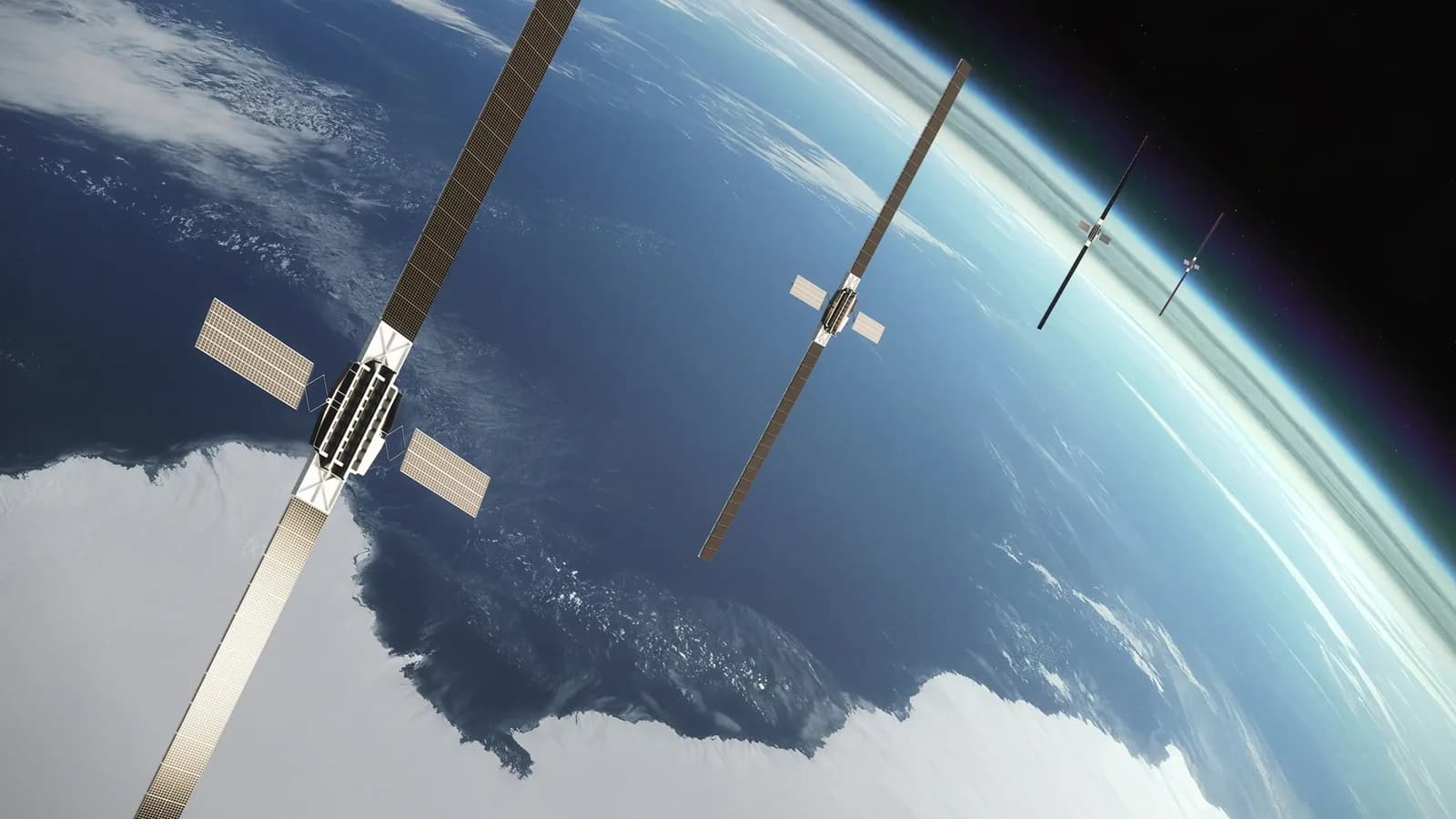
Sophia Space, a Pasadena, California, startup, said it has deployed its Sophia Orbital Operating System (SOOS) on two Kepler Communications satellites, the first time the software has run in space, according to a company release dated Nov. 19.
SOOS is designed to run and manage computing jobs across spacecraft connected by optical, or laser, links. That approach is known as edge computing, which means processing data near where it’s collected instead of sending all of it to Earth. The release said SOOS uses Kubernetes, software that runs and manages applications across a group of computers, and offers triple redundancy and built-in security features.
CEO Rob DeMillo said the effort is about “proving the architecture, step by step,” starting with software and building toward Sophia’s own hardware and satellites. The company said it is now open to partnering with other firms that want to run edge applications in low Earth orbit (LEO).
What Sophia says it showed
In the company’s release, Leon Alkalai, Sophia’s founder and chief technology officer, congratulated the Sophia and Kepler teams for demonstrating distributed operating system functions across multiple satellites and multiple graphics processing units (GPUs) on each satellite. GPUs are the chips that typically run AI workloads. Alkalai said the functions, tied to resilience and fault tolerance, are building blocks for future orbiting data centers.
The release didn’t say how many satellites or GPUs were involved, or how long the software ran. A later Payload report said the test used two satellites, with SOOS running on three processors per satellite and a fourth held in reserve. The software replicated itself across the processors before crossing the optical link to the second spacecraft. In April, TechCrunch reported that Sophia planned to configure SOOS across six GPUs on two spacecraft, which it described as a first for orbit.
The software ran within Kepler’s Tranche 1 constellation. Kepler said in March that the network carries 40 Nvidia Jetson Orin modules across 10 satellites. Caitlin Marsh, president of Kepler US, called the collaboration an early step toward showing how communications and computing can work together. A team at Nanyang Technological University in Singapore has proposed that in-orbit processing could cut the data sent to Earth a hundredfold.
Unproven claims and next steps
Sophia hasn’t released performance figures such as run time, latency or failure rates, so the results so far rest on the company’s own account of the test. The redundancy and security features are described as designed to support resilient operations. Here, “first” means SOOS’s first time in space, not a first for the industry.
Testing on Sophia’s own hardware is still ahead. That includes its passively cooled TILE (Thermal Integrated LEO Edge) modules, which radiate heat into space instead of using active cooling and haven’t flown yet.
Sophia isn’t alone in the field. SpaceX and Blue Origin have also announced plans for orbital data centers, though TechCrunch said Sophia and Kepler are aiming at nearer-term edge processing.
Sophia announced the SOOS deployment Nov. 19 in a PR Newswire release.
Get the latest news delivered to your inbox.
Related articles