Ukrainian Harpoon USV gains NATO status with 55 lb payload and 40-mile range at 4 mph
Ukraine’s unmanned naval technology sector has reached a new milestone after the Harpoon surface drone,...
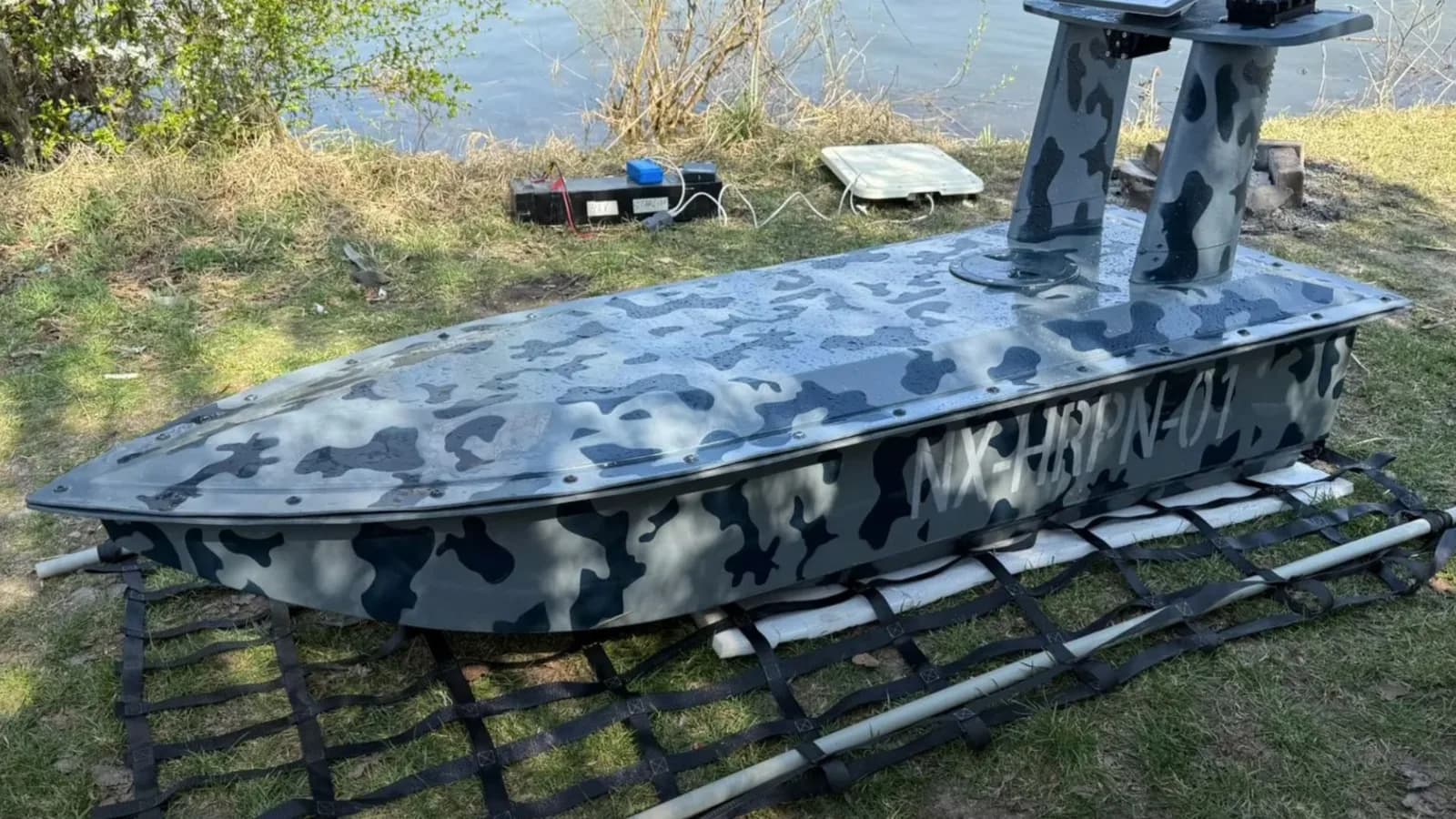
Ukraine’s unmanned naval technology sector has reached a new milestone after the Harpoon surface drone, developed by NOAH X, completed NATO codification, received a NATO stock number and was approved for military use. The Unmanned Naval Association announced the development, saying the vessel is entering service.
Harpoon is designed for combat and specialized missions across rivers, lakes, open waters and coastal areas. Its compact structure and remote-control operation allow it to work in different maritime environments. The design also makes deployment easier from shoreline locations, without requiring dedicated transport vehicles or extensive infrastructure. Its small footprint is intended to help crews move the craft between launch points and prepare it for use where larger vessels may be difficult to deploy.
NOAH X unveiled Harpoon in June 2026 at the Ukrainian-Nordic DIH Naval Forge 2026 conference. A company representative said at the time that the vessel had already been used in combat and had struck Russian targets. NATO codification was still pending during the unveiling. The craft measures 6.7 feet (2.05 meters) long, two feet (0.6 meters) wide and one foot (0.3 meters) high. Its hull is built from composite materials, while folding components allow it to fit inside a regular passenger car for transport.
Harpoon offers 22 mph speed
Harpoon can carry a payload of up to 55 pounds (25 kilograms) and reach a top speed of 22 miles per hour (35 kilometers per hour). Its operating range changes with speed: it can cover up to 40 miles (65 kilometers) at 4 miles per hour (7 kilometers per hour), 25 miles (40 kilometers) at 16 miles per hour (26 kilometers per hour), and 12 miles (20 kilometers) at maximum speed.
The vessel is remotely controlled through Starlink and LTE connections. It carries daylight and thermal cameras, allowing operators to monitor nearby conditions in different lighting environments.
The listed range figures show the trade-off between speed and distance, with slower travel extending the distance it can cover before its mission ends. Its compact design and flat bottom allow it to move through shallow water and launch from undeveloped coastlines. The platform is intended for reconnaissance, cargo transport and attack missions, giving it several uses beyond a single role.
Noah X expands naval drone development
NOAH X is also developing a larger unmanned surface vessel called 3-PACK. The platform is designed for attack, reconnaissance and specialized missions, and can carry other drones. Its sealed modular compartments are intended to hold FPV drones and interceptor drones, which can be launched from the water near the operational area.
Manufacturer specifications list 3-PACK at 7.2 feet (2.2 meters) long, with a payload capacity of up to 143 pounds (65 kilograms). It can reach speeds of 25 miles per hour (40 kilometers per hour) and travel up to 56 miles (90 kilometers). The manufacturer also reports standby endurance of up to 48 hours. The modular compartments give the vessel space for different equipment, depending on the task and the drones carried.
The vessel is designed to engage surface and coastal targets, conduct maritime reconnaissance, transport supplies and intercept unmanned aerial vehicles (UAVs).
Harpoon’s NATO codification gives the vessel a standardized identity within the alliance’s equipment system, while NOAH X continues work on a larger platform with different payload and mission capabilities.
Both vessels are intended for maritime operations involving reconnaissance, transport and combat tasks. The company’s two designs offer different size and payload options for those missions.
Get the latest news delivered to your inbox.
Related articles