
US Air Force receives first ‘robot wingmen’ drones to begin autonomous warfare trials
The United States Air Force (USAF) has taken delivery of the first batch of two...
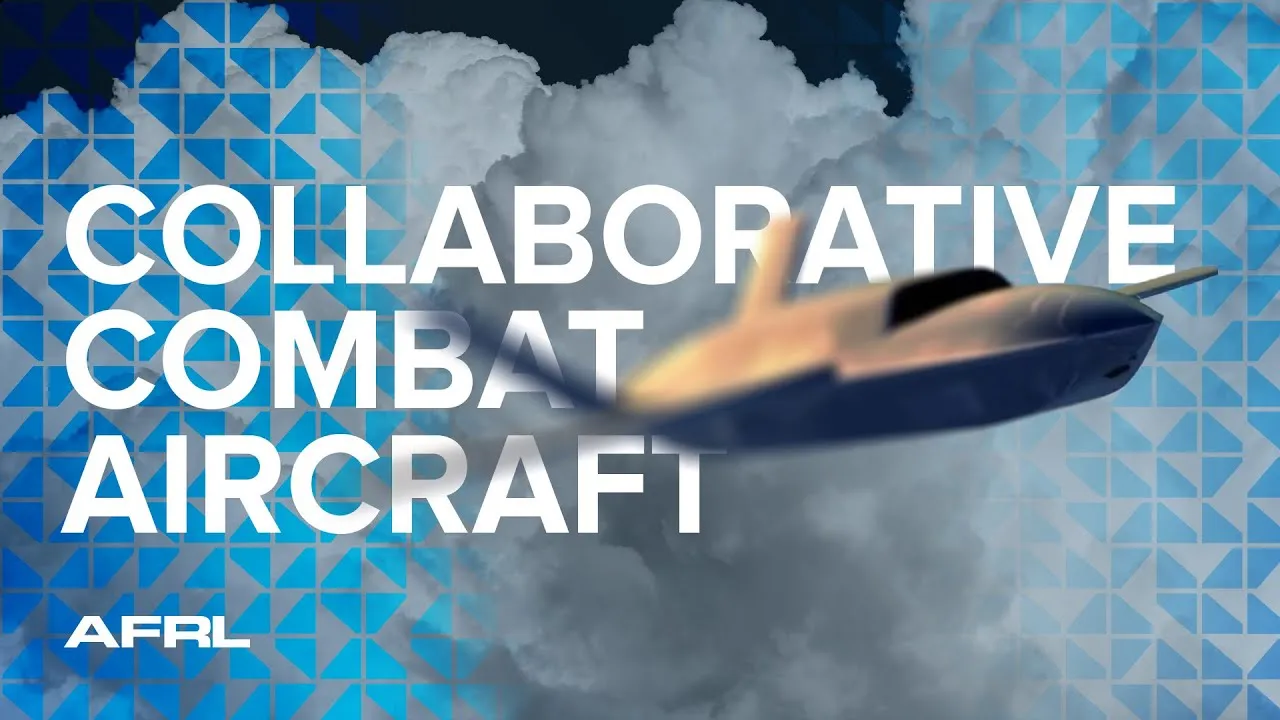
The United States Air Force (USAF) has taken delivery of the first batch of two Collaborative Combat Aircraft (CCA) designs at its Creech Air Force Base, Nevada. The USAF will now use them to figure out how to field, maintain, and operate them alongside its crewed fighters in “contested airspace.”
The CCAs in question, Anduril’s YFQ-44A (nicknamed “Fury”) and General Atomics’ YFQ-42A (dubbed “Vengeance”), were delivered in August for the former and last week for the latter.
According to reports, the “Fury” is already undergoing operational experimentation, with plans now in motion to do the same for the “Vengeance” either alone or in collaboration with the “Fury” and manned aircraft.
CCAs, in case you are unaware, are semi-autonomous uncrewed aircraft that look and operate in a similar fashion to traditional fixed-wing aircraft. They can fly at comparable speeds and can carry payloads for offensive (missiles) or defensive actions, or both.
USAF receives first batch of CCAs
CCAs are designed to be significantly cheaper to build and field, providing the USAF with something called “attritable mass.” This means that they are more expendable when compared to an expensive airframe like an F-35 and, more importantly, can be lost without risking a pilot’s life.
The idea is to use them to enter hostile areas to perform actions where there is a very high risk of losing a crewed aircraft, like an F-35. Under such circumstances, the F-35 would act as a “hub” to coordinate several CCAs in combat.
The human pilot would then become the decision-maker while the autonomous aircraft provide additional sensors, weapons, and physical aircraft. The USAF describes them as semi-autonomous aircraft that take direction from the human pilot and then carry out that direction without the pilot having to manually fly them.
So, a pilot could tell one CCA to fly X miles ahead, search, and report back. The CCA would then take that instruction, figure out the route, maintain formation, avoid hazards, and do as instructed.
Importantly, each CCA can act as a “missile carrier,” carrying additional AIM-120 AMRAAMs for an F-35 or F-47. So, instead of the crewed aircraft putting itself in danger, it can use the CCA’s weapons “remotely.”
CCAs could also go ahead as a sensor/scout, putting radar or infrared sensors closer to an enemy while the expensive crewed fighter remains farther back. Other configurations could potentially perform electronic warfare (EW), communications relay, decoy, surveillance, or strike functions.
They now need to figure out how to use them
When it comes to strike actions, the USAF is clear that CCAs will only ever fire when instructed by a human. Exactly how weapon employment will work operationally, however, remains to be seen.
For now, the USAF will use the CCAs to figure out important logistical questions such as: How many people does it take to operate X CCAs? How many CCAs can a single pilot handle? Where can they operate from, and how do we rearm/refuel them?
“We’re thrilled to welcome Fury and Vengeance to the experimental operational unit,” Air Force Chief of Staff General Ken Wilsbach said. “Our Airmen are excited to see what Collaborative Combat Aircraft can do,” he added.
“Putting CCA in the hands of Airmen is how we build the operational future of this program,” said Secretary of the Air Force Troy Meink. “Anduril’s Fury and General Atomics’ Vengeance deliveries show we can move at incredible speed, compete, and deliver cost-effective combat power to the force,” he concluded.
Related articles

China conducts satellite-to-satellite refueling operation in high Earth orbit: Report
China has successfully refuelled one of its BeiDou satellites in high orbit, according to reports. The...

Nuclear war, bioweapons, runaway AI: How researchers rank risks of smart systems
Artificial intelligence researchers have long warned the technology could wipe out humanity, whether by designing...
Hypersonic glide vehicles vs cruise missiles: How the weapons differ
Hypersonic weapons are designed to travel at speeds of Mach 5 or higher, or at...
First for US Army: MH-47G Chinook helicopter refuels from autonomous barge at sea
A U.S. Army MH-47G Chinook helicopter has landed on an uncrewed vessel at sea and...
US scientists’ new material could make next-gen microchip encryption faster, more secure
Researchers have defined a new material blueprint for the next-generation microchip encryption. The team of...

Why OLPC’s $100 laptop never stood a chance
The idea was big, exciting, and inspiring: What if we could get every kid in the world access to a computer?