US Army certifies first Patriot battery on IBCS in South Korea, freeing its radars
Delta Battery, 6th Battalion, 52nd Air Defense Artillery Regiment, became the first operational U.S. Army...
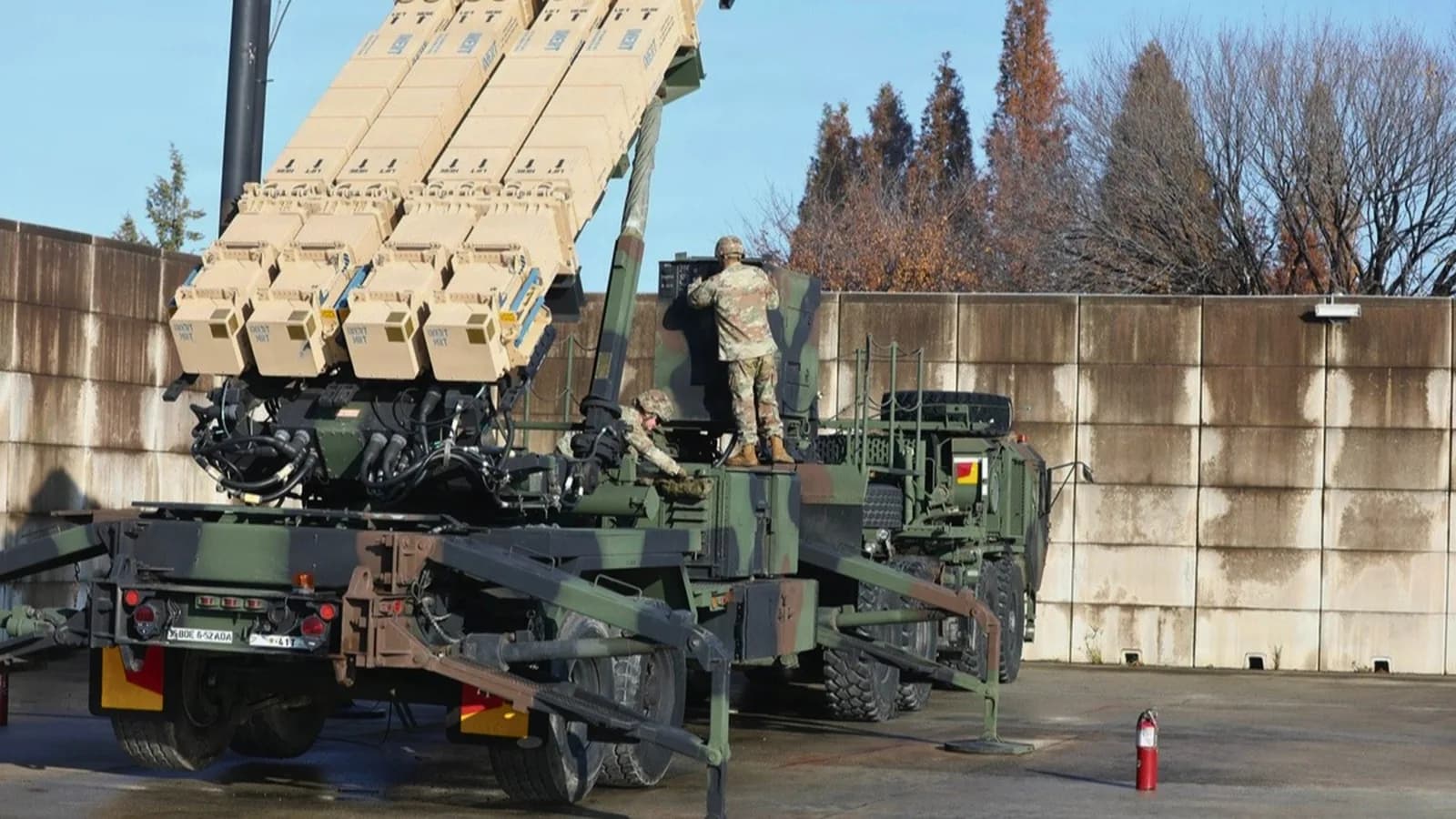
Delta Battery, 6th Battalion, 52nd Air Defense Artillery Regiment, became the first operational U.S. Army Patriot battery certified on the Integrated Battle Command System (IBCS). Eighth Army announced the milestone on Nov. 18 for the unit, part of the 35th Air Defense Artillery Brigade in the Republic of Korea.
Breaking out of Silos
Patriot units have traditionally relied on legacy, siloed weapon networks. With IBCS, Delta Battery’s Soldiers moved onto the system’s Integrated Fire Control Network and proved they could separate sensors and launchers from the battery’s fire control unit.
That separation lets the battery spread out its equipment instead of keeping it clustered in one spot. The Army describes the goal as “best sensor, best shooter,” pairing whichever connected radar has the best track with the launcher best placed to engage.
A Patriot battery pairs a radar, a fire control unit and launchers that fire interceptors such as the PAC-2 GEM-T and PAC-3 MSE.
A connected radar can supply tracking data, and fire control personnel can use it to assign an engagement to a suitable launcher elsewhere on the network. Crews gain flexibility in where they place equipment while still operating as a formation. Dispersal reduces how much equipment sits in any one location, though coordination still depends on connectivity among sensors, launchers and command elements.
Readiness on Peninsula
The Army said the forward-deployed certification enhances the 35th Brigade’s “Fight Tonight” readiness. It proves the unit can integrate modern air defense technology and defend critical assets against complex regional missile threats.
More Patriot units in the battalion are expected to certify on IBCS in the coming weeks. That would prepare the battalion for follow-on distributed command and control operations, in which crews coordinate engagements across a shared network. The release gave no date for those certifications beyond the coming weeks.
What remains unproven
The announcement covers a unit certification, not a combat test. The release offers no survivability data for a dispersed battery, and any gain depends on sensor coverage, track quality and network availability.
Eighth Army also did not say that THAAD, Aegis or F-35 sensors in Korea were linked through IBCS during the certification. The milestone applies to Delta Battery alone for now.
A wider Army push
IBCS is a Northrop Grumman system meant to connect sensors and weapons across the Army’s air and missile defense force. Earlier tests tied it to the new Lower Tier Air and Missile Defense Sensor radar and to the Navy’s SM-6 missile, according to earlier reporting. Lockheed Martin’s battle management prototype for Guam also draws on IBCS data, according to earlier reporting.
Northrop Grumman has said IBCS fuses data from multiple sensors so commanders can pick the best shooter against incoming threats, according to earlier reporting.
Newer interceptors are being designed around it too. Lockheed Martin’s PAC-3 Edge and PAC-3 ACE are designed to work with IBCS, and the Army has sought cheaper interceptors that must integrate with it.
For forces in Korea, the certification puts that connected approach in the hands of a forward-deployed Patriot crew. The next test is whether other batteries can share tracks and coordinate engagements across the battalion.
Get the latest news delivered to your inbox.
Related articles