US engineers build polymer fiber forest to cool chips by over 60°F without short circuits
Researchers at Cornell University have developed a new thermal interface architecture called a “polymer fiber...
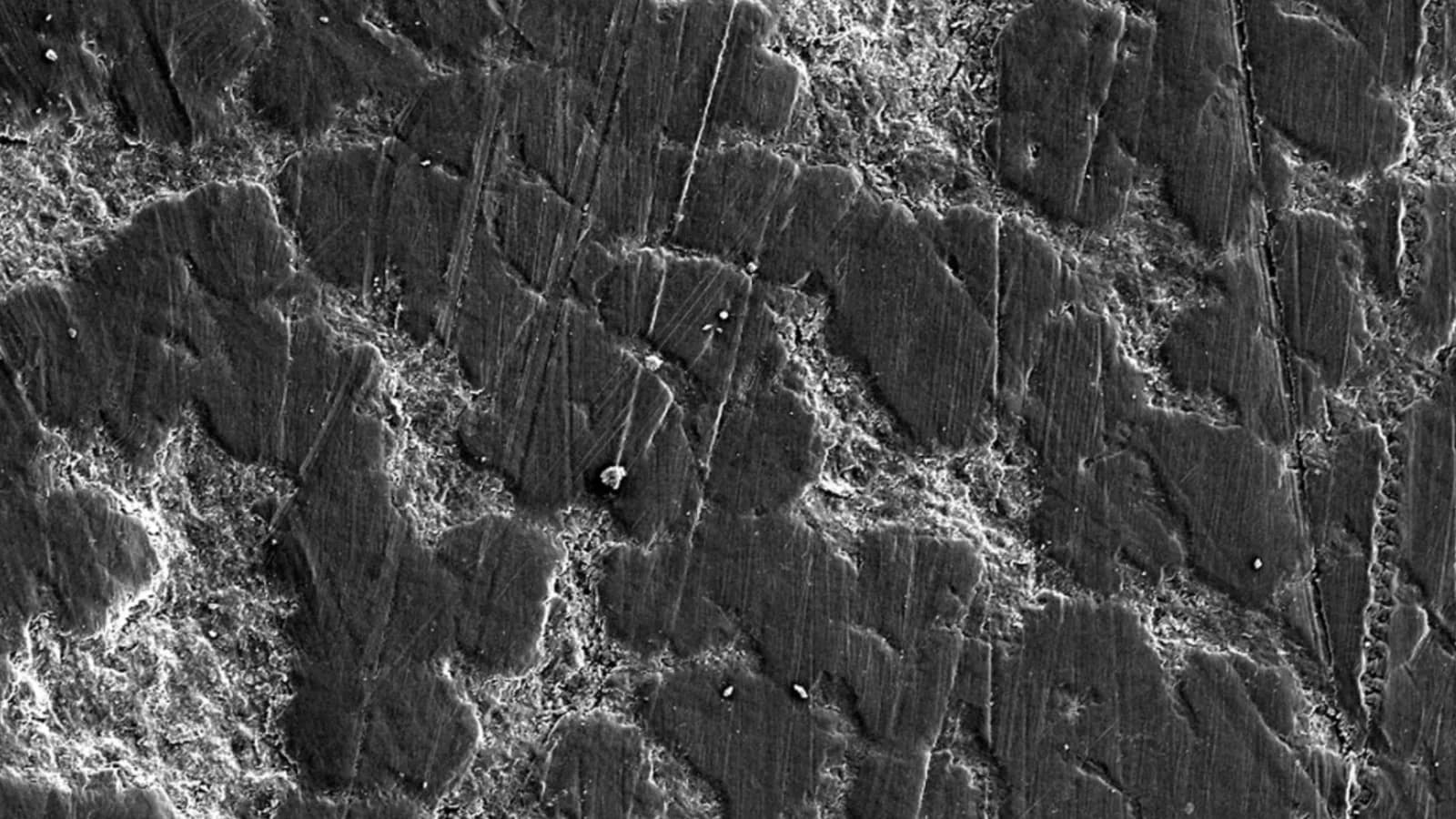
Researchers at Cornell University have developed a new thermal interface architecture called a “polymer fiber forest” that draws heat away from high-powered computer chips while remaining electrically insulating.
Inspired by how trees pack vertically across a woodland landscape, the material arranges thousands of microscopic polymer fibers upright, creating dedicated thermal highways between hot electronic components and cooling hardware.
In modern electronics, thermal management faces a fundamental materials trade-off. Metals and graphite conduct heat efficiently, yet they also conduct electricity, posing a severe short-circuit risk if they contact exposed circuitry.
Conversely, standard polymers provide reliable electrical insulation and conform well to uneven microscopic surfaces, but their tangled molecular structures typically trap heat rather than transferring it.
Building vertical fiber forest
The study was led by Zhiting Tian, John Brancaccio Professor in the Sibley School of Mechanical and Aerospace Engineering, alongside first author and doctoral student Gangchen Ren.
Tian’s group previously demonstrated in 2025 that stretching bulk polymers aligns their molecular chains and dramatically boosts heat conduction along the fiber axis. However, individual stretched fibers have cross-sectional areas measured in square millimeters, making them too narrow to cover an entire processor.
To scale that thermal performance across larger surfaces, the team bundled thousands of commercial Zylon fibers, a high-strength synthetic polymer known for rapid axial heat transfer, into a mold.
Engineers layered the fibers horizontally inside the mold and filled the surrounding gaps with a liquid polymer matrix. Once the matrix cured and hardened, they rotated the entire block by 90 degrees so the densely packed fibers stood vertically, spanning directly from the heat-generating surface toward the heat sink.
Because the composite block can be sliced and shaped to different dimensions, the process allows manufacturers to tailor coverage areas for specific chip geometries.
Testing heat transfer, chip cooling
To evaluate how mechanical flexibility affects heat transfer, the researchers fabricated two versions of the fiber forest: one embedded in rigid epoxy and another in a softer, silicone-like elastomer known as PDMS. In laboratory measurements, the epoxy-based composite achieved a thermal conductivity of 16.8 watts per meter-kelvin, while the compliant PDMS version reached 12.0 watts per meter-kelvin. Substantially higher than conventional bulk polymers.
“Although polymers generally conduct heat poorly, their ability to transfer heat can improve dramatically when their molecular chains are aligned,” Tian noted, adding that multiplying the fibers into a forest turns the heat-conducting properties of single polymer strands into bulk materials large enough for practical devices.
When tested in a laboratory setup simulating heat flow from an electronic chip to a heat sink at roughly 1.2 watts of heating power, the epoxy-based fiber forest kept the heated surface 17 degrees Celsius (63.6 degrees Fahrenheit) cooler than a commercial ceramic-filled silicone thermal pad, representing a 25 percent temperature drop.
Potential for tunable electronics cooling
Supported by the Semiconductor Research Corporation and the Defense Advanced Research Projects Agency (DARPA), the architecture serves as a modular platform rather than a single fixed compound.
By swapping out different thermally conductive fibers or tuning the softness of the surrounding polymer matrix, engineers could customize future thermal interface materials for compact consumer processors, power electronics, and defense hardware.
The findings were published in the journal Materials Today Physics.
Get the latest news delivered to your inbox.
Related articles