
US Marines extend F-35B combat reach across 4,000-mile Pacific transit using KC-130Js
The U.S. Marine Corps has demonstrated a new way to push F-35B Lightning II operations...
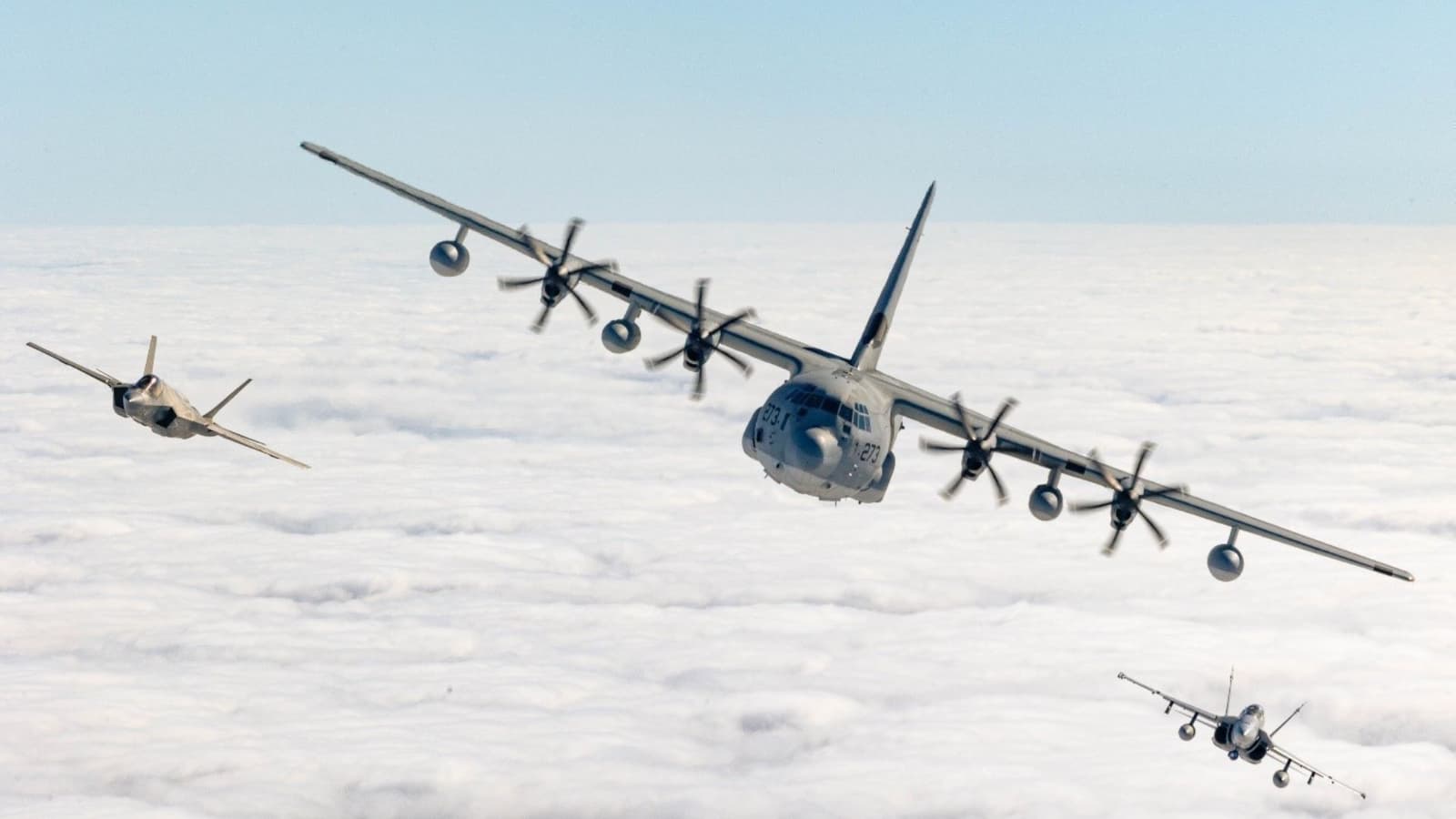
The U.S. Marine Corps has demonstrated a new way to push F-35B Lightning II operations deeper into the Indo-Pacific using KC-130J aircraft as mobile logistics hubs.
During Operation Slingshot, the 3d Marine Aircraft Wing tested an island-hopping model covering about 4,000 nautical miles across remote locations, showing how Marine aviation could sustain fighter operations without relying heavily on strategic tankers or established bases.
The demonstration moved 3d MAW personnel and aircraft from Royal Australian Air Force Base Tindal through Cairns, Pohnpei, Kwajalein Atoll and Wake Island before reaching Hawaii. Marines used MV-22B Ospreys and other wing assets to secure locations along the route.
KC-130J moves support forward
The KC-130J traveled ahead of the F-35Bs and functioned as a self-contained logistics node. It carried Marines, maintenance equipment, fuel, and other supplies needed to support aviation operations far from major military installations.
The aircraft also operated from remote and undeveloped airfields. Marines established aviation-delivered ground refueling and rearming points at these locations, giving the wing more options for sustaining aircraft across the Indo-Pacific.
“While the jets are focused on the tactical fight, the KC-130J is the workhorse in the background, carrying the maintainers, the maintenance equipment, and the fuel required to dramatically extend the range and lethality of those jets,” said 1st Lt. Christian Schwien, a KC-130J co-pilot.
Landing on austere airfields
Operating the KC-130J as a forward logistics hub placed demands on its crew. Pilots handled long-range overwater navigation and landed the 135,000-pound aircraft on austere airstrips. Loadmasters were responsible for weight and balance while also supporting ground-refueling activities.
The setup allowed the Marines to move essential support directly to locations where conventional infrastructure was limited. That capability can give F-35Bs more flexibility when operating across widely separated islands.
A modern island-hopping model
Operation Slingshot applied an island-hopping concept to modern Marine aviation. The F-35B served as the combat aircraft, while the KC-130J provided fuel, maintenance support, personnel, and supplies from forward locations. MV-22B Ospreys helped move Marines and establish operating sites along the route.
This created a mobile system in which each aircraft had a distinct role. The F-35Bs could operate from expeditionary locations, while the KC-130J kept those forward operations supplied. The MV-22Bs supported the movement of personnel needed to prepare and secure the sites.
The demonstration builds on the C-130 family’s long history of supporting Marines in difficult environments. During the 1968 siege of Khe Sanh, C-130 aircraft delivered more than 12,000 tons of supplies after overland routes to the surrounded 26th Marines were cut.
This is the best placement because it explains the overall system after you have already explained what the KC-130J does.
Legacy supports future operations
Marine KC-130 aircraft later refueled strike packages operating deep into the northern Persian Gulf during Operation Desert Storm in 1991. The KC-130J continues the transport mission while adding aerial refueling and wider multi-mission capabilities.
For 3d MAW, the aircraft provides a way to distribute fuel, personnel, and maintenance support over long distances. Operation Slingshot showed how that capability can help sustain F-35B operations across the Indo-Pacific while reducing reliance on established bases and external tanker support.
Source: https://interestingengineering.com/military/us-marines-extend-f-35b-combat-reach
Related articles

I have some questions for Mark Zuckerberg
It’s a big week for Meta. The company just kicked off its big Connect conference on Wednesday, and the new Muse AI agent appears to be an early hit.

The vibes are bad for Flock in Washington
Flock is in the hot seat in Washington, even if its CEO declined to actually face senators at a hearing about its "AI Surveillance Network" on Wednesday.

Google is sending an AI satellite into space next week
Google is getting ready to launch a satellite with its AI processors to test how well they perform in space, as reported earlier by The New York Times.

Why can’t we just keep rogue AIs off the internet?
AI agents keep getting loose, escaping supposedly secure tests to attack real-world targets, commandeer obscure wikis, and leave instructions for other agents to follow.

You might not miss what Nikon removed from its cheaper full-frame Z5 IIC
Nikon waited five years to update its full-frame Z5 camera to the Z5 II, but today it announced a new variant of last year's upgrade that removes features instead of introducing improvements in order…

Robot dog finishes 26-mile marathon on a single battery charge, beating human efficiency
A four-legged robot has completed a full marathon on a single battery charge, covering 42.195...