US: New solid-state batteries could pack more energy, last longer without pressure
A new type of solid-state batteries which could store more energy and withstand repeated charging...
A new type of solid-state batteries which could store more energy and withstand repeated charging cycles without external pressure, has just received substantial financial backing by the US.
The batteries are being developed by New York’s InfinitEnergy, an energy storage startup co-founded by Quinn Qiao, PhD, chair of the Department of Mechanical and Aerospace Engineering at Syracuse University, and Anthony Terrinoni, a staff member at the department.
The firm recently secured USD 250,000 from the New York State Energy Research and Development Authority (NYSERDA). The funds will support the development of the cells and address their reliance on external mechanical pressure to operate reliably.
As per the university, the funding is part of a nearly USD 13 million investment in 15 energy storage projects. Their goal is to strengthen the state’s power grid and reduce its dependence on fossil fuels.
New battery design
Solid-state batteries use solid electrolytes, rather than a liquid or gel, to conduct the ions between the anode and cathode. The electrolyte also acts as a physical barrier to prevent short circuits. The solid-state electrolytes usually have greater chemical and thermal stability than liquid ones.
At the same time, solid electrolytes can also enable batteries to achieve higher energy densities. Some solid-state battery designs could reach 500 watt-hours per kilogram (Wh/kg), compared to roughly 250 Wh/kg in conventional lithium-ion (Li-ion) cells.
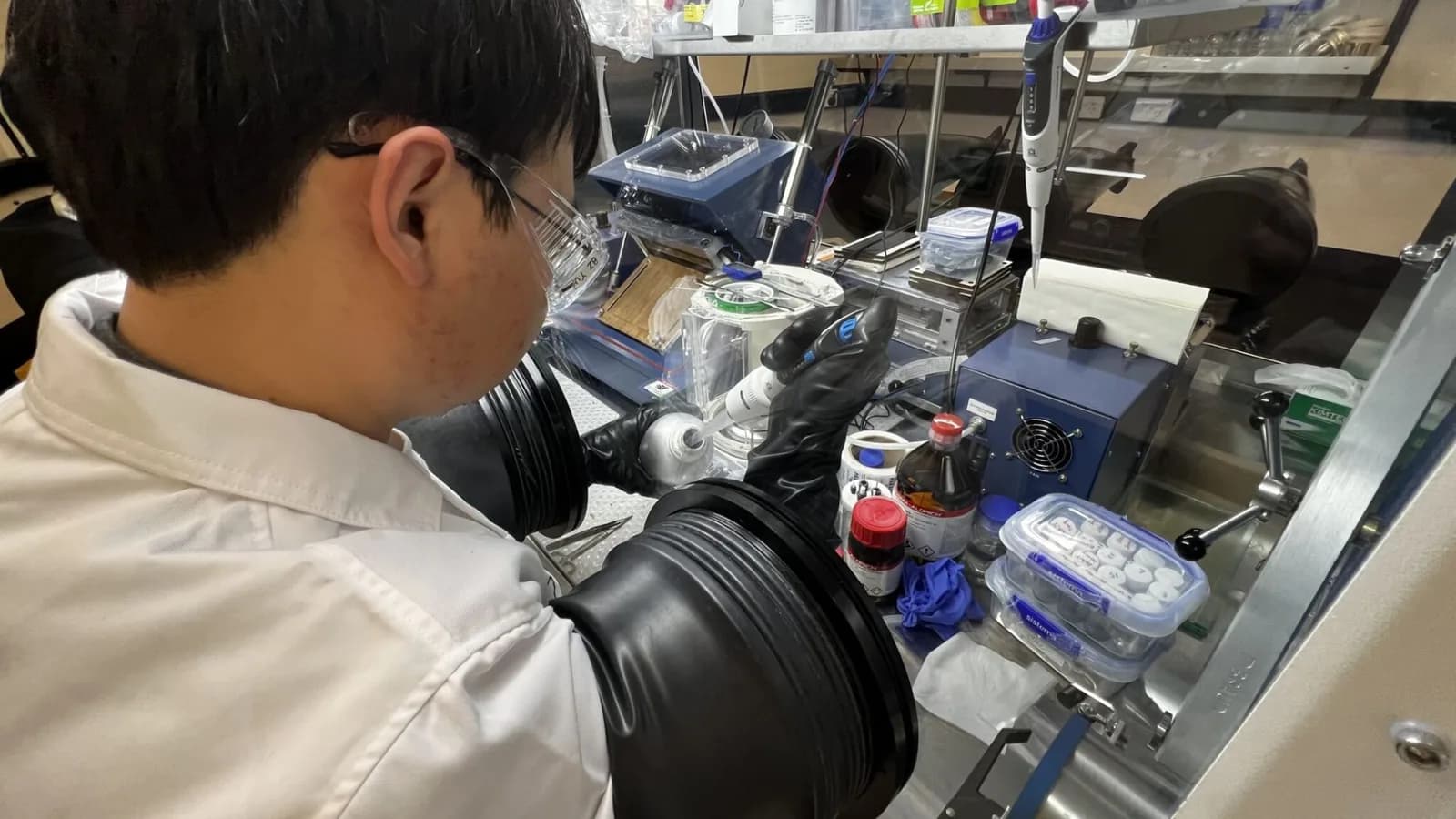
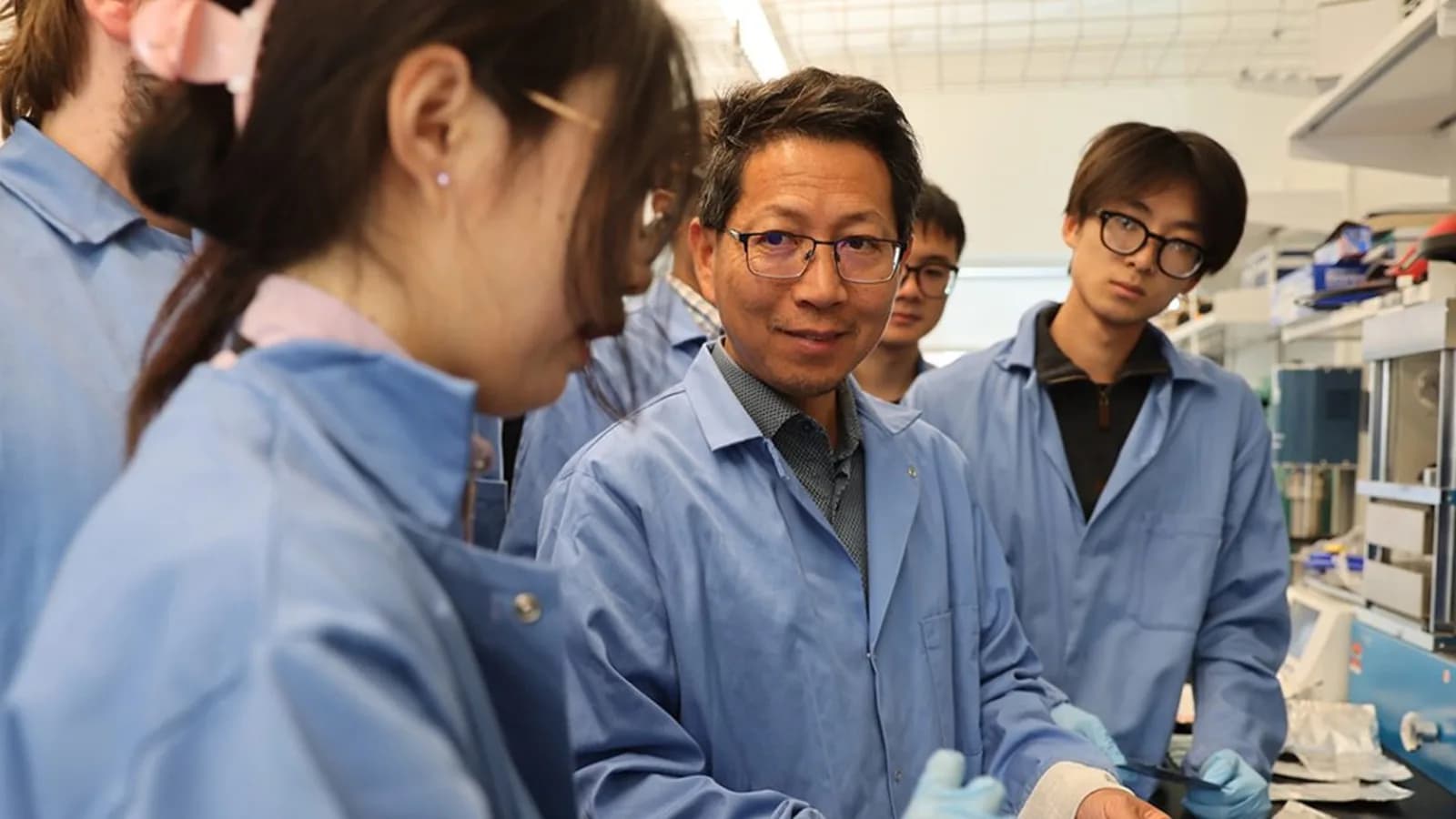
Quinn Qiao talking to students in the lab. Credit: Alex Dunbar
However several technical challenges have prevented solid-state cells’ widespread adoption, including the need for external mechanical pressure to keep the contact between the different components inside the cells. The extra equipment needed to maintain this pressure can make batteries harder to build, heavier and bulkier.
To tackle this challenge, the team aims to develop solid-state batteries that can operate without external pressure. The final goal is to make this happen without compromising energy density or cycle life.
“Removing the need for external mechanical pressure while keeping high energy density and long cycle life is one of the biggest barriers to practical deployment, and this support lets us move that work from the lab toward real-world use,” Qiao said. “We’re grateful to NYSERDA, and proud that this effort is rooted in Syracuse and New York.”
Nearing commercial use
The firm has not yet disclosed the chemical composition of the cells, their energy density, or the number of charging and discharging cycles they could withstand. They are certain, however, that their approach could ultimately lead to safer and commercially viable energy storage solutions.
The project was funded via NYSERDA’s Power Generation and Storage Innovation program. The program supports the development and demonstration of energy storage technologies that are not yet commercially available.
According to Terrinoni, the funding brings the company closer to commercializing the technology. “This NYSERDA award is an important milestone for InfinitEnergy as we advance our next-generation solid-state battery technology,” Terrinoni said. “This investment brings us one step closer to transforming innovative energy storage solutions into real-world products.”
Doreen M. Harris, NYSERDA CEO and president, explained that advanced energy storage technologies are essential to strengthening New York’s power grid and making the most of its energy resources. “These projects will advance promising solutions that can deliver power when it is needed most,” Harris concluded in a press release.
Source: https://interestingengineering.com/energy/solid-state-batteries-without-pressure
Get the latest news delivered to your inbox.
Related articles