
World-first high volume production line for water-based metal battery with 30,000-cycle life launched
A California-based company has started production at the first high volume manufacturing line built anywhere...
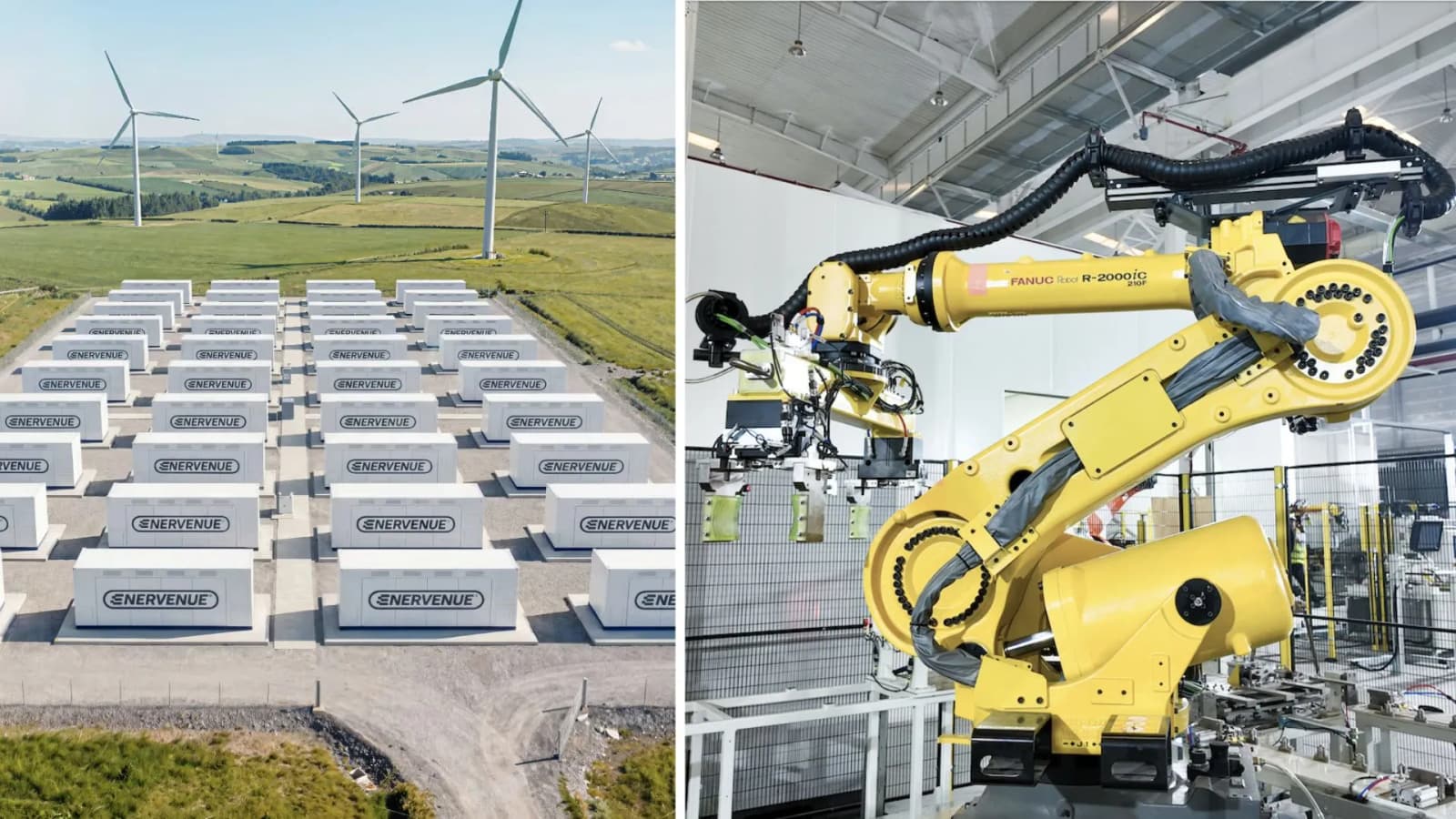
A California-based company has started production at the first high volume manufacturing line built anywhere in the world for the Aqueous Metal Cell (AMC).
EnerVenue revealed that the at full automation, the manufacturing line is designed to produce approximately 300 fourth-generation Aqueous Metal Cells a day.
“The Enervenue AMC is now being manufactured at scale, that’s what changes today. This is the only facility in the world making this high performing water-based nickel-based battery; it’s the first battery of its kind that acts like infrastructure rather than a degrading asset,” said Henning Rath, Chief Executive Officer of EnerVenue.
Aqueous Metal Cell is a water-based metal battery
The Aqueous Metal Cell is a water-based metal battery built on nickel-hydrogen chemistry, the same chemistry that powered the Hubble Space Telescope and the International Space Station for decades. EnerVenue re-engineered it with low-cost materials for use on Earth. The cell is designed for 30,000 charge cycles, up to three cycles a day for thirty years, and it needs no scheduled augmentation across that life.
The first conforming cell came off the line at the end of September and on schedule. Phase 1 is rated at 250 MWh of annual capacity, rising to 1 GWh in 2027 and multi-gigawatt-hour scale by 2028, according to EnerVenue.
Every cell passes 41 quality checks across 11 test and measure stations before it leaves the building, to verify weld integrity, leak tightness and performance. Fully commissioned 150KWh battery racks are all tested on site before heading to customers. Every machine on the high-volume line was engineered and validated on EnerVenue’s R&D line, six kilometers away, before it was committed to production here, according to a press release.
The plant occupies around 20,000 square meters, with provision drawn into the same building for a second phase of the same size. The stations are standardised, so capacity is added by replicating them, and this line is the blueprint for future local for local expansion, as per the release.
“A cell only leaves this building after 41 checks across 11 stations. Anyone can make one good vessel. The job is making the ten-thousandth one exactly the same,” said TJ Hua, Head of Production at EnerVenue.
Every cell passes 41 quality checks across 11 test
The company also revealed that every cell passes 41 quality checks across 11 test and measure stations before it leaves the building, to verify weld integrity, leak tightness and performance. Fully commissioned 150KWh battery racks are all tested on site before heading to customers. Every machine on the high-volume line was engineered and validated on EnerVenue’s R&D line, six kilometers away, before it was committed to production here.
The plant occupies around 20,000 square meters, with provision drawn into the same building for a second phase of the same size. The stations are standardised, so capacity is added by replicating them, and this line is the blueprint for future local for local expansion.
EnerVenue sells the cell against pumped hydro, flow batteries and compressed air rather than against lithium-ion on the price of a kilowatt hour. The argument is the energy an asset moves across thirty years and what it costs to own over that life. Lithium-ion is typically replaced or augmented every seven to ten years, at 8,000 to 10,000 cycles, and an Aqueous Metal Cell installation is designed to run the full life of the project around it.
Related articles

US Navy preparing sailors for robot warfare, launches autonomous systems warfighting center
To maintain decisive maritime advantage, the U.S. Navy has established a new warfighting center (RASWDC)...

Apple hit with $5.7 billion in damages over haptic patents
Haptics tech company Taction sued Apple in 2021, alleging it infringed two of its patents. Now a federal jury in San Diego has awarded Taction over $5.7 billion in damages.

China’s magnet dominance challenged, high performance magnet production validated on pilot line
France has taken a crucial step to end Europe’s reliance on Chinese rare-earth magnets. Orano...

US ally plans army of humanoid robots to conduct risky operations with drones, boost high-tech warfare
Former Ukrainian defense minister Mykhailo Fedorov has unveiled a new defense technology initiative called the...

Industrial inspection robots can now automatically open doors and authenticate themselves
Industrial inspection robots are useful only if they can reach the equipment they are supposed...

OpenAI pauses training of its ‘most capable models’
As reports of OpenAI's models breaking containment, hacking sites, and generally getting out of control pile up, the company has made the decision to pause training of its most powerful models.