115-million-year-old dinosaur bones yield chemical evidence of ancient blood
Blood chemistry has survived inside dinosaur bones for 115 million years, according to an international...
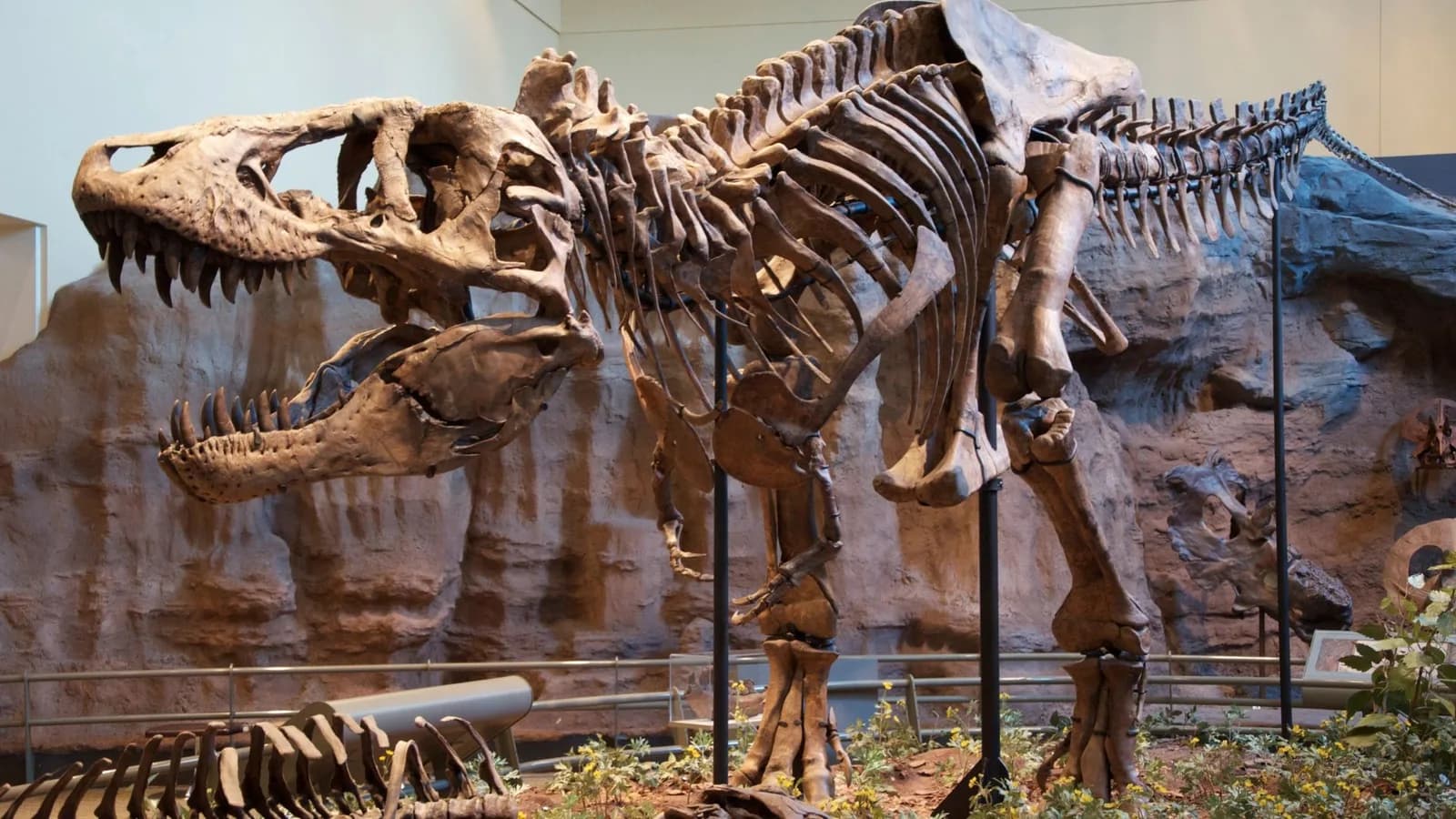
Blood chemistry has survived inside dinosaur bones for 115 million years, according to an international research team led by Curtin University.
Researchers identified mineralized red blood cells containing preserved heme molecules in the limb bones of Aratasaurus museunacionali, a theropod recovered in northeastern Brazil.
The study provides what the team described as the first chemical confirmation of hemoglobin-derived molecules inside fossilized red blood cells.
A mineral called hausmannite helped stabilize the cells and their molecular components, offering an explanation for their extraordinary longevity.
Chemical evidence of ancient blood
Previous research has reported structures resembling red blood cells in fossils. This study went further by identifying heme, the oxygen-binding component of hemoglobin, within cells preserved in the bone’s vascular canals.
That chemical evidence allowed the researchers to link the microscopic structures to blood remains, strengthening the identification beyond appearance alone.
The samples also contained amino acids associated with collagen, adding another indication that molecular components can persist across exceptionally long geological periods under favorable preservation conditions.
“To detect intact heme-derived molecules in 115-million-year-old red blood cells is astonishing: this really is a landmark discovery,” Professor Kliti Grice, the study’s lead author, said.
“It not only extends the known fossil record of blood, but also offers a direct molecular window into the physiology of long-extinct animals so we may better understand them and the world they lived in,” she added.
A mineral time capsule
The researchers found that the red blood cells had been mineralized with hausmannite. This mineral acted as a natural time capsule, preserving cellular structures and biomolecular components for millions of years.
The team believes the process followed rapid burial shortly after the dinosaur’s death. A low-oxygen environment rich in microbes may have created the conditions needed for such exceptional preservation.
These circumstances a explain how blood-related molecules endured within the fossil. They also highlight the importance of the burial environment when investigating ancient biological material.
“These findings challenge longstanding assumptions that certain biomolecules such as hemoglobin cannot survive deep time,” Grice said.
“It opens exciting new avenues for molecular-level paleontology, allowing us to investigate the evolution of blood, metabolism and even activity levels in ancient animals,” she added.
Implications beyond dinosaur fossils
The findings could help researchers investigate extinct animals through preserved molecular evidence, alongside the information provided by bone shape and structure.
Professor Martin Van Kranendonk, head of Curtin’s School of Earth and Planetary Sciences, said the work redefines how molecular structures can survive over long periods or in hostile conditions.
That understanding could also have implications for astrobiology and searches for evidence of ancient life beyond Earth.
“This study exemplifies how coordinated efforts across institutions, continents and scientific disciplines can unlock extraordinary insights into ancient life,” he said.
The collaboration included institutions in Australia, Japan, Brazil and the United States. Researchers from the Brazilian National Museum, Regional University of Cariri, Japan Agency for Marine-Earth Science and Technology, and Johns Hopkins University participated.
Grice’s 2021 Australian Research Council Laureate Fellowship funded the work. The study was published in the Proceedings of the National Academy of Sciences.
Source: https://interestingengineering.com/culture/115-million-year-old-dinosaur-bones
Get the latest news delivered to your inbox.
Related articles